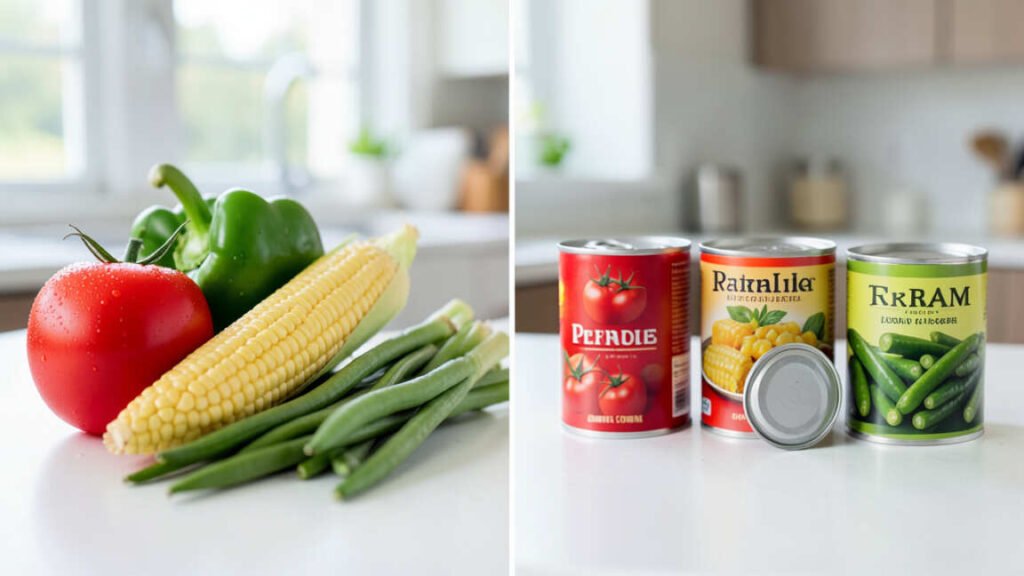
Fresh vs canned foods differ primarily in how processing alters specific nutrients, with canned produce often retaining comparable minerals like potassium while reducing heat-sensitive vitamins such as vitamin C. Practical examples show tomatoes gain lycopene through canning, beans offer superior convenience, and leafy greens maintain better nutrient profiles when fresh. The optimal choice depends on your priorities, as neither form is universally more nutritious; consider factors like added sodium, nutrient degradation over time, and intended use.
Fresh vs canned foods is a common kitchen debate that hinges on nutrition, convenience, and cost. Understanding how processing alters the nutritional profile of fruits and vegetables helps you make informed choices. This guide breaks down the science behind the can and compares it directly to the fresh alternative.
Simply put, the “best” choice depends on your priorities. Canned foods retain most vitamins and minerals, often at a lower cost and with longer shelf life, but can be high in added sodium or sugar. Fresh foods offer peak flavor and texture, but nutritional value degrades over time, making frozen a strong middle ground.
Key Takeaways
- Fresh vs canned foods differ mainly in the processing they undergo, which impacts specific nutrients like heat-sensitive vitamins.
- Canned produce is picked at peak ripeness, locking in nutrients, but the canning process can reduce vitamin C and some B vitamins.
- The nutritional gap is often smaller than assumed; for many minerals like potassium and fiber, canned and fresh are comparable.
- Your best strategy is to eat a variety of both forms, focusing on low-sodium canned options and fresh fruits and vegetables you enjoy.
- Consider frozen foods as a convenient, nutrient-dense alternative that bridges the gap between fresh and canned.
How Processing Changes Nutrient Profiles
The journey from farm to can involves several steps. Understanding these steps clarifies why nutritional changes occur. The primary methods are blanching (brief heat treatment) and thermal processing (sterilization).
Blanching deactivates enzymes that cause spoilage. This step can cause some loss of water-soluble vitamins. The food is then sealed in a can with liquid (water, juice, or syrup) and heated to a high temperature.
This heat kills bacteria but can further degrade heat-sensitive nutrients.
- Vitamin C and B Vitamins are the most vulnerable. They are water-soluble and heat-sensitive, so they leach into the canning liquid and break down with heat.
- Minerals (Potassium, Iron, Magnesium) are heat-stable and remain largely intact. The canned food’s mineral content is often equal to or higher than fresh.
- Carbohydrates and Fiber remain unchanged. Canned beans and fruits are excellent, consistent sources of fiber.
- Protein is not affected by the standard canning process.
- Fat-Soluble Vitamins (A, E, K) are relatively stable through thermal processing. Canned pumpkin, for example, remains a potent source of beta-carotene (Vitamin A).
| Nutrient | Impact of Canning | Key Consideration |
|---|---|---|
| Vitamin C | Significant loss (up to 50%) | Choose canned fruits in juice to limit added sugar. |
| B Vitamins (Folate, Thiamin) | Moderate loss (10-25%) | Not critical if varied diet; fresh leafy greens are better sources. |
| Potassium | Minimal change | Rinse canned veggies to reduce sodium without losing much potassium. |
| Fiber | No change | Canned beans, peas, and tomatoes are great fiber sources. |
As this table shows, the impact is not universal. The stability of a nutrient determines how much it survives the process. The liquid in the can holds the key – and the solution.
Tip: Always use the liquid from canned fruits (packed in 100% juice) and vegetables (packed in water) in your cooking. This recaptures some of the lost water-soluble vitamins that leached out during canning.
What Are the Specific Nutrient Differences? A Head-to-Head Comparison
Making a direct “fresh vs canned” comparison requires looking at specific produce. The nutritional outcome can vary by fruit or vegetable. Let’s examine some common staples.
Tomatoes: Lycopene Winner
Here, canned often wins. The thermal process breaks down cell walls, making the antioxidant lycopene more bioavailable. Canned tomatoes and paste are concentrated sources of this heart-healthy compound.
Fresh tomatoes are excellent, but for cooked sauces, canned is nutritionally superior and more consistent.
Beans and Legumes: The Convenience Champion
For beans, canned is a nutritional powerhouse with unmatched convenience. The protein, fiber, iron, and folate content is nearly identical to home-cooked dried beans. The main difference is sodium.
Rinsing canned beans under water for 30 seconds can reduce sodium content by up to 40%.
Leafy Greens and Berries: Fresh’s Stronghold
Delicate, water-rich foods like spinach, lettuce, and berries do not can well. The texture becomes mushy, and the loss of vitamin C and phytonutrients is significant. For these items, fresh (or frozen) is the clear nutritional choice.
Frozen berries, for instance, are flash-frozen at peak ripeness, preserving vitamins better than “fresh” berries that have traveled for days.
| Food Item | Fresh Nutrition Advantage | Canned Nutrition Advantage | Verdict |
|---|---|---|---|
| Tomatoes | More Vitamin C | Higher bioavailable lycopene | Canned for cooking, fresh for salads. |
| Carrots | Slightly more Vitamin C | Beta-carotene is very stable | Nearly equal; choose based on use. |
| Green Beans | Better texture, more Vitamin C | Similar fiber and minerals | Fresh or frozen for crispness. |
| Peaches | More vitamin C, natural sugar profile | Consistent sweetness, longer life | Fresh when in season; canned in juice year-round. |
This comparison highlights that there is no single “winner.” The best choice is contextual, depending on the food item and how you plan to use it.
Important: Always check the ingredient list. The healthiest canned option contains just the food and water or 100% juice. Avoid products with added syrups, sauces high in sodium, or artificial preservatives.
Why Fresh Isn’t Always More Nutritious
We often assume “fresh” from the grocery store is nutritionally perfect. This assumption overlooks the timeline. Produce is picked days or weeks before it reaches you.
During transport and storage, nutrients degrade.
Vitamin C is particularly fragile. A bell pepper sitting in the fridge for a week can lose a significant portion of its vitamin C content. In contrast, a canned bell pepper’s nutrients were locked in at the time of canning, which may have been closer to its harvest date.
- Harvest Time: Canned food is typically processed within 24 hours of picking. Fresh produce travels through a lengthy supply chain.
- Storage Conditions: Refrigeration slows but doesn’t stop nutrient breakdown. Light and air also contribute to degradation.
- Seasonality: “Fresh” berries in winter are likely imported and have been stored for a long time. Their frozen counterparts are often more nutritious.
- Waste: If fresh produce spoils before you eat it, its nutritional value is zero. Canned goods reduce food waste.
Warning: Be mindful of BPA in can linings. While most major brands have shifted to BPA-free linings, it’s worth checking labels or choosing brands that specify their lining materials, especially for acidic foods like tomatoes.
How to Choose Between Fresh and Canned Foods
Use this practical framework to make the best choice at the store. It balances nutrition, budget, and lifestyle needs. The goal is a varied, plant-rich diet, not perfection.
Choose Fresh When:
- You plan to eat it raw (salads, fresh fruit snacks).
- It is in-season and locally grown (farmers’ market finds).
- Texture is critical for your recipe (stir-fries, crudités).
- You can consume it within a few days of purchase.
Choose Canned When:
- You need a pantry staple with a long shelf life.
- The item is out of season or prohibitively expensive as fresh.
- You are using it in a cooked dish (soups, stews, sauces, casseroles).
- You want to minimize food waste and ensure always having produce on hand.
Choose Frozen When:
- You want peak-season nutrition with the convenience of a long shelf life.
- The item is delicate (berries, leafy greens, broccoli florets).
- You need portion control or want to reduce waste.
- You frequently forget to use fresh produce before it spoils.
Common Myths About Canned Food Debunked
Several persistent myths prevent people from using canned foods effectively. Let’s address the biggest misconceptions with facts.
Myth 1: Canned food has no nutritional value.
This is false. As covered, canned food is nutrient-dense. It is a reliable source of vitamins, minerals, fiber, and protein.
The USDA includes canned fruits and vegetables in its dietary recommendations.
Myth 2: You must avoid the canning liquid.
It depends. For canned vegetables in high-sodium brine, yes, draining and rinsing is wise. For canned fruits in 100% juice, the liquid is part of the nutrition and flavor.
Use it!
Myth 3: Canned food is always higher in sodium.
This is a choice, not a rule. Many brands now offer “no salt added” or “low sodium” versions. Rinsing regular canned vegetables is an effective way to control sodium intake.
You have control.
The Role of Additives and Preservatives
The ingredient list on a can is usually short. For plain vegetables or fruits, it may only contain the food, water, and perhaps citric acid or ascorbic acid (vitamin C) as a preservative and color stabilizer.
Products packed in syrup or sauces will contain sugar and salt. Some processed canned foods, like soup or chili, may have more complex ingredient lists including thickeners, flavors, and preservatives. Here, reading labels becomes critical.
- Citric Acid / Ascorbic Acid: Naturally derived, used to maintain color and freshness. Safe.
- Sugar / High Fructose Corn Syrup: Found in many canned fruits. Choose “in juice” options.
- Salt / Sodium: Used for flavor and preservation. Opt for “no salt added” and season yourself.
- Disodium EDTA: A preservative that helps maintain color and flavor. It is FDA-approved and used in very small amounts.
How to Properly Use Canned Foods for Maximum Nutrition
A few simple practices can maximize the nutritional benefit of canned foods and improve their taste and texture in your meals.
- Drain and Rinse Beans & Vegetables: Place in a colander and rinse under cool water for 30 seconds. This removes excess sodium and any metallic taste.
- Use the Liquid Strategically: Add canned bean liquid to soups for thickening. Use canned fruit juice in smoothies, oatmeal, or as a base for dressings.
- Toast or Sauté: Improve the texture of canned vegetables by sautéing them briefly with garlic, onions, or herbs. This drives off excess moisture and improves flavor.
- Pair with Fresh Elements: Brighten up a canned soup with fresh herbs. Top canned chili with fresh avocado and cilantro. This adds nutrients and texture contrast.
- Store Properly: Never store food in an opened can. Transfer leftovers to a glass or plastic container and refrigerate. Use within 3-4 days.
Frequently Asked Questions
Is canned fruit as healthy as fresh fruit?
Canned fruit is a healthy and convenient option, especially when packed in 100% juice. It retains most of its fiber and minerals. The main trade-off is some loss of vitamin C and the potential for added sugars in heavy syrup.
Choosing fruit in juice makes it a nutritious choice year-round.
Should I always choose low-sodium canned vegetables?
Choosing low-sodium or no-salt-added canned vegetables is ideal for controlling sodium intake, especially if you have high blood pressure. If you use regular canned vegetables, simply draining and rinsing them can reduce sodium content by 30-40% effectively, making them a heart-healthy option.
Do canned beans have the same protein as dried beans?
Yes, the protein content of canned beans is virtually identical to home-cooked dried beans. The canning process does not break down protein. The primary difference is convenience and the added sodium in the canning liquid, which can be reduced by rinsing.
Why do some canned tomatoes taste better than others?
Taste can vary based on the tomato variety, ripeness when canned, and the brand’s process. Some brands use vine-ripened tomatoes or specific varieties like San Marzano. Also, look for cans labeled “no salt added” or “packed in puree” for a richer, more tomato-forward flavor.
Can I use canned food for a balanced, healthy diet?
Absolutely. Canned foods are a key component of a balanced diet, providing affordable access to fruits, vegetables, legumes, and seafood. The Dietary Guidelines for Americans recognize canned foods as nutritious choices.
Focus on varieties without added sugars or excessive sodium, and combine them with fresh and frozen options for variety.
Final Thoughts
The fresh vs canned foods debate isn’t about declaring a winner. It’s about understanding the tools in your pantry. Canned goods offer reliable nutrition, affordability, and convenience.
Fresh foods provide superior texture and flavor when at their peak. Use them both strategically. A healthy diet incorporates a variety of foods in all forms – fresh, canned, and frozen – to ensure you get the best nutrition, taste, and value every time you eat.