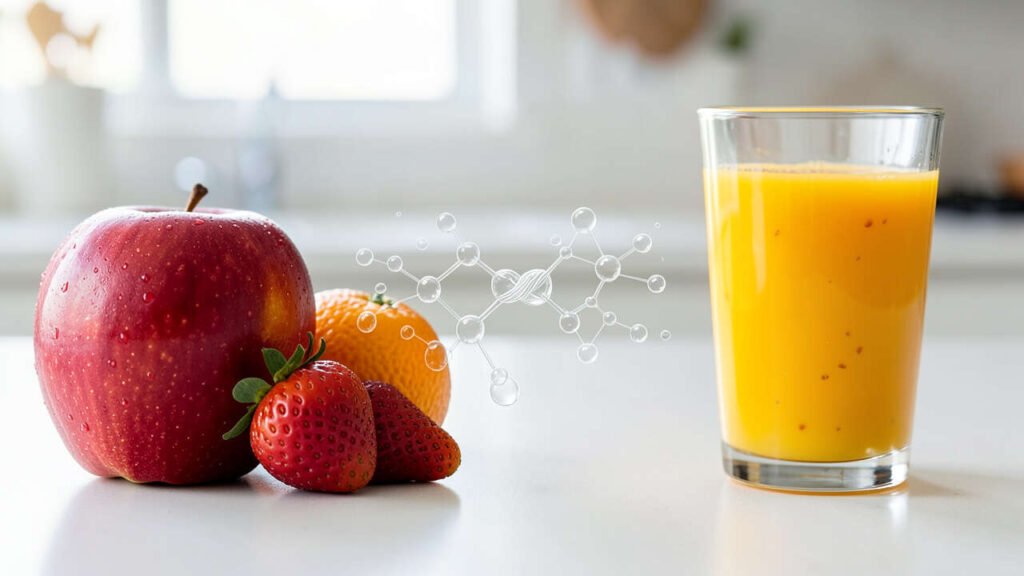
Fruit juice vs whole fruit reveals that juicing strips away most of the dietary fiber while concentrating the fruit's natural sugars. This process significantly increases the glycemic impact of the juice compared to eating the whole fruit and reduces its ability to promote a feeling of fullness. Consequently, while both contain vitamins, whole fruit is generally the superior choice for metabolic health and satiety, whereas juice may serve as a convenient hydration option in specific contexts.
Fruit juice vs whole fruit is a common debate for anyone trying to make healthier beverage choices. While both come from the same source, the juicing process fundamentally alters the nutritional profile and health impact of the fruit. Understanding these differences is key to making informed decisions about what you put in your body.
This post breaks down the science behind what happens when fruit is juiced. We’ll compare the two options head-to-head on nutrition, sugar content, and how they affect your health. You’ll learn exactly why one is often considered superior to the other.
Simply put, juicing removes the beneficial fiber and concentrates the sugars from fruit. This turns a whole food with balanced nutrients into a drink that can spike blood sugar and lacks the fullness factor of the original fruit.
Key Takeaways
- Fruit juice vs whole fruit shows that juicing strips away most of the fiber, which is crucial for digestion and blood sugar control.
- Whole fruits provide greater satiety, helping you feel full longer and manage calorie intake more effectively.
- The concentrated sugar in juice without fiber can lead to quicker blood sugar spikes and is easier to overconsume.
- Whole fruits retain the full spectrum of vitamins, minerals, and antioxidants in their natural, synergistic ratios.
- For most people, whole fruit is the healthier daily choice, while 100% juice can be an occasional part of a balanced diet.
What Is the Nutritional Difference Between Juice and Whole Fruit?
When you juice fruit, you extract the liquid and discard the pulp. This pulp contains most of the fruit’s insoluble fiber. According to the USDA, one medium apple has about 4.4 grams of fiber, while one cup of apple juice contains less than 0.5 grams.
This dramatic reduction changes how your body processes the fruit’s nutrients.
The vitamin and mineral content can also change. Some heat-sensitive nutrients may degrade during pasteurization. More importantly, the natural ratios of nutrients are disrupted when you separate the juice from the fiber-rich pulp.
| Nutrient Component | Whole Fruit (1 medium orange) | 100% Fruit Juice (1 cup) |
|---|---|---|
| Dietary Fiber | 3.1 grams | 0.5 grams |
| Total Sugars | 12.2 grams | 20.8 grams |
| Satiety Factor | High (chewing required) | Low (quick to drink) |
| Calorie Density | Lower (high volume) | Higher (concentrated) |
This table highlights the core issue: you lose fiber and gain concentrated sugar. The chewing process for whole fruit also signals fullness to your brain, a benefit lost with juice.
How Does Juicing Affect the Sugar Content and Glycemic Impact?
Fruit juice has a significantly higher glycemic index than whole fruit. The glycemic index measures how quickly a food raises blood sugar. Without fiber to slow digestion, the natural sugars in juice enter your bloodstream rapidly.
A 2013 study published in the journal Diabetes Care found that each daily serving of fruit juice was associated with an 18% higher risk of type 2 diabetes.
Whole fruits have a much lower glycemic load. The fiber acts as a physical barrier, slowing the absorption of fructose. This prevents the sharp insulin spikes associated with drinking fruit juice.
For individuals managing blood sugar levels, this difference is critical.
Warning: Be cautious with “fruit juice blends.” Many commercially available products add extra sugars, further increasing the glycemic impact. Always check labels for “100% fruit juice” with no added sugars.
What Happens to Fiber When Fruit Is Juiced?
Fiber is the most significant casualty of juicing. It exists in two forms: soluble and insoluble. Juicing removes most of both.
Soluble fiber helps regulate blood sugar and lower cholesterol, while insoluble fiber aids in digestion and prevents constipation. Losing this fiber changes the fruit from a slow-digesting, satiating food into a quick-digesting beverage.
- Soluble Fiber: Forms a gel in your gut, slowing sugar absorption. Found in apples, citrus fruits, and berries.
- Insoluble Fiber: Adds bulk to stool and promotes regular bowel movements. Abundant in the skins and pulp of most fruits.
- Prebiotic Effect: Both types of fiber feed beneficial gut bacteria. Removing them diminishes the fruit’s probiotic benefits.
- Satiety Signal: Fiber physically stretches the stomach, sending fullness signals to the brain. Juice lacks this mechanism.
The pulp left behind in a juicer is essentially a concentrated fiber supplement. Some people mix it back into smoothies or baked goods to recapture some of these benefits.
Why Is Whole Fruit More Filling Than Juice?
Satiety is governed by several factors: volume, fiber content, protein content (which fruit juice lacks), and the time it takes to chew. Whole fruit wins on all these fronts. Chewing requires time and effort, which gives your brain adequate time to register fullness.
Drinking juice, however, is a passive, rapid activity that doesn’t trigger the same neurological signals.
A study from the Pennington Biomedical Research Center showed that consuming whole apples before a meal reduced total calorie intake more than drinking apple juice. The solid form and fiber content created greater feelings of fullness. This makes whole fruit a superior choice for weight management.
| Satiety Factor | Whole Fruit | Fruit Juice |
|---|---|---|
| Chewing Required | Yes (activates satiety hormones) | No |
| Time to Consume | Slower (5-10 minutes) | Faster (1-2 minutes) |
| Stomach Distension | High (stretches stomach) | Low (liquid empties quickly) |
| Blood Sugar Response | Gradual rise and fall | Sharp spike and crash |
This comparison illustrates why a glass of orange juice doesn’t satisfy hunger the way eating a whole orange does. It’s easy to consume the sugar of four or five oranges in a single glass of juice without feeling full.
How Does Digestion Differ Between Juice and Whole Fruit?
The digestive process starts with chewing. This mechanical breakdown mixes food with saliva, initiating the digestive enzymes that break down starches. Juicing bypasses this first critical step entirely.
When you drink juice, it hits your stomach as a liquid, leading to faster gastric emptying.
The absence of fiber means the sugars in juice are absorbed in the small intestine with little resistance. This floods the liver with fructose. In contrast, the fiber in whole fruit slows this process, giving the liver time to process fructose in a more balanced way.
Over time, excessive fructose from juice can contribute to non-alcoholic fatty liver disease.
Tip: If you enjoy juice, try making “whole fruit smoothies” instead. Blending the entire fruit retains the fiber and creates a more digestive-friendly option that still has a drinkable consistency.
What Are the Practical Implications for Your Health?
Choosing between juice and whole fruit has long-term health implications. The concentrated sugar and lack of fiber in juice can contribute to weight gain, insulin resistance, and metabolic syndrome if consumed regularly in large quantities. The American Heart Association recommends limiting added sugars, and while juice sugar isn’t “added,” it behaves similarly in the body.
Whole fruits, as part of a balanced diet, are consistently linked to reduced risks of heart disease, stroke, and certain cancers. A 2017 meta-analysis in The Lancet found that high intake of whole fruits, especially blueberries, grapes, and apples, was associated with a significantly lower risk of all-cause mortality.
- Weight Management: The fiber and water in whole fruit promote fullness, aiding in calorie control.
- Blood Sugar Control: Whole fruits have a lower glycemic load, making them suitable for diabetics in moderation.
- Gut Health: The prebiotic fiber in whole fruits supports a healthy gut microbiome.
- Nutrient Absorption: Some nutrients in fruit may be better absorbed in the context of the whole food matrix.
Which Is Better for Hydration: Juice or Whole Fruit?
Both contribute to hydration, but water remains the best choice. Whole fruits with high water content, like watermelon, oranges, and strawberries, are excellent hydrating snacks. The water is bound within the fruit’s structure and released slowly during digestion.
Fruit juice is hydrating but often comes with a high sugar load. For effective hydration, especially during or after exercise, water or an electrolyte drink is preferable. If you use juice for hydration, diluting it with water (a 1:1 ratio) can reduce the sugar concentration while maintaining flavor.
Consider this breakdown of common fruits:
- Watermelon: 92% water by weight. Excellent for hydration with minimal calories.
- Cucumber: 96% water. Technically a fruit, perfect for infused water or salads.
- Orange: 87% water. Provides hydration along with vitamin C and fiber.
- Grapes: 81% water. Portable and hydrating but higher in sugar.
When Might Fruit Juice Be a Good Option?
Despite the clear advantages of whole fruit, there are specific situations where 100% fruit juice can be acceptable. For individuals who cannot chew due to dental issues or surgery, juice provides accessible nutrients. It can also be a quick way to consume certain nutrients, like potassium from orange juice, when whole fruit isn’t available.
For athletes needing rapid carbohydrate replenishment during intense endurance events, a small amount of juice can be effective. The key is moderation and context. Juice should be seen as a supplement, not a replacement for whole fruits and vegetables in the daily diet.
Important: Always choose 100% fruit juice with no added sugars. “Fruit drinks,” “cocktails,” or “juice drinks” often contain minimal actual juice and added sugars, making them significantly less healthy.
Frequently Asked Questions
Is fruit juice healthy at all?
Yes, but with major caveats. 100% fruit juice contains vitamins, minerals, and antioxidants. However, it is also high in sugar and lacks the fiber of whole fruit.
It’s best consumed in small portions (4-6 ounces) occasionally, not as a primary source of fruit intake.
Can I get enough fiber from fruit juice?
No. Juicing removes the vast majority of dietary fiber, which is the key component for satiety, blood sugar control, and digestive health. You cannot replace the fiber from an apple with its juice.
What about vegetable juice?
Vegetable juice generally has less sugar than fruit juice, but the same principle applies: it lacks fiber. If you juice vegetables, choose low-sugar options like kale, celery, or cucumber, and consider blending them into a smoothie instead to retain fiber.
Is cold-pressed juice healthier?
Cold-pressed juice may retain slightly more heat-sensitive nutrients like certain vitamins. However, it still removes the fiber and concentrates the sugars. The core nutritional trade-offs between juice and whole fruit remain the same.
How much fruit juice is safe to drink?
Dietary guidelines often recommend limiting fruit juice to no more than one small glass (about 4 ounces) per day, especially for children. For adults, it should be an occasional treat, with whole fruits being the main source of daily fruit servings.
Final Thoughts
The debate between fruit juice vs whole fruit clearly favors the unprocessed option. Whole fruits offer a complete nutritional package with fiber that slows sugar absorption, promotes fullness, and supports gut health. Juice, while tasty and convenient, strips away these benefits and concentrates sugars, making it a less healthy choice for regular consumption.
Make whole fruits your go-to snack and dessert. If you enjoy juice, treat it as a small, occasional indulgence rather than a dietary staple. Your body will thank you for choosing the form that nature designed.