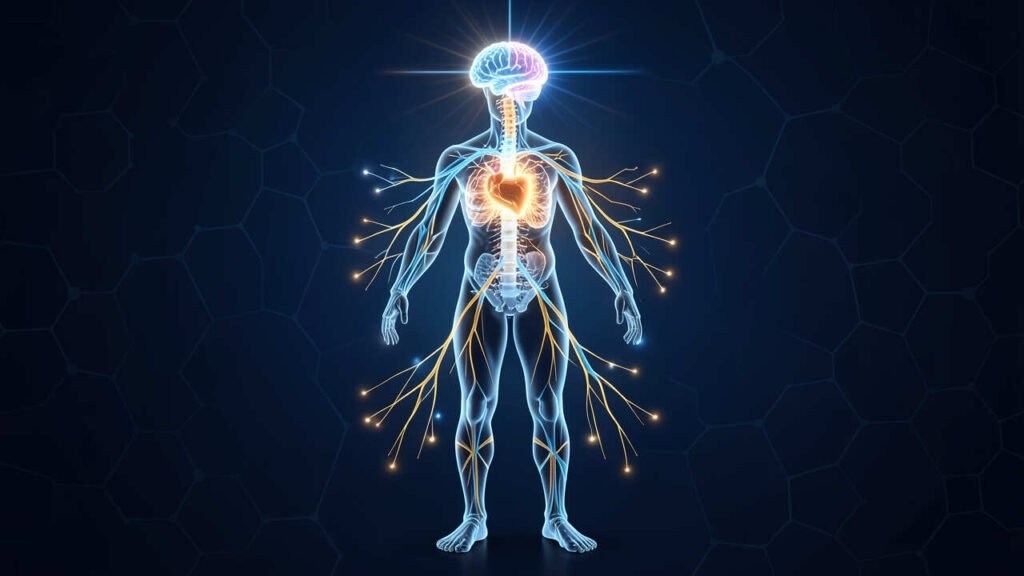
The brain communicates with the rest of the body primarily through the nervous system and the endocrine system. Electrical signals travel rapidly along neurons, while neurotransmitters and hormones act as chemical messengers to transmit specific instructions between cells. This coordinated network governs every bodily function, from conscious movement to the automatic regulation of heartbeat and metabolism.
How does the brain communicate with the rest of the body is a question at the center of every heartbeat, movement, and thought you experience daily. Your brain sends and receives billions of signals every second to keep you alive, coordinated, and aware of the world around you.
This post breaks down the exact pathways and chemicals that make this communication possible, including the nervous system, neurotransmitters, and hormones. You’ll also learn what keeps these signals fast, accurate, and healthy over a lifetime.
Simply put, the brain communicates with the rest of the body through two main systems: the nervous system and the endocrine system. The nervous system sends fast electrical impulses and chemical signals through neurons, while the endocrine system releases hormones into the bloodstream to trigger slower, longer-lasting responses across entire organs and tissues.
Key Takeaways
- How does the brain communicate with the rest of the body comes down to two routes: rapid electrical signals through neurons and slower hormonal messages through the blood.
- Neurons fire electrical impulses called action potentials, which travel along axons and cross synapses with the help of neurotransmitters.
- The endocrine system, led by the hypothalamus and pituitary gland, uses hormones to communicate with organs over longer time frames.
- Myelin, sleep, exercise, and nutrition all play a major role in keeping brain-body signals fast and reliable.
- When communication breaks down, health problems like Parkinson’s disease, depression, and chronic stress can appear.
How Does the Brain Communicate With the Rest of the Body?
The brain communicates with the body through two complementary systems: the nervous system and the endocrine system. The nervous system handles rapid, precise commands like pulling your hand away from a hot pan, while the endocrine system sends slower chemical instructions that regulate metabolism, growth, and stress.
Every thought, reflex, and sensation depends on these communication networks. Sensory signals travel from your skin, eyes, ears, and internal organs up to the brain, where they are processed and answered with a motor response. The brain then decides what to do and sends instructions back down the same pathways.
| Feature | Nervous System | Endocrine System |
|---|---|---|
| Speed | Milliseconds | Seconds to hours |
| Messengers | Neurotransmitters | Hormones |
| Duration | Short-lived | Long-lasting |
| Target | Specific cells or organs | Many tissues at once |
| Example | Pulling hand from a flame | Adrenaline during stress |
These two systems work together constantly. The hypothalamus in your brain acts as the bridge between them, converting neural signals into hormonal signals when needed. This entire process follows a predictable sequence:
- Receptors detect a stimulus such as heat, light, or pressure.
- Sensory neurons carry the signal to the spinal cord and brain.
- The brain interprets the information and selects a response.
- Motor neurons deliver the command to muscles or glands.
- Hormones may be released to sustain the response over time.
This loop repeats thousands of times each day. The faster it operates, the smoother your movements and decisions feel.
What Are the Core Building Blocks of Neural Communication?
Neurons are the specialized cells that carry information throughout your body. They are the foundation of every signal your brain sends or receives. While neurons vary in shape and size, they all share the same essential structure and function.
Each neuron works like a tiny wire that can both receive and transmit messages. The human brain contains roughly 86 billion neurons, according to the National Institutes of Health (NIH). These neurons form trillions of connections called synapses, creating a network far more complex than any supercomputer.
- Dendrites: Branch-like extensions that receive incoming signals from other neurons.
- Soma (cell body): Processes the incoming signals and maintains the neuron’s health.
- Axon: A long fiber that carries the electrical signal away from the cell body.
- Myelin sheath: A fatty layer that wraps the axon and speeds up signal transmission.
- Axon terminals: The endings that release chemical messengers to the next cell.
- Synapse: The tiny gap between two neurons where chemical communication occurs.
Neurons do not work alone. They are supported by glial cells, which outnumber them and perform critical jobs like forming myelin, clearing waste, and regulating blood flow. Without glial cells, neurons would not survive or transmit signals efficiently.
Important: Neurons are classified by their job. Sensory neurons bring information in, motor neurons send commands out, and interneurons connect the two inside the brain and spinal cord.
Understanding these building blocks makes the rest of brain-body communication much easier to grasp. Every thought and action begins with these cells working in precise coordination.
How Do Electrical Signals Travel From the Brain to Muscles and Organs?
The brain sends commands using electrical impulses called action potentials. These impulses travel down the axon like a wave, carrying information from one end of the neuron to the other. This electrical signal moves because of charged particles flowing across the neuron’s membrane.
At rest, a neuron is more negative on the inside than the outside. When a signal arrives, sodium channels open and allow positively charged sodium ions to flood in. This flips the charge and triggers the wave.
Potassium channels then open to restore the original state, allowing the neuron to fire again.
- Resting state: The neuron sits at roughly -70 millivolts, with a negative internal charge.
- Depolarization: Sodium channels open, and sodium rushes into the cell, making the charge positive.
- Propagation: The electrical change spreads down the axon like a line of falling dominoes.
- Repolarization: Potassium flows out, restoring the negative charge.
- Neurotransmitter release: The signal reaches the axon terminal and triggers chemical release.
- Reset: The sodium-potassium pump restores the original ion balance for the next signal.
Myelin is the key to speed. The National Library of Medicine reports that myelinated fibers conduct signals up to 120 meters per second, about 268 miles per hour. This process, called saltatory conduction, lets the signal jump between gaps in the myelin rather than traveling continuously.
That is why diseases like multiple sclerosis, which damage myelin, cause such serious disruption to movement and sensation.
Tip: A single action potential travels in only one direction. The neuron’s refractory period, a brief pause after firing, prevents signals from reversing course and keeps messages moving correctly.
This electrical system is incredibly reliable. It fires thousands of times per second without overheating or losing signal strength, making it the perfect tool for rapid body control.
What Role Do Neurotransmitters Play in Brain-Body Signaling?
When an electrical signal reaches the end of a neuron, it must cross a gap to reach the next cell. It cannot jump across directly. Instead, the neuron releases chemical messengers called neurotransmitters into the synapse, where they bind to receptors on the target cell and trigger a new signal.
This chemical step is how the brain controls muscles, organs, mood, and memory. Different neurotransmitters produce different effects depending on where they bind. Some excite the next cell into firing, while others calm it down.
| Neurotransmitter | Primary Role | Effect Type |
|---|---|---|
| Acetylcholine | Muscle contraction, memory | Excitatory |
| Dopamine | Movement, reward, motivation | Excitatory |
| Serotonin | Mood, sleep, appetite | Modulatory |
| GABA | Calms neuronal activity | Inhibitory |
| Glutamate | Learning, memory | Excitatory |
| Norepinephrine | Alertness, fight-or-flight | Excitatory |
When neurotransmitter levels fall out of balance, communication breaks down in recognizable ways. Parkinson’s disease appears when dopamine-producing neurons die, making movement difficult. Depression is linked to low serotonin and norepinephrine activity.
Many medications work by adjusting these chemical levels to restore normal signaling.
Warning: Toxins like botulinum toxin and certain snake venoms block neurotransmitter release. They can cause paralysis within hours, showing just how critical this chemical step is for survival.
Neurotransmitters are reabsorbed or broken down after release, preventing signals from lingering too long. This recycling process keeps the system precise and prevents overstimulation of muscles and organs.
How Does the Brain Use Hormones to Communicate With the Body?
Not all brain-to-body messages travel through neurons. Many travel through the bloodstream as hormones, which are chemical signals released by glands into circulation. These hormonal messages are slower but their effects last much longer than electrical signals.
The hypothalamus, a small region deep in the brain, controls this process. It monitors conditions like temperature, thirst, and stress, then signals the pituitary gland to release hormones. The pituitary, often called the master gland, directs the thyroid, adrenal glands, and reproductive organs to respond accordingly.
- Cortisol: Released during stress, raises blood sugar and suppresses inflammation.
- Adrenaline (epinephrine): Increases heart rate and blood flow to muscles.
- Thyroid hormones: Regulate metabolism and body temperature.
- Oxytocin: Supports bonding, childbirth, and social behavior.
- Antidiuretic hormone (ADH): Controls water balance in the kidneys.
- Growth hormone: Supports tissue repair and development.
The stress response shows how both systems cooperate. When you face a threat, the brain sends a fast nerve signal to the adrenal glands, triggering an adrenaline spike within seconds. At the same time, the hypothalamus releases corticotropin-releasing hormone, which leads to a slower cortisol surge that keeps you alert for hours.
| Factor | Neural Signal | Hormonal Signal |
|---|---|---|
| Delivery method | Electrical impulse | Bloodstream |
| Onset | Under 1 millisecond | Seconds to minutes |
| Duration | Brief | Minutes to days |
| Reach | Single target | Whole body |
Hormonal communication explains why some body changes feel gradual. A growth spurt, a deep sleep cycle, or a slow metabolic shift all depend on hormones working steadily over hours and days. This system gives the brain a way to manage long-term body states that electrical signals alone cannot sustain.
Why Does the Autonomic Nervous System Control Body Functions Automatically?
Many brain-body signals happen without conscious thought. Your heart beats, your lungs expand, and your pupils adjust without you lifting a finger. This automatic control comes from the autonomic nervous system (ANS), which operates beneath your awareness at all times.
The ANS has two branches with opposite jobs. The sympathetic nervous system prepares the body for action during stress or danger. The parasympathetic nervous system promotes calm, digestion, and recovery.
Together they keep the body balanced moment by moment.
| Body Function | Sympathetic (Fight or Flight) | Parasympathetic (Rest and Digest) |
|---|---|---|
| Heart rate | Increases | Decreases |
| Digestion | Slows down | Speeds up |
| Pupils | Dilate | Constrict |
| Sweating | Increases | Decreases |
| Muscle tension | Elevated | Relaxed |
The vagus nerve is the main highway of the parasympathetic system. It runs from the brainstem to the heart, lungs, and digestive tract. Research from Harvard Medical School highlights that a healthy vagus nerve tone is linked to lower inflammation and better emotional resilience.
- Heartbeat regulation without conscious effort
- Automatic breathing adjustments during exercise
- Digestive enzyme and acid release after meals
- Pupil response to changing light levels
- Bladder and bowel control reflexes
- Blood pressure adjustments when you stand up
Chronic stress can push the sympathetic system into overdrive, keeping the body in a constant state of alert. Over time, this disrupts sleep, digestion, and immune function. Restoring parasympathetic activity through deep breathing, meditation, and rest is essential for healthy brain-body communication.
How Fast Does the Brain Communicate With the Rest of the Body?
Speed is one of the most impressive features of brain-body communication. Signals do not all travel at the same speed. The fastest neurons, the myelinated motor fibers, conduct impulses at up to 120 meters per second.
The slowest fibers, such as unmyelinated pain fibers, may only reach around 1 meter per second.
This variation makes practical sense. A reflex that protects your hand from a burn needs to be almost instantaneous. Dull, aching pain signals from deep organs travel slowly because they indicate ongoing conditions rather than immediate danger.
- Myelinated motor neurons: 70 to 120 meters per second
- Myelinated sensory neurons: 30 to 70 meters per second
- Unmyelinated autonomic fibers: 2 to 15 meters per second
- Unmyelinated pain fibers: 0.5 to 2 meters per second
To understand these numbers, consider reaction time. A simple visual reaction, such as pressing a button when a light flashes, takes about 200 to 250 milliseconds. That time includes light reaching your retina, the signal traveling to the visual cortex, the brain deciding to act, and the motor command reaching your finger.
Tip: You can estimate your own reaction time at home. Have a friend drop a ruler without warning and catch it between your fingers. The distance it falls before you catch it reflects your neural processing speed.
Temperature also affects signal speed. Cold fingers feel slow and clumsy because lower temperatures slow ion channel activity and nerve conduction. Athletes and surgeons both rely on keeping their extremities warm to maintain fast, precise neural responses.
The brain itself consumes about 20% of your body’s total energy, according to research reported by Scientific American. Even though it makes up only about 2% of your body weight, it demands a constant supply of glucose and oxygen to fuel this high-speed communication network.
How Can You Keep Brain-Body Communication Healthy?
Your brain and body form a connected system that responds to how you live. Regular physical activity, quality sleep, and proper nutrition directly improve the speed and clarity of neural signals. The opposite habits, such as poor sleep and chronic stress, degrade them over time.
The evidence is strong. The NIH states that aerobic exercise increases blood flow to the brain and promotes the release of brain-derived neurotrophic factor (BDNF), a protein that supports neuron growth and synapse formation. Even 30 minutes of walking daily can improve neural communication.
- Sleep 7 to 9 hours: The brain clears waste and consolidates neural connections during deep sleep.
- Exercise regularly: Boosts circulation, BDNF, and myelin maintenance.
- Eat omega-3 fatty acids: Found in fish, walnuts, and flaxseed; supports neuron membrane health.
- Manage stress: Deep breathing and meditation activate the parasympathetic nervous system.
- Stay hydrated: Even mild dehydration impairs concentration and slows reaction time.
- Avoid neurotoxins: Excess alcohol and recreational drugs damage neurons and myelin.
- Challenge your brain: Learning new skills strengthens synaptic connections and builds cognitive reserve.
Tip: Social connection also matters. Engaging conversations, laughter, and physical touch stimulate oxytocin and dopamine, reinforcing healthy brain-body signaling networks.
Warning: Persistent numbness, tingling, weakness, or unexplained memory loss should never be ignored. These symptoms may signal nerve damage or neurological conditions that require prompt evaluation by a doctor.
Small daily habits compound into long-term neural health. You do not need extreme interventions to protect your brain-body connection, just consistent choices that support the system every day.
Frequently Asked Questions
How does the brain communicate with the rest of the body?
The brain uses two main pathways: the nervous system and the endocrine system. The nervous system sends fast electrical signals and chemical neurotransmitters through neurons, while the endocrine system releases hormones through the bloodstream for slower, longer-lasting effects.
What is the fastest way the brain sends a signal?
The fastest signals travel along myelinated motor neurons at up to 120 meters per second, roughly 268 miles per hour. Myelin acts as an insulator that lets electrical impulses jump between gaps, dramatically increasing conduction speed compared to unmyelinated fibers.
What neurotransmitters help the brain communicate?
Key neurotransmitters include acetylcholine for muscle movement, dopamine for reward and movement, serotonin for mood, GABA for calming, and glutamate for learning and memory. Each one binds to specific receptors and produces either excitatory or inhibitory effects on target cells.
Can the brain heal its communication pathways after injury?
Yes, the brain shows remarkable plasticity. Neuroplasticity allows neurons to form new connections, reroute signals around damaged areas, and strengthen existing pathways through practice and rehabilitation. Recovery depends on the injury’s severity, location, and the quality of therapy.
How do hormones differ from neurotransmitters in brain-body communication?
Neurotransmitters cross tiny synaptic gaps and act within milliseconds, affecting a single nearby cell. Hormones travel through the bloodstream and may take seconds or minutes to act, but they influence many tissues at once and their effects last much longer.
Final Thoughts
How does the brain communicate with the rest of the body no longer needs to feel like a mystery. Electrical impulses, chemical neurotransmitters, and hormones work together to control everything you do, feel, and remember. The system is fast, precise, and remarkably resilient.
Supporting it with sleep, exercise, nutrition, and stress management keeps the connection sharp throughout your life.