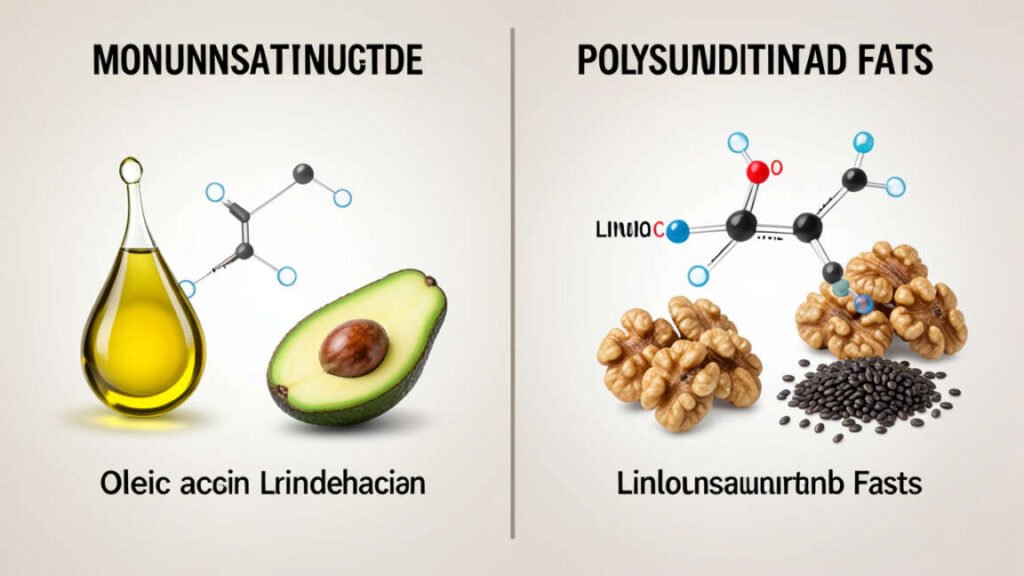
Monounsaturated and polyunsaturated fats are the two primary types of unsaturated fat, distinguished by their molecular structure, which affects their health benefits and cooking properties. Monounsaturated fats are heat-stable for cooking, while polyunsaturated fats are a source of essential omega-3 and omega-6 fatty acids your body cannot make. Replacing saturated fats with either type lowers LDL cholesterol and significantly reduces the risk of heart disease.
Monounsaturated vs polyunsaturated fats are the two main types of unsaturated fat in your diet, and they affect your heart, your cooking, and your energy in different ways. This guide explains exactly how they differ, which foods deliver each type, and how to use them for better health.
Simply put, both monounsaturated and polyunsaturated fats lower LDL cholesterol and reduce heart disease risk when they replace saturated fats. Monounsaturated fats handle higher cooking temperatures, while polyunsaturated fats provide essential omega-3 and omega-6 fatty acids. Include both daily through olive oil, avocados, nuts, seeds, and fatty fish.
Key Takeaways
- Monounsaturated vs polyunsaturated fats both improve cholesterol levels and support cardiovascular health.
- Monounsaturated fats tolerate heat better, making them ideal for sautéing, roasting, and baking.
- Polyunsaturated fats deliver essential omega-3 fatty acids that your body cannot produce on its own.
- Replacing just 5% of your saturated fat calories with unsaturated fats can lower heart disease risk by up to 25%.
- Whole-food sources such as olive oil, avocados, nuts, and salmon offer the most reliable benefits.
What Are Monounsaturated Fats?
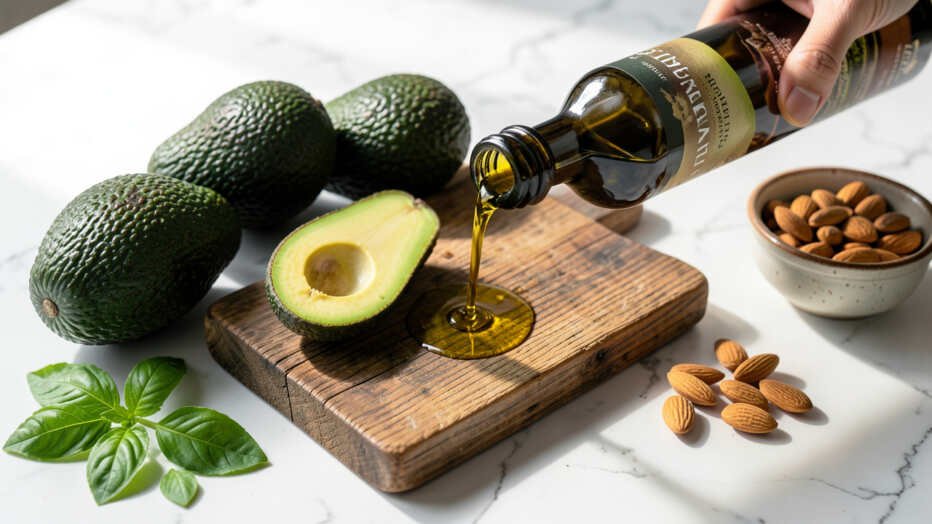
Monounsaturated fats are fatty acids with a single double bond in their carbon chain. That single bond keeps them liquid at room temperature while giving them more stability than polyunsaturated fats when exposed to heat. They are the backbone of the Mediterranean diet.
Oleic acid is the most common monounsaturated fat, and extra virgin olive oil is its richest everyday source. Avocados, nuts, and certain seed oils also deliver substantial amounts. These fats help lower LDL cholesterol without dragging down HDL cholesterol, and they play a role in keeping blood sugar steady.
- Extra virgin olive oil contains about 73% monounsaturated fat, mostly oleic acid.
- Half an avocado provides roughly 10 grams of monounsaturated fat.
- Almonds, pecans, and hazelnuts combine monounsaturated fats with fiber and vitamin E.
- Peanut oil, canola oil, and high-oleic sunflower oil are practical kitchen staples.
- Monounsaturated fats support the absorption of fat-soluble vitamins A, D, E, and K.
- They also help maintain flexible, healthy cell membranes throughout your body.
Studies consistently link olive oil consumption with lower rates of cardiovascular disease and better metabolic health. The key is using these fats in place of butter, lard, and heavily processed spreads, not piling them on top of an already high-calorie diet.
What Are Polyunsaturated Fats?
Polyunsaturated fats contain two or more double bonds in their carbon structure. These extra bonds create bends in the fatty acid chain, making these fats stay liquid even when refrigerated. They also make them more delicate and prone to oxidation at high heat.
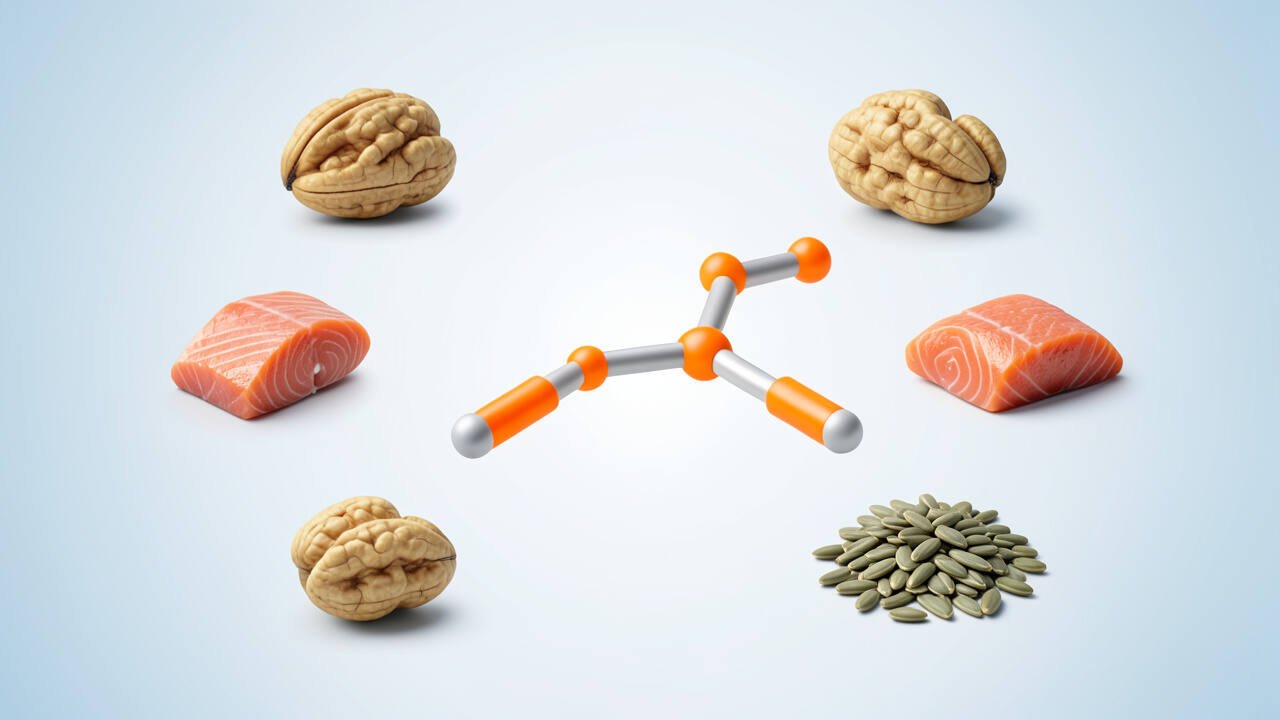
Two families matter most: omega-3 and omega-6 fatty acids. Omega-3s from fish, known as EPA and DHA, lower triglycerides and ease inflammation. Plant-based ALA, found in flaxseed and walnuts, converts to EPA and DHA in small amounts.
Omega-6 linoleic acid supports skin, hair, and cellular health, but modern diets tend to overload on it.
- Fatty fish like salmon, mackerel, and sardines are the best omega-3 sources.
- Walnuts, chia seeds, and ground flaxseed provide plant-based ALA.
- Sunflower, safflower, corn, and soybean oils are rich in omega-6.
- Polyunsaturated fats are essential, meaning your body cannot manufacture them.
- Eating fish twice a week covers most omega-3 recommendations from health organizations.
Important: Most people eat too many omega-6 oils and too few omega-3 foods. Aim for a ratio of about 4:1 or lower by adding salmon, walnuts, and flaxseed to your routine. This balance supports a healthy inflammatory response.
Polyunsaturated fats also support brain function and normal growth in children. Because your body depends on them completely, a deficiency is possible on very low-fat diets, which is why these fats should never be completely avoided.
Monounsaturated vs Polyunsaturated: Key Differences
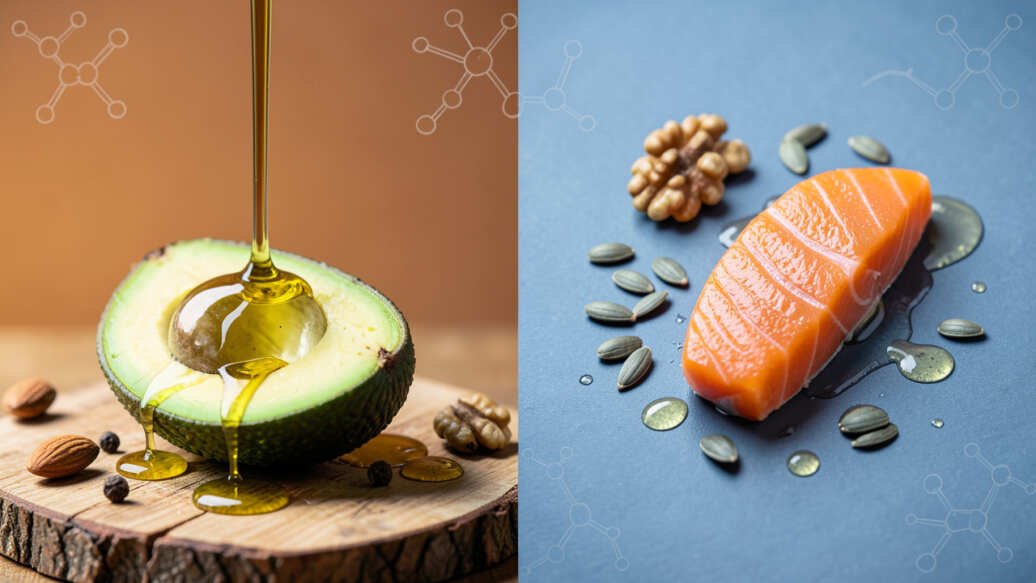
The fastest way to understand the monounsaturated vs polyunsaturated fat debate is to compare their structure, behavior, and food sources side by side. This table summarizes the essentials:
| Feature | Monounsaturated Fats | Polyunsaturated Fats |
|---|---|---|
| Chemical structure | One double bond | Two or more double bonds |
| Texture at room temperature | Liquid, cloudy when chilled | Liquid, stays liquid when chilled |
| Heat stability | Moderate to high | Low to moderate |
| Essential fatty acids | Not essential | Yes: omega-3 and omega-6 |
| Main food sources | Olive oil, avocado, almonds, peanuts |