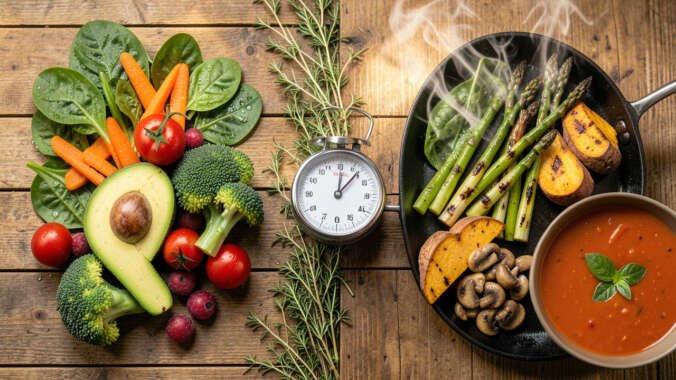
Neither raw nor cooked food is universally more nutritious, as the optimal choice depends on the specific food and the nutrient you aim to maximize. Some heat-sensitive nutrients, like certain vitamins in bell peppers, degrade with cooking, while other nutrients, such as lycopene in tomatoes, become more bioavailable through heating. The most nutrient-preserving approach involves eating some foods raw and selecting appropriate cooking methods for others to enhance digestion and mineral absorption.
Raw vs cooked food is a long-standing debate in nutrition circles. Many people believe eating everything raw is the healthiest path, while others argue that cooking unlocks key nutrients and improves digestion. The truth is more complex than a simple either-or answer.
This guide breaks down the scientific evidence to help you decide what to eat raw and what’s better cooked. You’ll learn which cooking methods preserve nutrients, how heat affects different vitamins and minerals, and how to get the most nutrition from your diet regardless of preparation style.
Simply put, neither raw nor cooked food is always more nutritious. The best choice depends on the specific food and the nutrient you want to maximize. Some foods, like spinach, are more nutritious when cooked, while others, like bell peppers, retain more vitamin C when raw. A balanced diet including both raw and cooked foods is ideal for optimal health.
Key Takeaways
- The nutritional value of raw vs cooked food varies significantly depending on the food type and the specific nutrient in question.
- Cooking can break down cell walls, making some nutrients like beta-carotene more bioavailable, but it can also destroy heat-sensitive vitamins like vitamin C.
- For certain foods like tomatoes and carrots, cooking significantly increases the availability of beneficial antioxidants like lycopene.
- Water-soluble vitamins, particularly B vitamins and vitamin C, are most vulnerable to loss during cooking, especially with boiling.
- The healthiest approach is to eat a variety of both raw and cooked vegetables, using cooking methods that minimize nutrient loss.
How Cooking Affects Nutrients: The Science
Heat fundamentally changes the chemical structure of food. When you cook a vegetable, you’re not just making it softer and more flavorful. You are triggering chemical reactions that alter its nutritional profile.
These changes can be both good and bad, depending on the nutrient.
Certain vitamins are highly sensitive to heat, light, and air. When exposed to high temperatures, these nutrients begin to degrade. On the other hand, cooking can break down tough cellular structures in plants, releasing nutrients that would otherwise be trapped and unabsorbable by your body.
Heat-Sensitive Nutrients That Decrease with Cooking
- Vitamin C: This water-soluble vitamin is very unstable. It can be lost through leaching into cooking water and degradation from heat.
- B Vitamins (like Thiamin/B1 and Folate/B9): These are also water-soluble and sensitive to heat. Boiling can cause significant losses.
- Glucosinolates: Found in cruciferous vegetables like broccoli and cabbage, these compounds can break down when cooked, especially at high temperatures.
- Some Antioxidants: Certain fragile antioxidant compounds can be diminished by the cooking process.
Nutrients That Can Increase or Become More Available with Cooking
| Nutrient | Effect of Cooking | Best Food Sources |
|---|---|---|
| Beta-carotene (converts to Vitamin A) | Increased bioavailability. Heat breaks down cell walls. | Carrots, sweet potatoes, spinach |
| Lycopene | Significantly increased. Heat breaks down cell walls and changes lycopene structure. | Tomatoes, red peppers, watermelon |
| Lutein | Increased bioavailability. Cooking helps release it from the food matrix. | Spinach, kale, broccoli |
| Certain Minerals (Potassium) | Can be lost by leaching into cooking water. Steaming or microwaving preserves more. | Potatoes, beans, lentils |
Cooking can also reduce anti-nutrients like phytic acid and lectins, which can interfere with mineral absorption and cause digestive discomfort. For example, cooking beans makes them safer and more digestible by destroying lectins.
Tip: To minimize the loss of water-soluble vitamins, use cooking methods that require little or no water, like steaming, microwaving, or stir-frying. If you boil vegetables, try to use the nutrient-rich cooking water in soups or sauces.
When Raw Wins: Foods Often Better Eaten Uncooked
Some foods shine when eaten raw. Their nutritional value, particularly for heat-sensitive vitamins and enzymes, is highest in their natural state. The crisp texture and fresh flavor are also part of their appeal.
These foods are typically high in water-soluble vitamins that are easily degraded by heat. Eating them raw ensures you get the full dose of these sensitive nutrients. They are also often rich in digestive enzymes that can aid in nutrient absorption.
Top Foods Best Enjoyed Raw
- Bell Peppers: Especially red and yellow varieties, are packed with vitamin C. Cooking can reduce their vitamin C content by up to 25%.
- Onions and Garlic: While delicious cooked, their beneficial sulfur compounds and the enzyme alliinase are most potent when raw. Crushing or chopping them and letting them sit for a few minutes before eating enhances these benefits.
- Fruits: Most fruits, like berries, oranges, and apples, are best raw to preserve their full vitamin C and delicate antioxidant content.
- Delicate Greens: Baby spinach, arugula, and mixed salad greens retain their folate and vitamin C better when not exposed to heat.
- Herbs: Fresh herbs like parsley, cilantro, and basil provide maximum flavor and antioxidants when added raw to dishes after cooking.
| Food | Key Nutrient Preserved Raw | Potential Loss When Cooked |
|---|---|---|
| Red Bell Pepper | Vitamin C | Up to 25-30% loss |
| Broccoli | Sulforaphane (a glucosinolate) | Significant loss with high-heat cooking |
| Spinach | Folate (Vitamin B9) | Folate is heat and water-sensitive |
| Garlic | Allicin (from alliinase enzyme) | Heat destroys the activating enzyme |
A simple salad with a variety of colorful raw vegetables can be a powerhouse of vitamins and antioxidants. The key is to consume these foods soon after preparation to prevent oxidation from light and air.
When Cooking Wins: Foods That Benefit From Heat
For many foods, cooking is not just about safety and flavor. It’s a crucial step to unlock their full nutritional potential. The heat breaks down tough plant fibers and cell walls, making nutrients more accessible for your body to absorb.
Cooking also makes some foods safer and more digestible. It destroys harmful bacteria and reduces compounds that can cause digestive issues. The improved palatability often means people eat more of these nutrient-dense foods when they are cooked.
Foods That Become More Nutritious When Cooked
- Tomatoes: Cooking dramatically increases the bioavailability of the antioxidant lycopene. Tomato sauce, paste, and soup are excellent sources. Pairing with a little healthy fat, like olive oil, further boosts absorption.
- Carrots: Cooking softens their cell walls, releasing more beta-carotene, which your body converts to vitamin A. Studies show cooking can increase beta-carotene availability by up to 5 times.
- Spinach and Kale: While some folate is lost, cooking increases the absorption of other key nutrients like iron, calcium, and magnesium. It also reduces the oxalate content, which can hinder mineral absorption.
- Mushrooms: Cooking breaks down the tough chitin in their cell walls, making their nutrients more digestible. It also helps break down potential irritants.
- Legumes (Beans, Lentils): Cooking is essential to destroy lectins and make these protein- and fiber-rich foods safe and digestible.
Important: The method of cooking matters. Steaming or microwasting vegetables typically preserves more nutrients than boiling, as it minimizes contact with water and reduces cooking time.
Cooking Methods Ranked for Nutrient Preservation
- Steaming: The gold standard for preserving water-soluble vitamins. Vegetables don’t sit in water, and cooking times are short.
- Microwaving: Despite myths, it’s excellent for nutrient retention due to very short cooking times and minimal water use.
- Stir-frying / Sautéing: Quick cooking with a small amount of oil helps retain color, texture, and nutrients, especially antioxidants.
- Roasting / Baking: Good for concentration of flavors. Can cause some loss of heat-sensitive vitamins but is better than boiling.
- Boiling: Often results in the highest nutrient loss, as water-soluble vitamins leach into the cooking water. Reserve the water for soups to reclaim some nutrients.
Understanding Bioavailability: What Your Body Can Actually Use
A food’s label might show a high nutrient content, but the real question is: how much of that nutrient can your body absorb and use? This is the concept of bioavailability. Cooking is a primary factor that influences it.
The structure of plant foods includes tough cell walls made of cellulose. Many nutrients are trapped inside these cells. Without breaking down these walls, your digestive enzymes can’t access the nutrients inside.
Cooking acts like a key, unlocking these cells.
For example, raw spinach contains iron, but it also contains oxalates that bind to iron and reduce its absorption. Cooking spinach reduces oxalate levels, thereby increasing the amount of iron your body can actually absorb. Similarly, the beta-carotene in raw carrots is tightly bound; cooking loosens this bond, making it 5-6 times more available.
What Are the Best Practices for a Balanced Raw and Cooked Diet?
Achieving optimal nutrition doesn’t require choosing a side in the raw vs cooked food war. Instead, it’s about strategically using both methods. Think of your plate as a canvas where both raw and cooked elements contribute unique benefits.
Start by incorporating a large, colorful raw salad or veggie sticks with most lunch or dinner meals. This ensures a baseline intake of heat-sensitive vitamins and enzymes. For your main vegetable servings, use varied cooking methods to boost the availability of other key nutrients.
A Sample Day of Balanced Eating
- Breakfast: Oatmeal (cooked) topped with fresh berries (raw) and nuts.
- Lunch: A large spinach salad (raw) with grilled chicken, and a side of roasted sweet potato cubes (cooked).
- Snack: Apple slices (raw) with almond butter.
- Dinner: Steamed broccoli (cooked) and salmon, with a side of raw cucumber and tomato salad.
Warning: A diet consisting exclusively of raw foods can be restrictive and lead to nutrient deficiencies, particularly in vitamin B12, iron, and zinc. It also requires significant time for preparation and digestion.
What Does Food Pairing Have to Do With Nutrients?
The conversation about raw vs cooked food is incomplete without discussing food synergy. How you combine foods can dramatically affect how well you absorb their nutrients, regardless of whether they are cooked or raw.
Certain nutrients work together. For instance, fat-soluble vitamins (A, D, E, K) need dietary fat to be absorbed. Eating a raw carrot (rich in beta-carotene/vitamin A) with a little avocado or olive oil will help your body absorb far more of that vitamin than eating the carrot alone.
Similarly, pairing plant-based iron sources (like spinach) with vitamin C enhances absorption. A salad with raw spinach and bell peppers is a perfect example. Conversely, drinking coffee or tea with a meal can inhibit the absorption of non-heme iron from plant foods.
Final Thoughts
The debate between raw vs cooked food isn’t about declaring a universal winner. The science shows that both preparation methods have unique advantages. Cooking unlocks nutrients in some foods while preserving them in others. The key is variety and method. Focus on eating a wide range of colorful vegetables and fruits, prepared both raw and with gentle cooking techniques like steaming and sautéing. This balanced approach ensures you reap the full spectrum of nutritional benefits available from your food.