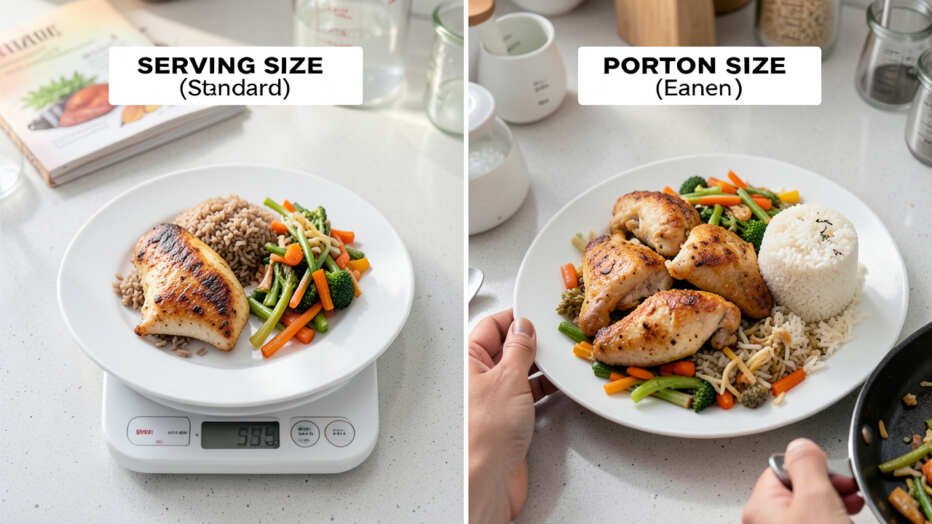
A serving size is a standardized reference amount used on nutrition labels to calculate calories and nutrients, while a portion size is the actual amount of food you choose to consume in one sitting. The critical difference is that a serving size is a fixed measurement for information, whereas your personal portion can be any amount you eat, often exceeding the listed serving. Understanding this distinction is essential for accurately managing dietary intake and making informed choices to support specific health and nutrition goals.
Serving size vs portion size is a critical concept for anyone trying to understand nutrition labels and manage their dietary intake effectively. Many people use these terms interchangeably, but they refer to two very different measurements. Knowing the distinction can directly impact your goals for weight management, muscle building, or simply eating a balanced diet.
This guide breaks down exactly what each term means, how they differ, and why that difference matters for your health. You will learn how to identify them on food labels and in real-life settings, empowering you to make informed choices at the grocery store and at the dinner table.
Simply put, a serving size is a standardized, measured amount of food defined by nutrition facts labels or dietary guidelines. A portion size is the actual amount of food you choose to eat at one time, which can be larger or smaller than a serving.
Key Takeaways
- A serving size is a reference amount, like a cup or ounce, used to calculate calories and nutrients on a nutrition label.
- A portion size is your personal helping—the amount you actually put on your plate and consume.
- Portion sizes have grown dramatically over decades, often leading to unintentional overeating.
- Understanding serving size vs portion size helps you accurately track nutrient intake and avoid common diet pitfalls.
- Tools like the plate method and hand guides can help you estimate healthy portions without strict measuring.
What Is a Serving Size?
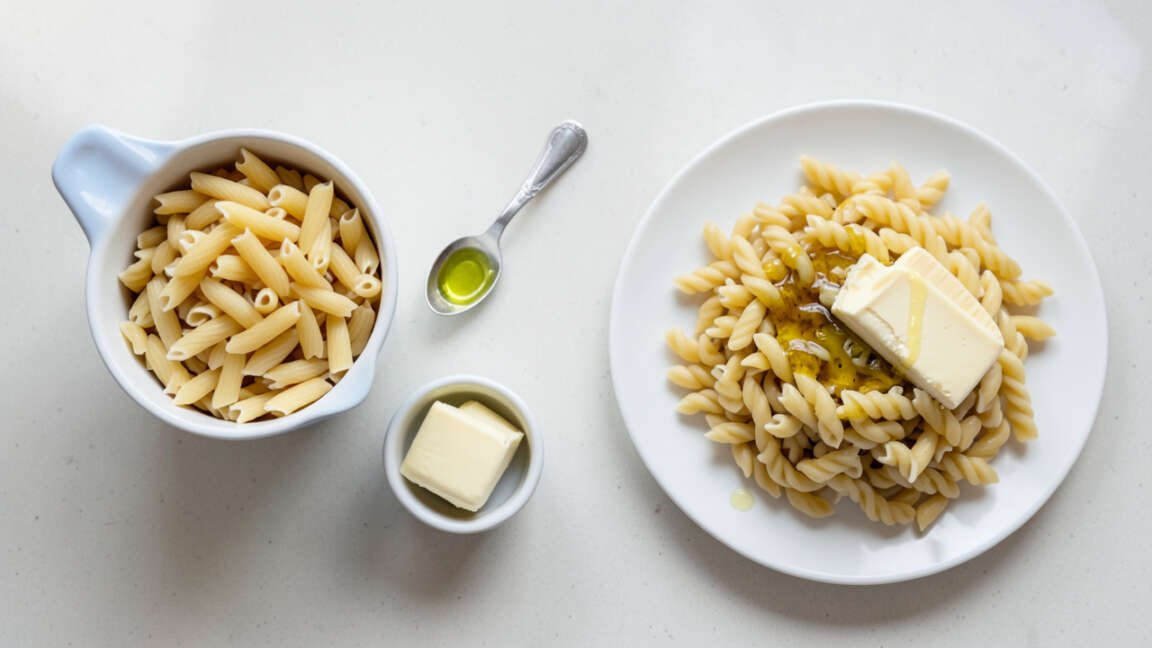
A serving size is a standardized measurement established by food manufacturers or health organizations. Its primary purpose is to provide a common baseline for the nutritional information listed on a label. When you see calories, fats, carbs, and proteins on a package, all those numbers apply to that single, defined serving.
These sizes are determined based on what people “typically” eat, though this average can sometimes feel unrealistic. The FDA and other regulatory bodies have strict guidelines for how manufacturers must declare serving sizes on packaged goods. This standardization allows you to compare the nutritional value of different products on an equal footing.
How Serving Sizes Are Determined
The process involves analyzing dietary data from large populations to see what constitutes a common consumption amount. For example, the serving size for a beverage might be based on the average amount someone drinks at one time, not the entire bottle. This is why a bottle of soda might list 2.5 servings, even if you drink it all in one sitting.
- Regulatory Standard: Set by agencies like the FDA to ensure consistency across all food labels.
- Based on Consumption Data: Reflects what a typical person eats, though “typical” is an average.
- Fixed Measurement: Stated in familiar units like cups, grams, or pieces (e.g., “1 cup,” “30g,” “2 cookies”).
- Reference Point Only: Does not tell you how much you should eat, just what the following nutritional data refers to.
| Food Item | Typical Serving Size | Common Package Size |
|---|---|---|
| Potato Chips | 28g (about 15 chips) | 170g (about 6 servings) |
| Ice Cream | 1/2 cup (66g) | 1.5 quart tub (about 12 servings) |
| Pasta (Dry) | 56g (2 oz) | 454g (1 lb, about 8 servings) |
This table shows how a single serving size often represents only a fraction of the entire product you bring home from the store. You must multiply the label’s nutrition numbers by how many servings you actually consume.
What Is a Portion Size?
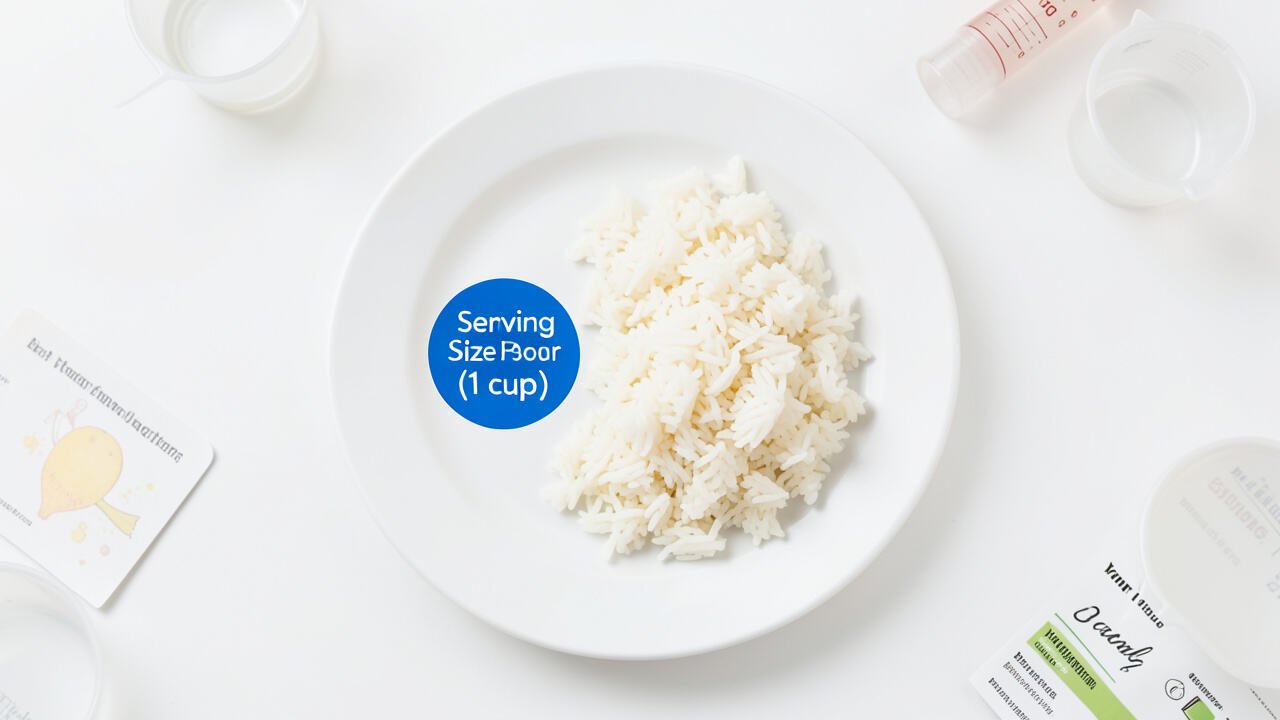
A portion size is the amount of food you decide to serve yourself and eat. It is entirely personal and variable. Your portion of pasta at dinner might be three times the standard serving size listed on the box.
This is where the real-world application of nutrition knowledge happens.
Portion sizes are influenced by many factors beyond hunger. The size of your plate, how food is served (family-style vs. plated), restaurant offerings, and even stress can affect how much you put on your plate.
Recognizing that your portion is a choice is the first step toward mindful eating.
Why Portion Sizes Have Grown
Over the last few decades, portion sizes in homes and especially in restaurants have expanded dramatically. This phenomenon, often called “portion distortion,” means we have become accustomed to seeing and expecting large amounts of food. A “standard” muffin today is often three times the size it was 30 years ago.
Research from the National Institutes of Health suggests that larger package and serving sizes directly lead to increased calorie consumption. When more food is available, people tend to eat more of it without necessarily feeling more satisfied.
Warning: Do not assume that the amount of food on your restaurant plate represents a single serving. A single entree can easily contain 2-4 servings of the main components.
How to Compare Serving Size vs Portion Size
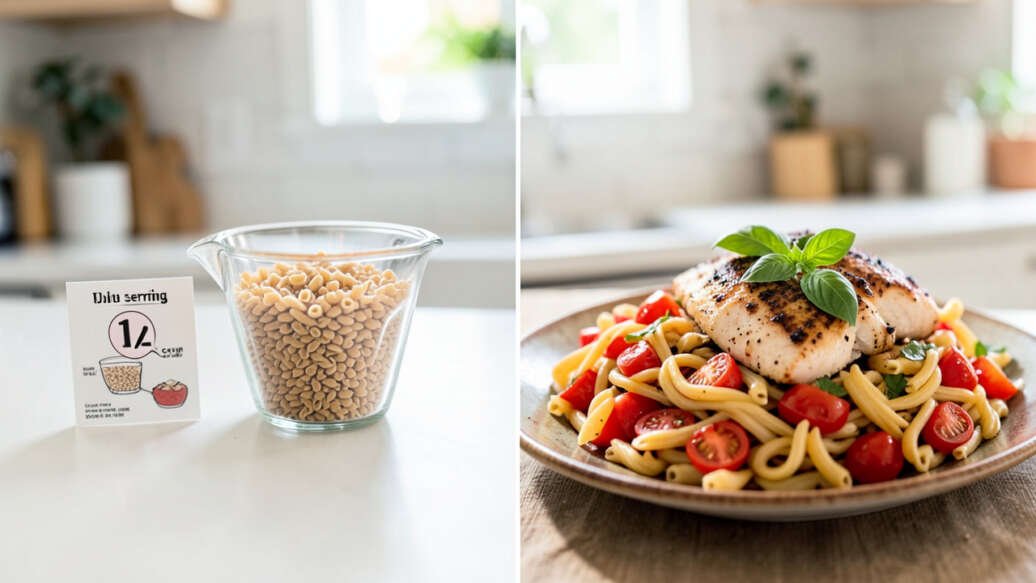
The core difference is one of definition versus reality. A serving size is a fixed, official measurement. A portion size is a fluid, personal decision.
One is about information, the other is about action.
Think of it this way: the serving size is the instruction, and the portion size is what you actually do. If a recipe serves four and you serve it to two people, each person gets a portion equal to two servings. Misunderstanding this relationship is a primary reason people struggle with calorie and nutrient tracking.
| Characteristic | Serving Size | Portion Size |
|---|---|---|
| Definition | A measured, reference amount of food. | The amount you choose to eat at one time. |
| Determined By | Regulators and food manufacturers. | You (the consumer). |
| Purpose | To standardize nutritional information on labels. | To satisfy personal hunger and preferences. |
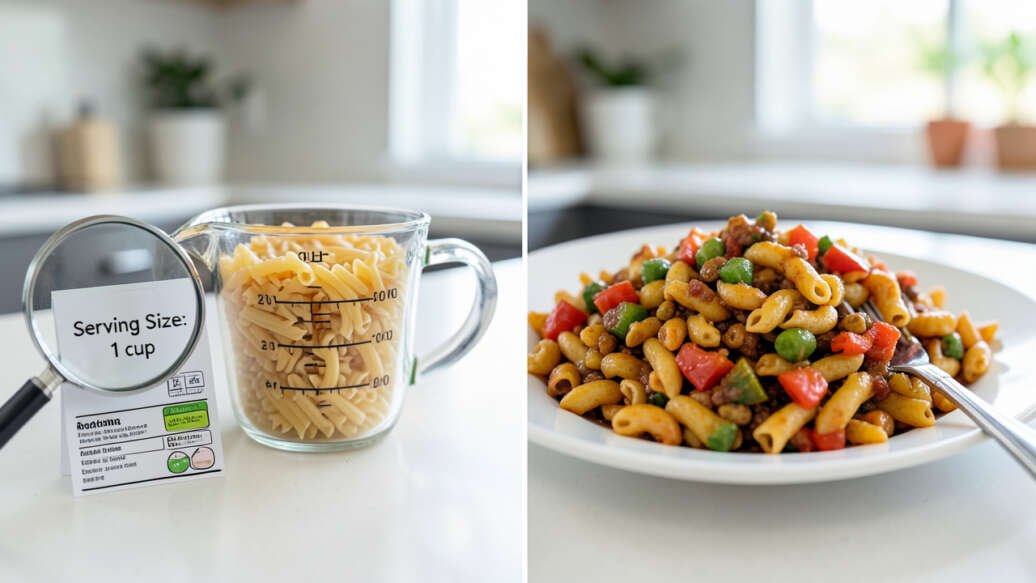
| Example | “1 cup” of cereal listed on the box. | The 3 cups of cereal you pour into your bowl. |
This side-by-side comparison makes the distinction clear. Your success in using nutrition labels depends entirely on matching the information (serving size) to your action (portion size).
Why the Distinction Matters for Your Health
Confusing these two terms can completely derail dietary goals. If you eat a portion that is double the serving size but only account for the calories of one serving on the label, you have just underreported your intake by 100%. Over a day, week, or month, these miscalculations add up significantly.
For weight management, this precision is non-negotiable. You must know how many servings are in your portion to track calories accurately. Similarly, if you are monitoring sodium, sugar, or fat intake for health reasons, portion awareness is your most powerful tool.
Impact on Dietary Goals
- Weight Loss: Consistently eating larger portions than serving sizes creates a hidden calorie surplus, making weight loss difficult or impossible.
- Weight Gain: Conversely, those trying to build muscle might underestimate their portions, not eating enough protein and calories to support growth.
- Blood Sugar Control: For diabetics, carbohydrate counting relies on knowing how many carbohydrate servings are in each meal portion.
- Sodium Reduction: A single serving of soup might have 30% of your daily sodium limit. If your portion is two servings, you’ve hit 60% in one bowl.
Tip: When cooking at home, prepare single-serving portions or divide large batches into containers immediately. This makes it easier to track and control what you eat later.
How to Estimate Healthy Portions Without Measuring
You don’t need to carry a food scale everywhere to practice portion control. Once you learn some simple visual cues and hand guides, you can make reasonable estimates on the fly. These methods provide a practical bridge between the abstract serving size on a label and the food on your plate.
The Hand Guide Method
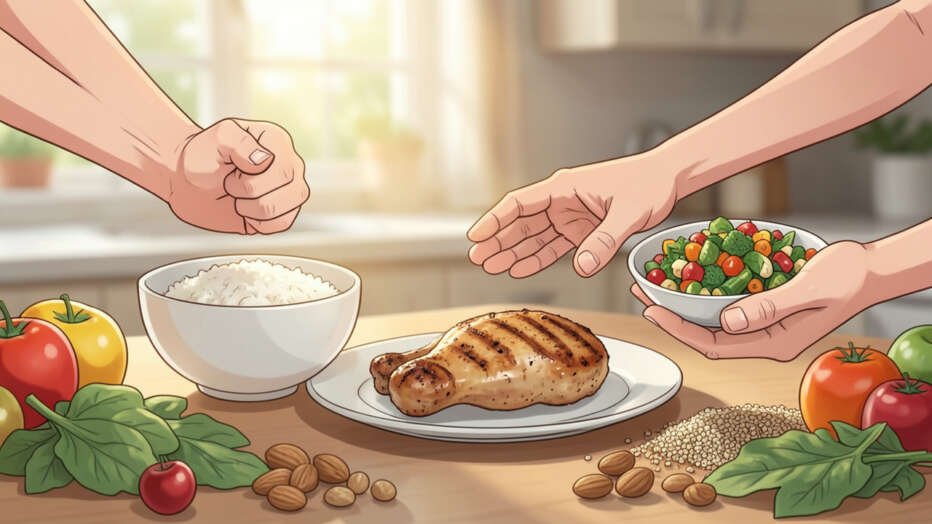
Your hand is a portable, personalized portion guide. The size of your hand correlates roughly with your body size, making it a useful starting point.
- Palm: A palm-sized portion (thickness and diameter) equals approximately 3-4 ounces of meat, fish, or poultry. This is one serving of protein.
- Clenched Fist: This represents about 1 cup, which is a good guide for carbohydrates like pasta, rice, or cereal, and also for vegetables.
- Cupped Hand: One cupped handful equals roughly 1/2 cup. This is a serving of nuts, snack foods, or chopped fruit.
- Thumb: Your thumb (from tip to base) represents about 1 tablespoon, a serving for fats like peanut butter, oil, or salad dressing.
The Plate Method
This is a powerful visual tool for creating balanced meals without counting anything. The USDA’s MyPlate model provides a simple blueprint.
- Half Your Plate: Fill this space with non-starchy vegetables like leafy greens, broccoli, peppers, and tomatoes.
- One Quarter of Your Plate: Dedicate this to a lean protein source such as chicken, fish, tofu, beans, or lentils.
- The Final Quarter: Reserve this for a carbohydrate source, preferably whole grains like brown rice, quinoa, or a small potato.
- A Thumb of Fat: Add a small amount of healthy fat, like avocado slices or a drizzle of olive oil, if needed.
These methods are excellent for building balanced, appropriately portioned meals quickly and intuitively, especially when eating out or at social gatherings where precise measuring isn’t possible.
Strategies for Managing Portions at Home and Restaurants
Mastering portion control requires conscious strategies. It starts with awareness and involves setting up your environment for success. Whether you’re in your kitchen or at a restaurant, specific tactics can keep your portions in check.
At Home: Set Yourself Up for Success
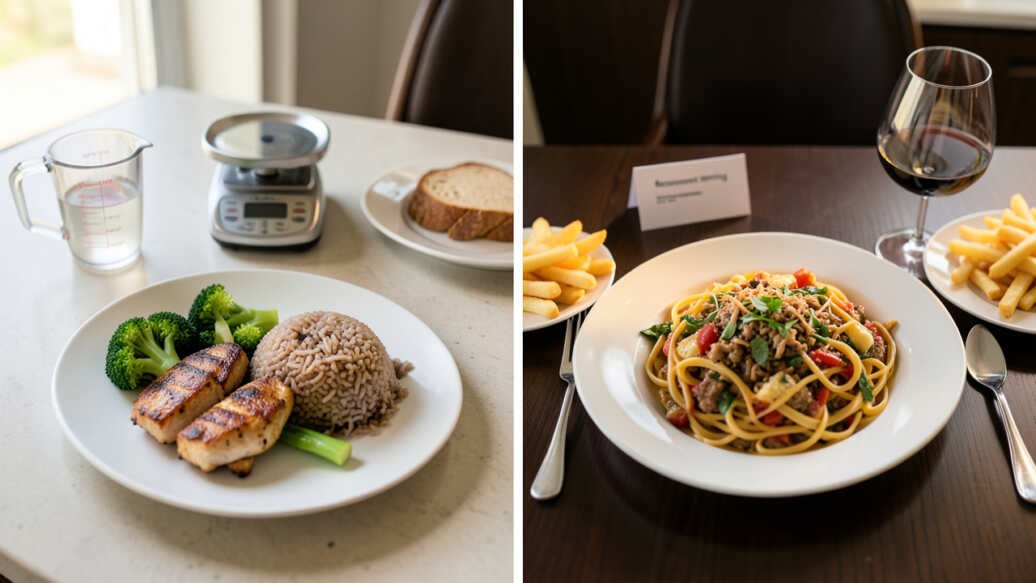
- Use Smaller Dishes: A psychological trick. Eating from a smaller plate makes a normal portion look more substantial, which can increase satisfaction.
- Serve from the Stove: Place serving bowls on the stovetop instead of on the dining table. This puts a physical barrier between you and second helpings.
- Pre-portion Snacks: Never eat directly from a large bag or container. Divide snacks into small bowls or bags immediately after buying them.
- Measure Oils and Dressings: These calorie-dense foods are the easiest to over-pour. Use measuring spoons or a spray bottle to control amounts.
- Read Labels Before You Eat: Take 30 seconds to check the serving size on a package before you start snacking to avoid mindless overconsumption.
At Restaurants: Navigate the Menu Smartly
- Consider an Appetizer as a Meal: Appetizers are often portioned as a single serving and can make a satisfying, reasonably portioned lunch or light dinner.
- Ask for a To-Go Box Upfront: Immediately box half your entrée before you start eating. This removes the temptation to clean your plate and provides a meal for later.
- Share an Entrée: Restaurant portions are notoriously large. Sharing with a dining partner is an easy way to halve your portion immediately.
- Order “A La Carte”: Instead of a combo meal, order items separately. This gives you complete control over the components and sizes on your plate.
- Specify Dressings and Sauces on the Side: This puts you in charge of how much added fat, sugar, and sodium goes onto your food.
Important: When a recipe makes multiple servings, the calories and nutrients listed are per serving, not for the entire pot. If you eat the whole pot, you must multiply all the values by the number of servings the recipe yields.
Frequently Asked Questions
Does a serving size mean how much I should eat?
No, a serving size is a reference amount used for nutritional labeling, not a prescriptive recommendation for individual intake. Your ideal daily intake depends on your age, gender, activity level, and health goals. Use the serving size to understand the label, then decide on your portion based on your needs.
How do I know if my portion is too big?
A simple rule of thumb is to compare your portion to your hand. A portion of protein should be about the size of your palm, carbohydrates about the size of your fist, and fats about the size of your thumb. If your portions are consistently several times larger than these guides, they may be excessive.
Can I ignore serving sizes if I’m eating healthy foods?
Even nutrient-dense foods have calories. Nuts, avocados, whole grains, and olive oil are very healthy but also calorie-dense. Overeating healthy foods can still lead to weight gain.
Being mindful of portions helps you enjoy their benefits without consuming excess calories.
Why do some products have “dual column” nutrition labels?
Some packages now show two columns: one for a single serving and one for the entire package. This was introduced by the FDA to address the issue of “unit-sized” packages, like a 20-ounce soda or a large bag of chips, that are often consumed in one sitting. It provides transparency about total consumption.
How can I track portions when eating out?
Use the visual hand guides and plate method as your primary tools. Remember that restaurant portions are often 2-3 times a standard serving. Ask for a box and portion out half immediately, or plan to share.
Focus on filling half your plate with vegetables to create a balanced meal with appropriate portions.
Final Thoughts
Understanding the difference between a serving size and a portion size transforms your relationship with food from guesswork to informed choice. The serving size on a label is your educational tool, while the portion on your plate is your personal application. Mastering this distinction gives you control over your calorie and nutrient intake, which is foundational to any health goal.
Use the visual guides, restaurant strategies, and awareness of portion distortion to align your daily actions with your long-term objectives.