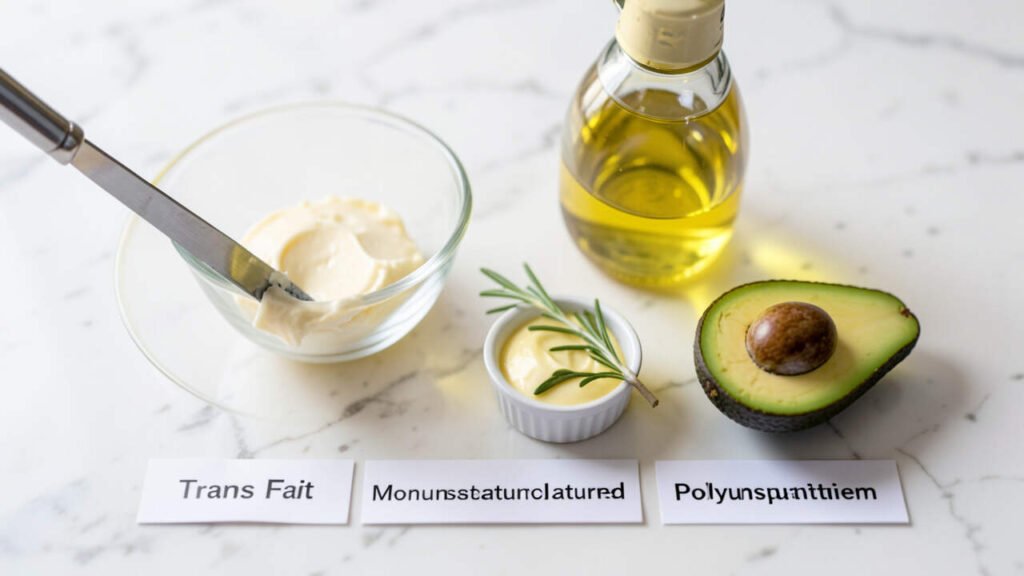
Trans fats are industrially produced fats created through the partial hydrogenation of vegetable oils, a process that makes them solid at room temperature and extends the shelf life of processed foods. They are uniquely harmful because they simultaneously raise LDL (bad) cholesterol and lower HDL (good) cholesterol, creating a potent risk factor for heart disease. To protect your health, it is critical to avoid artificial trans fats by checking labels for partially hydrogenated oils, the primary source in the food supply.
Trans fats are a type of dietary fat that has been widely studied for its significant impact on heart health. Understanding how they differ from other fats is crucial for making informed choices about what you eat. This guide will break down the science behind trans fats, compare them to healthier alternatives, and show you how to minimize them in your diet.
Simply put, trans fats are industrial fats created by adding hydrogen to liquid vegetable oils, a process called hydrogenation. They are particularly harmful because they raise bad LDL cholesterol while lowering good HDL cholesterol, significantly increasing the risk of heart disease. Natural trans fats exist in small amounts, but artificial trans fats from processed foods are the primary concern.
Key Takeaways
- Trans fats are industrially produced fats created through partial hydrogenation, making them solid at room temperature and extending shelf life.
- They are distinct from saturated and unsaturated fats in their chemical structure, which negatively impacts cholesterol levels and heart health.
- Artificial trans fats are the most dangerous dietary fats, linked to a 23% increase in heart attack risk for every 2% increase in calorie intake.
- While natural trans fats exist in some meat and dairy products, the vast majority in the diet come from processed foods like fried items, baked goods, and margarine.
- Reading nutrition labels and ingredient lists is the best way to avoid trans fats, even in products labeled “0g trans fat.”
What Are Trans Fats and How Are They Made?
Trans fats, or trans-fatty acids, are a specific form of unsaturated fat. Their name comes from the “trans” configuration of hydrogen atoms across the carbon double bond in their fatty acid chain. This structure is what makes them behave differently from other fats in your body.
There are two primary sources of trans fats in the food supply: industrial and natural. The industrial process, partial hydrogenation, is the main culprit. Food manufacturers add hydrogen to liquid vegetable oils (like soybean or cottonseed oil) under high heat and pressure.
This process makes the oils more solid, increases shelf life, and improves texture in processed foods.
- Industrial/Artificial Trans Fats: Created via partial hydrogenation. Found in fried foods, commercial baked goods, non-dairy creamers, and stick margarines. These are the primary health concern.
- Natural Trans Fats: Produced in the guts of some animals (like cows and sheep). Found in small amounts in meat, milk, and dairy products (e.g., vaccenic acid and CLA). The health impact of these is less clear and they are consumed in much lower quantities.
Tip: You can often identify sources of industrial trans fats by looking for the term “partially hydrogenated oil” in the ingredient list of a product.
How Do Trans Fats Differ From Saturated, Unsaturated, and Omega Fats?
To understand what makes trans fats unique, it helps to compare them to the other main categories of dietary fats. Each type has a different chemical structure, which directly affects how it behaves in food and in your body.
| Fat Type | Chemical Structure | Common Sources | Health Impact |
|---|---|---|---|
| Trans Fat | Hydrogen atoms on opposite sides of a double bond (“trans” configuration). | Fried fast foods, commercial pastries, margarine, packaged snacks. | Harmful: Raises LDL (“bad”) cholesterol, lowers HDL (“good”) cholesterol, promotes inflammation. |
| Saturated Fat | No double bonds; saturated with hydrogen atoms. | Fatty meats, butter, cheese, coconut oil, palm oil. | Mixed/Elevated Concern: Raises LDL cholesterol, but the impact is debated. Should be consumed in moderation. |
| Monounsaturated Fat | One double bond with hydrogen atoms on the same side (“cis” configuration). | Olive oil, avocados, almonds, peanuts. | Healthy: Can help lower LDL cholesterol and maintain HDL cholesterol levels. |
| Polyunsaturated Fat | Two or more double bonds in the “cis” configuration. | Walnuts, sunflower seeds, fatty fish (salmon), corn oil. | Healthy: Includes essential fats like omega-3 and omega-6. Supports cell health and reduces heart disease risk. |
| Cis Unsaturated Fat | Hydrogen atoms on the same side of the double bond. The standard form of unsaturated fats. | The naturally occurring form in most vegetable oils, nuts, and avocados before processing. | Healthy: The baseline form of the beneficial monounsaturated and polyunsaturated fats. |
The key difference lies in the shape. The “cis” bonds in unsaturated fats create a kink, keeping them liquid. The straight “trans” structure allows them to stack like saturated fats, making them solid or semi-solid.
This straight shape is what disrupts normal cholesterol transport in the body.
Why Are Trans Fats So Bad for Your Health?
The health risks associated with artificial trans fats are well-documented and severe. The World Health Organization (WHO) has called for their global elimination due to their impact on public health. Their effects go beyond just cholesterol numbers.
At the cellular level, trans fats promote systemic inflammation. Chronic inflammation is a root cause of many diseases, including atherosclerosis (hardening of the arteries). They also damage the lining of blood vessels, impair insulin sensitivity, and may contribute to memory loss.
- Cardiovascular Disease: A 2% increase in energy intake from trans fats is associated with a 23% increase in the incidence of coronary heart disease (American Journal of Clinical Nutrition).
- Cholesterol Disruption: They uniquely lower HDL (“good”) cholesterol while raising LDL (“bad”) cholesterol and triglycerides.
- Inflammation: Trans fats increase inflammatory markers like C-reactive protein (CRP), which is a key risk factor for heart attacks.
- Insulin Resistance: Consumption is linked to a higher risk of type 2 diabetes by interfering with insulin signaling.
- Other Risks: Associations have been made with increased risk of stroke, certain cancers, and metabolic syndrome.
Warning: There is no established safe level of artificial trans fat consumption. Health agencies recommend keeping intake as low as possible, ideally zero.
What Foods Commonly Contain Hidden Trans Fats?
Food labeling laws allow products with less than 0.5 grams of trans fat per serving to claim “0 grams” on the nutrition facts panel. This means you can still consume trans fats from multiple servings of these products, which add up quickly. The ingredient list is your most reliable tool.
Be vigilant about checking for “partially hydrogenated oil” in any processed food. This term is synonymous with the presence of industrial trans fats. Common culprits include foods that need to be shelf-stable, have a crumbly or flaky texture, or are fried.
- Fried Fast Foods: French fries, fried chicken, and doughnuts are major sources due to the use of partially hydrogenated frying oils.
- Commercial Baked Goods: Packaged cookies, cakes, pie crusts, and biscuits often use these fats for texture and longevity.
- Stick Margarine and Shortening: Although many brands have reformulated, some cheaper stick products still contain trans fats.
- Non-Dairy Coffee Creamers: Many powdered and liquid creamers use partially hydrogenated oils to prevent separation.
- Packaged Snacks: Microwave popcorn, crackers, frozen pizzas, and refrigerated dough products can be significant sources.
| Food Category | Example Items | What to Look For on Labels |
|---|---|---|
| Baked Goods | Pie crusts, biscuits, cakes | “Shortening,” “partially hydrogenated vegetable oil” |
| Fried Foods | Fried chicken, tacos, doughnuts | “Hydrogenated oil” in ingredient list for frying |
| Dairy Alternatives | Coffee creamers, non-dairy whipped toppings | “Partially hydrogenated soybean oil” |
| Snack Foods | Microwave popcorn, packaged pastries | Check both ingredient list and “0g trans fat” claim |
According to the FDA, removing artificial trans fats from the U.S. food supply could prevent tens of thousands of heart attacks annually. This underscores why label scrutiny is so important for your long-term health.
How Can You Effectively Avoid Trans Fats in Your Diet?
Avoiding trans fats requires a combination of label reading and choosing whole, unprocessed foods. The strategy is simple: if a product contains “partially hydrogenated oil,” leave it on the shelf. Making this a habit is the single most effective step.
Cooking at home with whole ingredients gives you complete control over the fats you consume. Replace trans fats and saturated fats with healthier unsaturated options. Use olive oil for dressings, avocado oil for high-heat cooking, and eat fatty fish like salmon for omega-3s.
- Master the Label: Always check the ingredient list first for “partially hydrogenated oil,” regardless of the front-label “0g trans fat” claim.
- Choose Whole Foods: Build meals around fresh vegetables, fruits, lean proteins, whole grains, nuts, and seeds. These naturally contain no trans fats.
- Swap Your Spread: Use soft tub margarines made with olive or canola oil instead of stick margarine. Better yet, use mashed avocado or hummus.
- Be Cautious When Eating Out: Many restaurants, especially fast-food chains, have eliminated trans fats. But it’s wise to assume fried foods from smaller establishments may still be cooked in hydrogenated oils.
- Opt for Healthy Fats: Actively incorporate foods rich in monounsaturated and polyunsaturated fats, such as nuts, seeds, avocados, and fatty fish, into your daily diet.
Important: The U.S. FDA has determined that partially hydrogenated oils are no longer “Generally Recognized As Safe” (GRAS). While a compliance date exists for manufacturers, it may take time for existing stocks to clear the market.
What Is the Current Regulatory Status of Trans Fats?
Global recognition of the dangers of artificial trans fats has led to decisive regulatory action. The most impactful move has been banning or restricting their use in the food supply. The United States and the European Union have led these efforts.
In the U.S., the FDA’s 2018 ban on partially hydrogenated oils in human food was a landmark decision. This required manufacturers to reformulate products. Many countries have followed suit, including Canada, Chile, and several EU nations.
The WHO’s REPLACE initiative aims for global elimination by 2023, though full compliance is ongoing.
Regulations focus on industrial trans fats. Natural trans fats in meat and dairy are considered part of the normal diet and are not targeted by these bans. The focus remains squarely on the preventable, artificial source that has caused the most harm.
- FDA Ban (USA): Partially hydrogenated oils are prohibited from the food supply, though enforcement allows for a gradual phase-out.
- EU Regulation: Limits industrially produced trans fats to 2% of total fat in all foods.
- WHO REPLACE Framework: A guide for governments to eliminate industrially produced trans fatty acids from national food supplies.
- Labeling Requirements: In the U.S. and many other countries, trans fat content must be declared on nutrition facts panels.
Why Are Natural Trans Fats Considered Different?
Not all trans fats are created equal. The trans fats naturally produced in the digestive systems of ruminant animals (like cows, sheep, and goats) have a different biological effect and are consumed in far smaller quantities. This is a critical distinction in nutrition science.
The most studied natural trans fat is conjugated linoleic acid (CLA), found primarily in meat and dairy from grass-fed animals. Some research suggests CLA may have neutral or even slight beneficial effects on body composition and inflammation when consumed as part of a balanced diet. However, studies are mixed and effects are subtle.
The key difference is dose and context. Natural trans fats are consumed in milligrams as part of a complex food matrix (like milk), not in the grams found in processed foods. The overwhelming consensus is that the health risk from diet comes almost exclusively from industrial trans fats.
What Is the Future Outlook for Trans Fats in Food?
The trajectory is clear: industrial trans fats are on a path to extinction in the global food supply. Regulatory pressure from agencies like the FDA and WHO, combined with consumer awareness, has driven major food manufacturers to reformulate products with safer fats.
Innovation in food technology has provided viable alternatives. Firms now use interesterified fats, fully hydrogenated oils blended with liquid oils, or tropical oils like palm and coconut oil to achieve similar textures. While some alternatives (like those high in saturated fats) are not perfect, they are considered a safer bet than trans fats.
Continued education will be vital. As the world becomes more processed, understanding how to read labels and choose whole foods remains the consumer’s best defense. The fight against trans fats is a successful case study in how science, policy, and public advocacy can lead to meaningful public health improvements.
Frequently Asked Questions
How much trans fat is safe to eat daily?
There is no safe level for artificial trans fat consumption. Health authorities recommend keeping intake as low as possible, ideally less than 1% of your total daily calories. The best practice is to aim for zero grams from industrial sources by avoiding processed foods that contain partially hydrogenated oils.
Are all margarines high in trans fats?
No, this is an outdated concern. Most major brands have reformulated their products to eliminate trans fats. Soft tub margarines are generally trans-fat-free.
Always check the ingredient list for “partially hydrogenated oil” to be certain, and consider healthier alternatives like olive oil or avocado spread.
Do natural trans fats from meat and dairy cause heart disease?
The evidence suggests that natural trans fats, consumed in the typical amounts found in meat and dairy, are not harmful and may even have neutral or minor beneficial effects. The significant health risks are linked exclusively to the artificial trans fats created industrially for processed foods.
Can restaurants still use trans fats?
While most large chains have eliminated them, some smaller or independent restaurants may still use partially hydrogenated frying oils due to cost or availability. Fried foods from such establishments should be consumed with caution. You can always ask about the type of oil used for frying.
How can I be sure a “0g trans fat” label is accurate?
A “0g” label means less than 0.5 grams per serving. If you eat multiple servings, the trans fats can add up. The only foolproof method is to read the ingredient list.
If you see “partially hydrogenated oil” listed anywhere, the product contains trans fats, regardless of the front-of-package claim.
Final Thoughts
Understanding trans fats empowers you to make significantly healthier food choices. The clear distinction between harmful industrial trans fats and the less concerning natural versions simplifies your decision-making. By prioritizing whole foods and mastering the skill of reading ingredient labels, you can effectively eliminate this major dietary risk factor.
This knowledge places you in direct control of protecting your heart health.