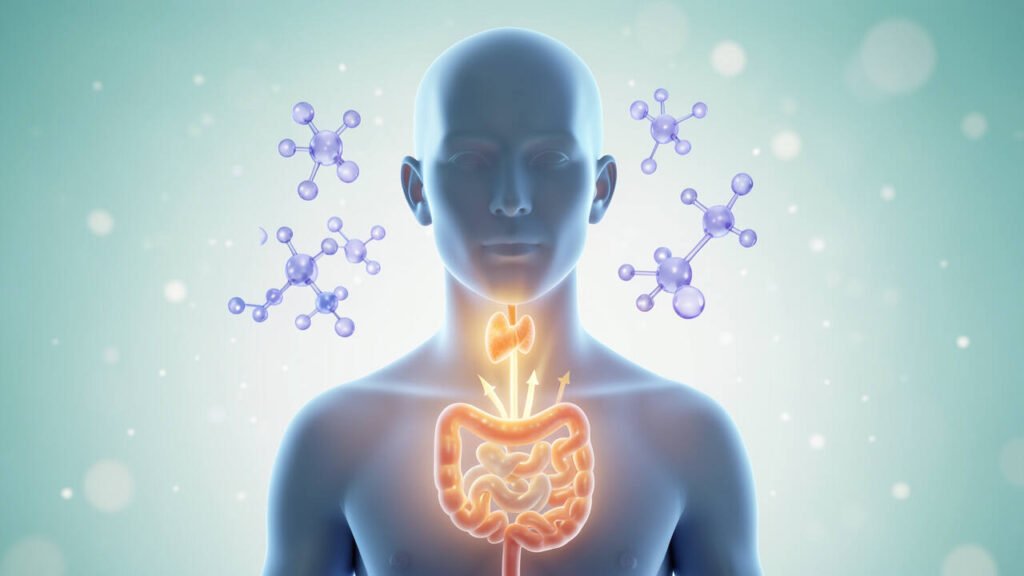
Iodine is an essential trace mineral that the body requires to produce thyroid hormones, which regulate metabolism, growth, and development. The thyroid gland uses iodine to synthesize hormones T3 and T4 that control fundamental cellular processes, including brain development and energy levels. Without sufficient dietary iodine, individuals risk deficiency symptoms such as fatigue, weight gain, and cognitive impairment, while severe shortages can lead to goiter or developmental disorders.
What does iodine do in your body, and why is it so critical for your overall health? Iodine is a trace mineral that your body cannot produce on its own, yet it plays a massive role in keeping your thyroid gland functioning properly and your metabolism running smoothly.
Without enough iodine, your body struggles to produce essential hormones that regulate growth, brain development, and energy levels. This guide covers exactly what iodine does, how it works in your system, and why every cell in your body depends on it to some degree.
Simply put, iodine is a trace mineral that your thyroid gland uses to produce hormones T3 and T4, which control metabolism, brain function, growth, and development. Without adequate iodine, your body cannot regulate these critical processes, leading to fatigue, weight gain, cognitive issues, and in severe cases, goiter or developmental disorders in children.
Key Takeaways
- Iodine is an essential trace mineral that the body cannot produce on its own and must come from food or supplements.
- The primary role of iodine is to support the thyroid gland in producing hormones T3 and T4 that regulate metabolism.
- Adequate iodine intake is crucial for brain development, especially during pregnancy and early childhood.
- Iodine deficiency can lead to goiter, hypothyroidism, cognitive impairment, and developmental delays.
- The recommended daily intake for adults is 150 mcg, with pregnant and breastfeeding women needing significantly more.
What Is Iodine and Why Is It Essential?
Iodine is a chemical element and an essential micronutrient that your body needs in small amounts to function correctly. It belongs to a group of minerals called trace minerals, meaning you only need microgram quantities of it daily. But don’t let the small dose fool you – the impact of iodine on your health is enormous.
According to the World Health Organization (WHO), iodine deficiency disorders affect approximately 2 billion people worldwide, making it one of the most common nutritional deficiencies on the planet. Your body stores most of its iodine in the thyroid gland, a butterfly-shaped organ at the base of your neck.
The reason iodine is classified as “essential” is simple: your body cannot make it. Unlike some vitamins and minerals that your body can synthesize or recycle, iodine must come entirely from your diet. When you consume foods containing iodine, your digestive system absorbs it and transports it directly to your thyroid gland.
| Where Iodine Is Stored | Percentage of Total Body Iodine |
|---|---|
| Thyroid Gland | 70-80% |
| Muscles | ~10% |
| Blood | ~5% |
| Bones and Other Tissues | ~5-10% |
Here is why iodine matters so much:
- It is the raw material your thyroid needs to build hormones that control how every cell uses energy.
- It supports normal growth and physical development in children and adolescents.
- It plays a direct role in neurological development of the fetus during pregnancy.
- It helps regulate body temperature, heart rate, and digestive function.
- It supports healthy immune system responses against infections.
Without iodine, the thyroid gland simply cannot do its job. And when the thyroid fails, virtually every system in your body is affected.
How Does Iodine Work in the Thyroid Gland?
The thyroid gland is the primary consumer of iodine in your body. When iodine reaches the thyroid, specialized cells called follicular cells absorb it and convert it into thyroid hormones. The two main hormones produced are thyroxine (T4) and triiodothyronine (T3).
The “3” and “4” in these names actually refer to the number of iodine atoms attached to each molecule. T4 contains four iodine atoms, while T3 contains three. T4 is produced in larger quantities but is relatively inactive, while T3 is the more potent, biologically active form that your cells actually use.
Here is how the process works step by step:
- Iodide absorption: You consume iodine through food or supplements. Your gut absorbs iodide ions and sends them into the bloodstream.
- Thyroid uptake: The thyroid gland actively pulls iodide from the blood through a sodium-iodide symporter (NIS) protein.
- Oxidation: An enzyme called thyroid peroxidase (TPO) oxidizes iodide into a reactive form of iodine.
- Hormone synthesis: The reactive iodine attaches to tyrosine amino acids in a protein called thyroglobulin, forming T3 and T4.
- Release: The thyroid releases T4 and T3 into the bloodstream, where they travel to every cell in your body.
- Conversion: Most cells convert T4 into the more active T3 form using enzymes called deiodinases.
The pituitary gland at the base of your brain acts as the control center for this entire process. It monitors hormone levels and releases thyroid-stimulating hormone (TSH) to tell the thyroid when to produce more or less.
Important: When iodine intake is low, the thyroid cannot produce enough T3 and T4. The pituitary gland responds by pumping out more TSH, which causes the thyroid to grow larger – this is what creates a visible goiter in the neck.
This feedback loop is elegant but fragile. Without enough raw iodine, the entire system breaks down. The thyroid becomes overstimulated and enlarged, yet still cannot produce adequate hormones.
This leads to the hallmark symptoms of iodine deficiency: fatigue, weight gain, cold sensitivity, and mental fog.
What Does Iodine Do for Brain Development?
One of the most critical roles of iodine is supporting brain development, particularly during pregnancy and the first few years of life. The developing brain is extremely sensitive to iodine availability, and even mild deficiency during this window can cause lasting damage.
According to the Centers for Disease Control and Prevention (CDC), severe iodine deficiency during pregnancy can reduce a child’s IQ by 8 to 13 points on average. This makes iodine deficiency the world’s leading preventable cause of intellectual disability. The effects are irreversible once the critical developmental windows close.
During the first trimester of pregnancy, the fetus depends entirely on the mother’s thyroid hormones for neurological development. The baby’s own thyroid does not begin functioning until around week 12 of gestation. This means the mother must have adequate iodine stores for both herself and her developing child.
Here are the key ways iodine impacts brain function:
- Neuron formation: Iodine-dependent thyroid hormones guide the creation and migration of brain cells during fetal development.
- Myelination: These hormones help form the protective myelin sheath around nerve fibers, which speeds up signal transmission in the brain.
- Synaptogenesis: Iodine supports the formation of connections between neurons, which is essential for learning and memory.
- Cerebellar development: The cerebellum, which controls coordination and balance, is particularly dependent on iodine during early development.
- Cognitive performance in adults: Even in adults, low iodine levels are associated with reduced concentration, slower reaction times, and impaired memory.
Warning: Pregnant and breastfeeding women need 220-290 mcg of iodine daily – nearly double the standard adult dose. Always check with your healthcare provider about supplementation during pregnancy.
Research published in the journal Thyroid found that children born to mothers with low iodine status scored lower on tests of verbal IQ, reading accuracy, and comprehension at age 8. The study followed over 1,000 mother-child pairs across multiple regions with varying iodine availability.
For adults, iodine continues to support cognitive function by maintaining healthy thyroid hormone levels. Hypothyroidism caused by iodine deficiency is linked to depression, brain fog, and difficulty concentrating. Many people who feel mentally sluggish do not realize that a simple iodine deficiency may be the underlying cause.
How Much Iodine Does the Body Need Daily?
The amount of iodine your body needs depends on your age, gender, and life stage. The National Institutes of Health (NIH) and the WHO have established recommended daily allowances that ensure optimal thyroid function without exceeding safe limits.
| Life Stage | Recommended Daily Iodine (mcg) |
|---|---|
| Infants 0-6 months | 110 mcg |
| Infants 7-12 months | 130 mcg |
| Children 1-8 years | 90 mcg |
| Children 9-13 years | 120 mcg |
| Teens and Adults 14+ | 150 mcg |
| Pregnant Women | 220 mcg |
| Breastfeeding Women | 290 mcg |
The tolerable upper intake level (UL) for iodine in adults is 1,100 mcg per day. Consuming more than this over extended periods can cause thyroid dysfunction, including both hypo- and hyperthyroidism.
It is worth noting that most people in developed countries who use iodized salt get enough iodine to avoid deficiency. However, surveys show that many people are still falling below optimal levels, particularly those who limit salt intake for blood pressure management or who follow restrictive diets.
Here are some practical guidelines for meeting your daily iodine needs:
- Use iodized table salt regularly – about half a teaspoon provides roughly 150 mcg of iodine.
- Eat seafood at least two to three times per week, as fish and shellfish are among the richest natural sources.
- Include dairy products, eggs, and fortified foods in your regular diet.
- If you follow a vegan or plant-based diet, consider an iodine supplement or use seaweed in small amounts.
- Pregnant and breastfeeding women should speak with their doctor about a prenatal vitamin containing adequate iodine.
Tip: Sea salt and Himalayan pink salt are often marketed as healthier alternatives, but most do not contain iodine unless explicitly labeled. If you use these regularly, you may need another reliable iodine source.
What Happens When You Don’t Get Enough Iodine?
Iodine deficiency is a global health concern that the WHO has been tracking for decades. When your body does not get enough iodine, the thyroid cannot produce sufficient hormones, and the consequences range from mild to severe depending on how long and how badly you are deficient.
The most visible sign of chronic iodine deficiency is goiter – a visible swelling of the thyroid gland in the front of the neck. The thyroid enlarges as it tries to capture more iodine from the blood, but the enlargement itself does not fix the problem. Goiter affects an estimated 200 million people worldwide, according to the WHO.
Beyond goiter, iodine deficiency causes a cascade of health problems:
- Hypothyroidism: Low iodine leads to low thyroid hormone production, causing fatigue, weight gain, dry skin, constipation, and depression.
- Cognitive impairment: Both children and adults may experience difficulty concentrating, poor memory, and reduced mental sharpness.
- Developmental delays in children: Severe iodine deficiency in utero and early childhood can cause stunted physical growth and permanent intellectual disability.
- Reproductive issues: Low iodine can interfere with fertility in both men and women and increases the risk of miscarriage and stillbirth.
- Increased pregnancy complications: Preeclampsia, premature delivery, and low birth weight are all more common in iodine-deficient mothers.
- Cold intolerance: Because thyroid hormones regulate body temperature, deficiency often makes people unusually sensitive to cold.
In severe cases, infants born to iodine-deficient mothers may develop cretinism, a condition characterized by profound intellectual disability, short stature, and deaf-mutism. While cretinism is rare in developed countries, it remains a serious problem in regions where salt iodization programs are not implemented.
The CDC reports that approximately 12% of the U.S. population is iodine deficient. While most cases are mild, the numbers highlight that even in wealthy nations, iodine intake is not guaranteed to be adequate, especially among certain demographic groups.
Populations at highest risk for iodine deficiency include:
- Pregnant and breastfeeding women who need significantly more iodine than average.
- Vegans and vegetarians who avoid dairy, fish, and eggs – major iodine sources.
- People who live in regions with iodine-poor soil, such as mountainous areas and inland regions far from the ocean.
- Individuals who use non-iodized salt or limit salt intake for medical reasons.
- People who follow low-sodium diets without supplementing iodine from other sources.
What Are the Best Natural and Dietary Sources of Iodine?
The good news is that getting enough iodine does not require complicated meal planning or expensive supplements for most people. Many common foods contain meaningful amounts of iodine, and iodized salt remains one of the most effective public health tools in history.
Seaweed and sea vegetables are the single most concentrated natural sources of iodine. A single sheet of nori, commonly used in sushi, can provide up to 43 mcg. Kelp and kombu seaweed contain even higher amounts – sometimes exceeding the safe upper limit in a single serving.
Here are the top iodine-rich foods ranked by approximate iodine content:
- Kelp seaweed: up to 2,984 mcg per gram (use sparingly – can easily exceed safe limits)
- Nori seaweed: 16-43 mcg per sheet
- Cod fish: 99 mcg per 3-ounce serving
- Iodized salt: 71 mcg per half teaspoon
- Shrimp: 35 mcg per 3-ounce serving
- Tuna (canned): 17 mcg per 3-ounce serving
- Dairy milk: 56 mcg per cup
- Eggs: 24-29 mcg per large egg
- Lima beans: 16 mcg per half cup
- Prunes: 13 mcg per 5 prunes
It is interesting to note that the iodine content of food varies greatly depending on where it was grown or raised. Areas with iodine-rich soil produce crops with higher iodine levels, while inland agricultural regions may produce food with very little iodine. This is one reason why iodized salt was introduced in the first place – it levels the playing field.
Here are some practical tips for increasing your iodine intake through food:
- Season your cooking with iodized table salt instead of sea salt or specialty salts.
- Add a small piece of kombu to soups and broths for an easy iodine boost.
- Eat fish or shellfish a few times per week as a main protein source.
- Choose yogurt or milk as a snack or beverage option regularly.
- Keep hard-boiled eggs on hand for a quick, iodine-rich snack.
Important: Certain foods contain goitrogens – compounds that can interfere with iodine absorption. Cruciferous vegetables like broccoli, cauliflower, and cabbage, as well as soy products, may slightly reduce thyroid function when consumed in very large quantities without adequate iodine. Cooking these foods typically reduces their goitrogenic effect.
Can You Take Too Much Iodine?
Yes, you absolutely can. While iodine is essential for health, too much of it is just as problematic as too little. The thyroid gland is sensitive to iodine overload, and consuming amounts beyond what it needs can trigger a paradoxical response.
When you suddenly consume a large amount of iodine – particularly from supplements or kelp-based products – the thyroid may actually reduce its hormone output. This is known as the Wolff-Chaikoff effect, a protective mechanism that temporarily shuts down hormone synthesis to prevent iodine toxicity.
In most healthy individuals, the thyroid adapts and resumes normal function after a few days. However, in people with pre-existing thyroid conditions like Hashimoto’s disease or Graves’ disease, this temporary shutdown can become permanent, worsening their condition.
The symptoms of excessive iodine intake mirror those of iodine deficiency in many ways:
- Goiter (swelling of the thyroid gland)
- Hypothyroidism or hyperthyroidism
- Nausea and stomach discomfort
- Metallic taste in the mouth
- Excessive salivation
- Skin rashes or acne-like breakouts
- Burnishing or darkening of the skin in some cases
The tolerable upper intake level (UL) for adults is set at 1,100 mcg per day. This is well above the recommended 150 mcg, which means there is a wide margin of safety for most people. However, some high-dose iodine supplements and kelp capsules can easily push you past this limit.
Warning: Never start taking high-dose iodine supplements without consulting your doctor, especially if you have a thyroid condition. The interaction between iodine and medications like thyroid hormone replacements or antithyroid drugs can be dangerous.
Populations that may accidentally consume too much iodine include people who eat large quantities of seaweed regularly, those in Japan where traditional diets include daily consumption of kelp-based products, and individuals who take multiple supplements containing iodine without realizing the combined dose.
How Do You Know If You Are Iodine Deficient?
Iodine deficiency is difficult to self-diagnose because its symptoms overlap with many other health conditions. Fatigue, weight gain, and brain fog are commonly attributed to stress, aging, or other lifestyle factors, which means iodine deficiency often goes undetected for months or even years.
The most reliable way to determine your iodine status is through a medical evaluation. Your doctor can order several types of tests to measure iodine levels in your body accurately.
The main tests used to assess iodine status include:
- Urinary iodine concentration (UIC): The gold standard for measuring iodine status. A spot urine sample measures how much iodine your kidneys are excreting, which reflects recent intake. Levels below 100 mcg/L indicate deficiency.
- Thyroid function panel: Blood tests measuring TSH, free T4, and free T3 can reveal whether your thyroid is struggling due to inadequate iodine.
- Thyroid antibody tests: Elevated antibodies may indicate autoimmune thyroid conditions that can be triggered or worsened by iodine imbalance.
- Thyroid ultrasound: If a goiter is suspected, imaging can confirm thyroid enlargement and identify nodules.
A basic blood test is usually the starting point. If your TSH is elevated and your free T4 is low, your doctor may suspect hypothyroidism caused by iodine deficiency. From there, urinary iodine testing can confirm whether insufficient iodine is the root cause.
You should consider getting tested if you experience any of the following warning signs:
- Persistent fatigue that does not improve with adequate sleep.
- Unexplained weight gain despite no changes in diet or exercise.
- Feeling cold when others are comfortable.
- Brain fog, difficulty concentrating, or memory problems.
- Dry skin, brittle nails, or hair thinning.
- Constipation without an obvious dietary cause.
- A visible swelling in the front of your neck.
It is important to note that iodine deficiency is just one potential cause of thyroid problems. Autoimmune conditions like Hashimoto’s thyroiditis and Graves’ disease can also cause hypothyroidism and hyperthyroidism, respectively. A comprehensive thyroid workup will help your doctor distinguish between these conditions and determine the best course of treatment.
Frequently Asked Questions
What is the main function of iodine in the body?
The main function of iodine is to support the thyroid gland in producing hormones T3 and T4, which regulate metabolism, body temperature, heart rate, growth, and brain function. Without iodine, the thyroid cannot produce these hormones, leading to a condition called hypothyroidism.
What foods are highest in iodine?
Seaweed (especially kelp and nori), cod fish, shrimp, dairy milk, eggs, and iodized salt are the richest dietary sources of iodine. A half teaspoon of iodized salt alone provides roughly 150 mcg, meeting the entire daily adult requirement in one serving.
Can iodine deficiency cause weight gain?
Yes. Iodine deficiency leads to hypothyroidism, which slows your metabolism. When your metabolic rate drops, your body burns fewer calories at rest, making weight gain more likely.
Many people with unexplained weight gain discover that low thyroid function from insufficient iodine is a contributing factor.
How much iodine should a pregnant woman take daily?
Pregnant women need at least 220 mcg of iodine per day, and breastfeeding women need 290 mcg. Most prenatal vitamins contain this amount, but it is important to check the label and confirm with your healthcare provider that your supplement provides adequate iodine.
Is it possible to overdose on iodine from food?
It is extremely unlikely to overdose on iodine from food alone in a normal diet. However, consuming large amounts of kelp seaweed or taking high-dose iodine supplements can exceed the safe upper limit of 1,100 mcg per day and potentially cause thyroid problems, especially in those with existing thyroid conditions.
Final Thoughts
Iodine is a small mineral with a massive impact on your health. From producing the thyroid hormones that control your metabolism to supporting brain development during pregnancy, iodine quietly powers some of your body’s most essential processes.
Getting enough iodine is straightforward for most people – use iodized salt, eat seafood regularly, and include dairy or eggs in your diet. If you fall into a higher-risk group, a simple blood test can confirm your levels and guide you toward the right approach. Do not overlook this small but mighty mineral.