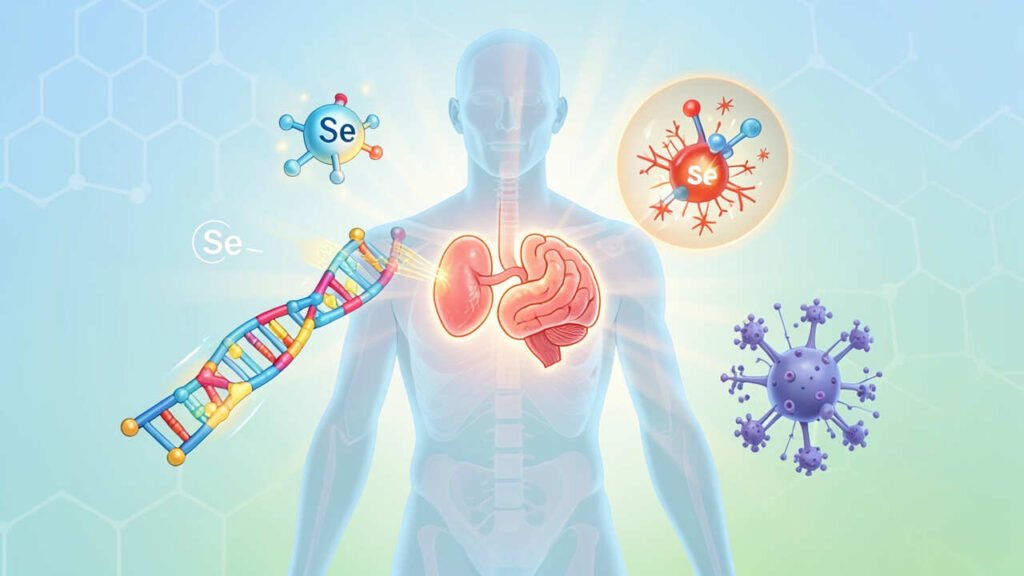
Selenium is an essential trace mineral that functions primarily as a critical component for antioxidant enzymes and proteins in the human body. Its key functions include defending cells from oxidative damage, supporting proper thyroid hormone production, and maintaining a healthy immune system. Because the body cannot produce selenium, obtaining adequate amounts through diet or supplementation is vital for these core biological processes.
Selenium plays a crucial role in keeping your body’s defense systems strong and your cells protected from damage. This essential trace mineral doesn’t get the same spotlight as vitamin C or calcium, but it’s a powerhouse for several vital biological processes. If you’ve ever wondered why selenium is included in multivitamins or how it contributes to overall wellness, you’re in the right place. This guide breaks down exactly what selenium does in the human body, from protecting your thyroid to supporting a robust immune response.
Simply put, selenium is a mineral that your body uses primarily as a building block for antioxidant enzymes and proteins. These compounds defend cells from harmful free radicals, help your thyroid gland produce hormones correctly, and support a healthy immune system. You only need small amounts daily, but its impact on cellular health is immense.
Key Takeaways
- Selenium is an essential trace mineral, meaning your body cannot produce it and must obtain it from food or supplements.
- Its primary role is as a component of selenoproteins, which are critical for antioxidant defense and thyroid hormone metabolism.
- The thyroid gland contains a higher concentration of selenium than any other organ in the body, highlighting its importance for hormonal health.
- Adequate selenium intake supports immune function, DNA synthesis, and may help reduce the risk of certain chronic diseases.
- Both deficiency and excess selenium can be harmful, so maintaining the right balance through diet is key.
What Is Selenium and Why Is It Essential?
Selenium (Se) is a naturally occurring, non-metal element found in soil, water, and certain foods. It enters the food chain as plants absorb it from the soil, and animals consume these plants. For humans, it is classified as an essential trace mineral, which means we require it for normal physiological function but only in very small quantities—measured in micrograms.
The body cannot synthesize selenium, so it must come from your diet. Once ingested, it is incorporated into 25 known human proteins called selenoproteins. These specialized proteins are the primary executors of selenium’s functions in the body.
Without adequate selenium, these proteins cannot be properly made, leading to disrupted biological processes.
The concept of selenium’s importance is tied to its role as a nutrient with a narrow therapeutic window. This means there is a specific range of intake that is beneficial. Too little leads to deficiency disorders, while too much can cause toxicity.
This balance underscores why understanding its specific functions is so important for health management.
Selenium vs. Other Essential Minerals
While minerals like iron, calcium, and potassium often get more attention, selenium serves unique functions that they cannot replicate. Its most distinctive role is in forming the active site of certain antioxidant enzymes. The following table compares some key minerals and their primary roles to highlight selenium’s niche.
| Mineral | Primary Function(s) | Key Difference from Selenium |
|---|---|---|
| Selenium | Antioxidant defense, thyroid hormone metabolism, immune support | Found directly in the structure of critical enzymes (selenoproteins). |
| Zinc | Immune function, wound healing, DNA synthesis | Acts as a cofactor for many enzymes but is not part of their core structure. |
| Iron | Oxygen transport in blood (hemoglobin), energy production | Central component of hemoglobin and myoglobin for oxygen binding. |
| Magnesium | Muscle/nerve function, blood sugar control, blood pressure regulation | Involved in over 300 enzyme systems, primarily as a cofactor. |
The table illustrates that while many minerals are vital cofactors, selenium is unique because it is literally built into the selenoproteins that perform critical jobs like detoxification and hormone regulation.
How Does Selenium Function in the Body?
The primary mechanism through which selenium exerts its effects is by being incorporated into selenoproteins during their synthesis. This process requires the amino acid cysteine to be replaced by the amino acid selenocysteine, which contains selenium. This specific substitution is what gives these proteins their unique and powerful abilities.
Once assembled, these selenoproteins go to work in various tissues. For example, glutathione peroxidases are antioxidant enzymes that neutralize harmful hydrogen peroxide and lipid hydroperoxides, preventing oxidative damage to cell membranes. Thioredoxin reductases are involved in DNA synthesis and play a role in cell growth and death.
Iodothyronine deiodinases are enzymes that convert thyroid hormones from their inactive to active forms.
This functional role makes selenium a master regulator of cellular redox balance. By controlling oxidative stress, it helps maintain the integrity of DNA, proteins, and fats within your cells. This protective function is foundational to its benefits for long-term health and disease prevention.
Tip: Eating Brazil nuts is one of the fastest ways to boost your selenium intake. Just one or two nuts can meet your entire daily requirement. Be mindful not to overconsume them, as this can lead to excessive intake.
What Are the Major Health Benefits of Selenium?
The biological functions of selenium translate into several significant health benefits supported by scientific research. Its role in combating oxidative stress and supporting immunity makes it a key player in preventive health.
According to the National Institutes of Health (NIH), selenium intake is associated with a lower risk of certain cancers, though more research is needed to confirm a direct causal link. The antioxidant properties are believed to protect DNA from damage that could lead to uncontrolled cell growth. Furthermore, studies suggest a link between adequate selenium status and a reduced risk of cardiovascular disease, possibly due to its anti-inflammatory effects and role in preventing blood clot formation.
One of the most well-established benefits relates to thyroid health. The gland’s high selenium concentration is necessary for producing thyroid hormones and protecting the thyroid from damage caused during hormone production. Research from the Endocrine Society indicates that selenium supplementation can improve outcomes in individuals with autoimmune thyroid conditions like Hashimoto’s thyroiditis.
Selenium’s Role in Immune Defense
Your immune system relies on a coordinated attack to fend off pathogens, and selenium helps regulate this response. It enhances the proliferation of lymphocytes (a type of white blood cell) and boosts the activity of natural killer cells, which are crucial for identifying and destroying virally infected cells and tumors.
The body’s response to infection also generates significant oxidative stress. Selenium-dependent antioxidants help manage this collateral damage, protecting healthy immune cells in the process. This creates a more efficient and sustained immune response, which is why deficiency is often linked to increased susceptibility to infections.
What Happens During Selenium Deficiency?
Selenium deficiency occurs when dietary intake is chronically low, which is more common in regions with selenium-poor soil, such as parts of China and Europe. The consequences range from mild to severe, depending on the extent and duration of the deficiency.
A classic example is Keshan disease, a potentially fatal type of cardiomyopathy (heart disease) that was first identified in a selenium-deficient region of China. Research linked the condition directly to low selenium status, combined with a viral infection. Supplementation programs have since dramatically reduced its incidence.
Another condition is Kashin-Beck disease, an osteoarthropathy affecting joints and bones, also associated with selenium deficiency in specific geographic areas.
Beyond these severe conditions, mild deficiency can manifest as a weakened immune system, leading to more frequent colds and infections. It can also cause fatigue, brain fog, and nail changes. Since thyroid function relies heavily on selenium, deficiency can exacerbate symptoms of hypothyroidism, such as weight gain, sensitivity to cold, and depression.
What Foods Provide Selenium?
Dietary sources of selenium vary widely based on the selenium content of the soil where plants are grown or animals are raised. This geographic variation means the selenium content of foods can differ significantly from one region to another.
Animal products are generally reliable sources because animals concentrate selenium from their feed. Plant foods are more variable. For instance, wheat grown in selenium-rich areas of the Great Plains in the USA has much higher levels than wheat grown in selenium-poor areas of New Zealand.
The following table lists some of the top food sources and their approximate selenium content per serving, based on data from the USDA FoodData Central database.
| Food Source | Serving Size | Approximate Selenium (mcg) |
|---|---|---|
| Brazil Nuts | 1 ounce (6-8 nuts) | 544 mcg (over 900% DV) |
| Yellowfin Tuna | 3 oz cooked | 92 mcg (167% DV) |
| Halibut | 3 oz cooked | 47 mcg (85% DV) |
| Ham | 3 oz roasted | 42 mcg (76% DV) |
| Shrimp | 3 oz cooked | 40 mcg (73% DV) |
| Cottage Cheese | 1 cup | 20 mcg (36% DV) |
| Brown Rice | 1 cup cooked | 19 mcg (35% DV) |
| Sunflower Seeds | 1 ounce | 19 mcg (35% DV) |
The RDA (Recommended Dietary Allowance) for adults is 55 micrograms (mcg) per day. Pregnant and breastfeeding women require slightly more (60-70 mcg). As the table shows, just one Brazil nut can easily cover your daily needs, which is why moderation is key with this particular food.
Warning: It is possible to get too much selenium, a condition called selenosis. Symptoms include garlic-like breath odor, hair loss, nail brittleness, and gastrointestinal distress. This is almost always caused by over-supplementation, not food.
How Does Selenium Support Thyroid Function Specifically?
The thyroid gland, a butterfly-shaped organ at the base of your neck, is central to regulating metabolism, growth, and development. Selenium’s role here is twofold and critical. First, it is required for the proper metabolism of thyroid hormones.
The thyroid produces mainly thyroxine (T4), an inactive hormone. To become active, T4 must be converted to triiodothyronine (T3) in tissues throughout the body. The enzymes that catalyze this conversion, iodothyronine deiodinases, are selenoproteins.
Without enough selenium, this conversion is impaired, leading to symptoms of hypothyroidism even if the thyroid is producing adequate T4.
Second, the process of producing thyroid hormones generates a high amount of hydrogen peroxide. The thyroid contains powerful antioxidant enzymes, specifically glutathione peroxidases and thioredoxin reductases (both selenoproteins), to neutralize this oxidative stress and protect the gland’s cells from damage. This dual role makes the thyroid exceptionally vulnerable to selenium deficiency.
Who Needs to Pay Special Attention to Selenium Intake?
While most people in developed nations can obtain sufficient selenium through a varied diet, certain populations are at higher risk for deficiency or may benefit from careful monitoring of their intake.
Individuals living in regions with selenium-poor soils, such as parts of China, Russia, and New Zealand, are at increased risk. Those with conditions that impair nutrient absorption, like Crohn’s disease or celiac disease, may also have difficulty absorbing selenium effectively. People undergoing kidney dialysis can lose selenium through the procedure.
On the other end of the spectrum, people taking high-dose selenium supplements without medical supervision are at risk for toxicity. This is particularly relevant for those self-treating perceived deficiencies. Individuals with a history of non-melanoma skin cancer have been studied in relation to selenium supplementation, with results showing no benefit and a potential increased risk for other cancers, highlighting the need for professional guidance.
Selenium and Pregnancy
During pregnancy, selenium requirements increase to support fetal development and the mother’s expanding blood volume. Adequate selenium is important for the developing baby’s brain and immune system. However, both deficiency and excess can be harmful.
Pregnant women should focus on obtaining selenium from food sources and consult their healthcare provider before considering any supplementation.
What Are the Risks of Selenium Overconsumption?
As with many nutrients, the dose makes the poison. Selenium toxicity, or selenosis, can occur from chronic intake of amounts above the Tolerable Upper Intake Level (UL) of 400 mcg per day for adults. The most common cause is the improper use of high-dose supplements.
The signs of selenium toxicity often develop gradually. Early symptoms include a metallic taste in the mouth, nausea, and diarrhea. More advanced selenosis is characterized by the classic symptoms of hair loss, brittle and discolored nails, and the distinctive garlic-like odor of the breath and sweat due to the excretion of volatile selenium compounds.
Long-term excessive intake can lead to more severe issues, including nervous system problems, kidney failure, and respiratory difficulties. The risk is low from food alone, as it is difficult to consume toxic amounts from dietary sources. Brazil nuts are the only food where toxicity is a practical concern if eaten in very large quantities regularly.
Frequently Asked Questions
Can you take selenium with other supplements?
Selenium is generally safe to take with other supplements, but interactions can occur. High doses of vitamin C may reduce selenium absorption. Conversely, selenium may enhance the effects of vitamin E as an antioxidant.
It’s best to space supplements apart and consult a healthcare provider if you take high doses of any nutrient or medications, especially for thyroid conditions.
Is selenium good for hair and skin health?
Yes, indirectly. Selenium’s antioxidant properties help protect skin cells from oxidative damage caused by UV radiation and pollution. For hair, selenium is part of enzymes that help create antioxidant compounds in the scalp.
However, deficiency can lead to hair loss and skin issues, so adequate intake supports normal health. Excess selenium, however, can cause hair loss.
How much selenium should I take daily?
The Recommended Dietary Allowance (RDA) for adults is 55 micrograms (mcg) per day. Pregnant women need about 60 mcg, and breastfeeding women need 70 mcg. The Tolerable Upper Intake Level (UL) is 400 mcg per day.
Most people can meet their needs through food, so supplementation is only necessary if advised by a doctor for a confirmed deficiency.
Does cooking destroy selenium in food?
Selenium is generally heat-stable and not destroyed by normal cooking methods. However, the amount of selenium in food can vary based on soil content, not cooking. Some loss may occur if food is boiled in large amounts of water that is then discarded, as selenium can leach into the water.
Are there different forms of selenium in supplements?
Yes. The two most common supplemental forms are selenomethionine (found naturally in foods) and sodium selenite (an inorganic form). Selenomethionine is often considered to have better absorption and bioavailability.
It’s important to follow dosage recommendations on supplement labels and not exceed the UL.
Final Thoughts
Selenium is a small mineral with a big job, acting as a cornerstone for antioxidant defense and thyroid regulation. Its incorporation into selenoproteins allows it to protect your cells from damage and ensure your metabolism runs smoothly. A varied diet typically provides all the selenium you need, with Brazil nuts and seafood being exceptionally rich sources.
Remember, balance is everything – focus on getting enough through food, and be cautious with supplements to avoid the risks of both deficiency and excess. By understanding what selenium does in the human body, you can make informed choices to support your long-term health.