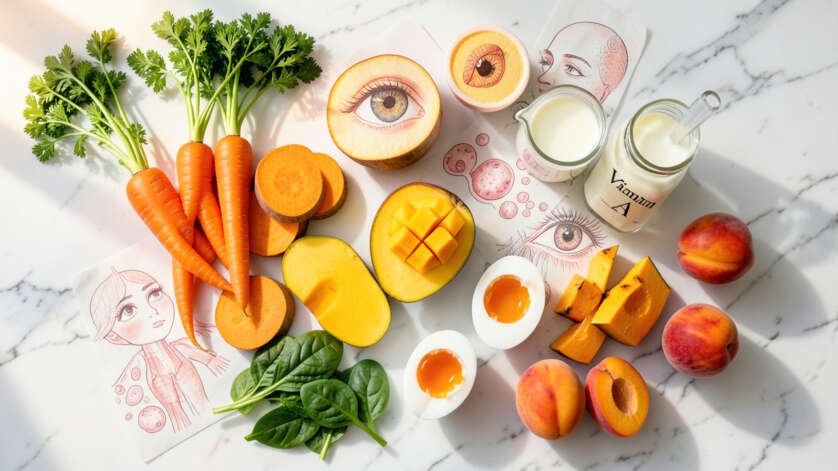
Vitamin A is a fat-soluble nutrient essential for maintaining sharp vision, a robust immune system, and healthy skin and organs. It is obtained from two forms: preformed vitamin A from animal sources like liver and eggs, and provitamin A carotenoids from plant foods such as carrots and spinach. Consuming the right amount is critical, as deficiency can cause severe health issues like blindness, while excess intake can lead to toxicity.
Knowing what vitamin A does can transform the way you think about your diet, because this one nutrient supports your eyes, immune system, skin, and vital organs.
This guide covers the two forms of vitamin A, the best food sources, daily requirements, deficiency risks, and how to tell if you are getting enough in your routine.
Simply put, vitamin A is a fat-soluble nutrient that keeps your vision sharp, strengthens your immune response, and maintains healthy skin. You get it from animal foods like liver and eggs or from plant sources such as carrots and spinach. A balanced diet usually covers your needs without supplements.
Key Takeaways
- Vitamin A supports vision, immunity, skin repair, and normal organ function throughout the body.
- There are two main forms: preformed vitamin A from animal foods and provitamin A carotenoids from plants.
- Your daily vitamin A needs depend on age, sex, and life stage, with adult men needing about 900 mcg RAE and women about 700 mcg RAE.
- Both deficiency and excess can cause serious health problems, so balance matters more than megadosing.
- Whole foods like liver, sweet potatoes, spinach, and carrots are the most reliable vitamin A sources.
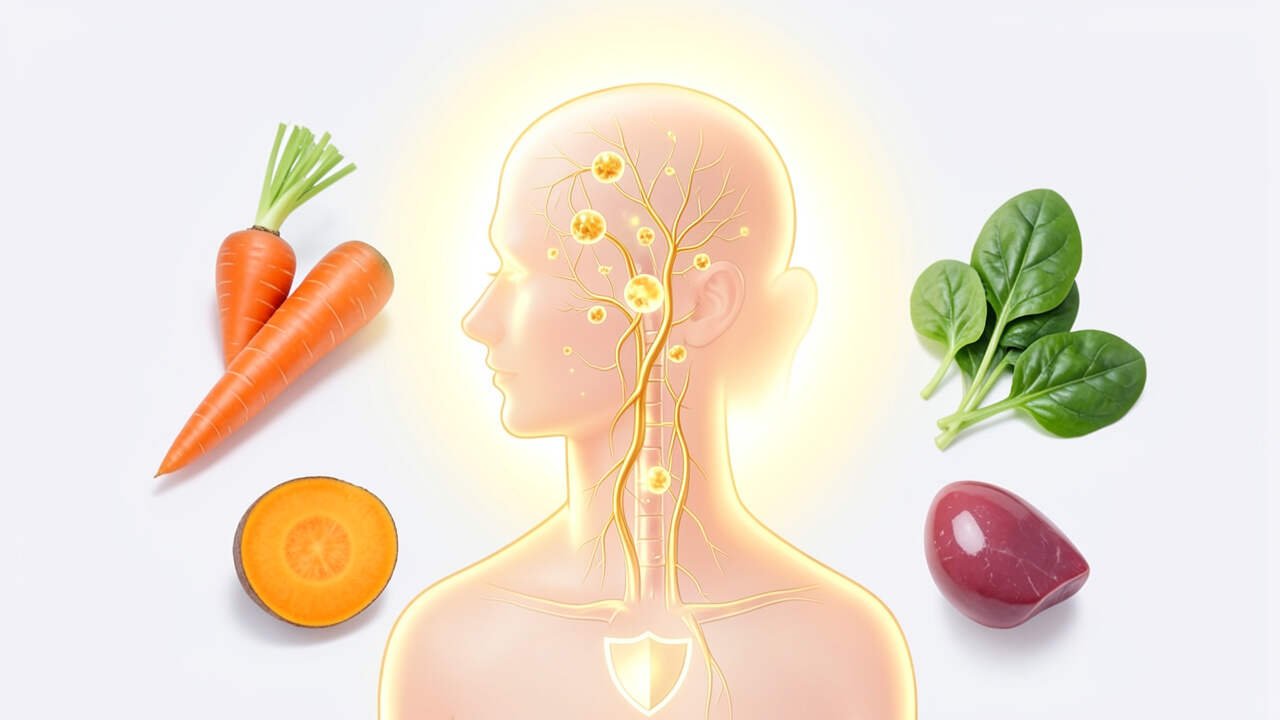
What Does Vitamin A Do for Your Body?
Vitamin A acts like a multitasking manager inside your body. It helps your eyes convert light into a brain signal, which is why night vision depends so heavily on this nutrient. It also regulates gene expression, which means it controls how cells grow, mature, and repair themselves.
Your immune system relies on vitamin A to maintain the mucous membranes in your eyes, lungs, and gut. These membranes act as physical barriers that trap bacteria and viruses before they can enter your bloodstream. Without enough vitamin A, those barriers weaken and infections become more frequent.
Vitamin A also supports reproduction and fetal development. In men, it helps produce sperm. In pregnant women, it guides the development of the baby’s heart, lungs, kidneys, eyes, and nervous system.
This is one reason prenatal vitamins almost always include a carefully measured dose.
- Maintains sharp vision, especially in dim light
- Strengthens immune barriers against infections
- Keeps skin cells renewing at a healthy rate
- Supports bone growth and dental health
- Protects the surface of the eyes, lungs, and digestive tract
- Helps regulate cell growth and differentiation
- Supports healthy reproduction and fetal development
According to the World Health Organization (WHO), vitamin A deficiency is the leading cause of preventable blindness in children worldwide, which shows how essential this nutrient is for basic human function.

What Are the Two Types of Vitamin A?
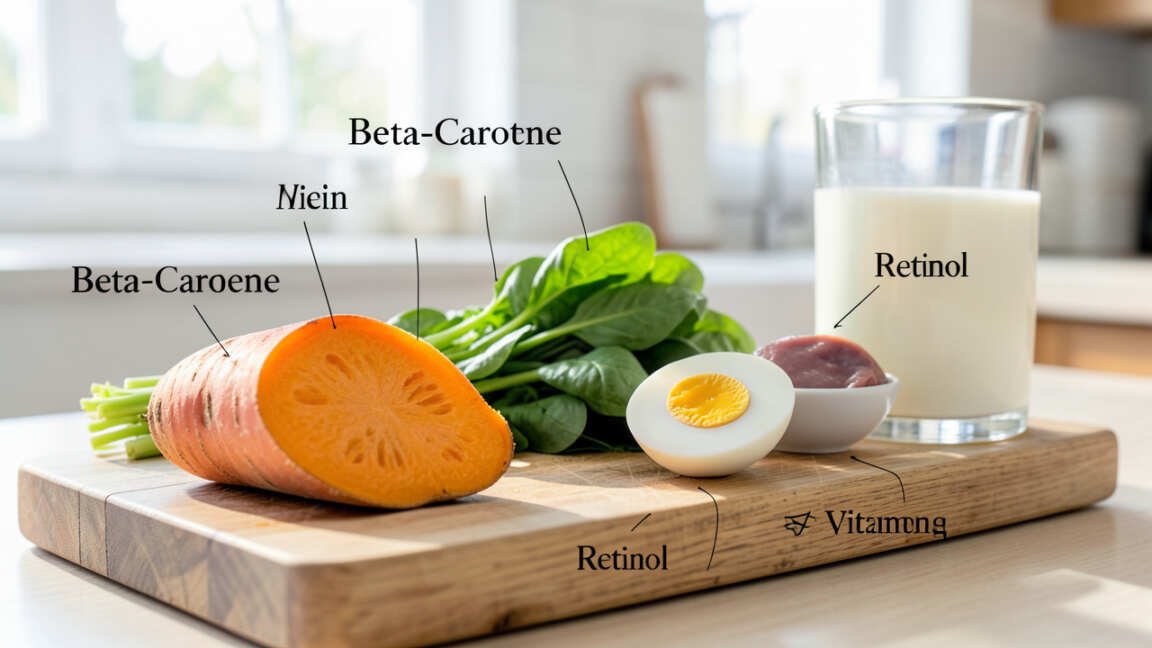
Vitamin A exists in two main forms in food, and your body handles them differently. Preformed vitamin A, called retinol, is ready to use right away. Provitamin A carotenoids, like beta-carotene, need to be converted into retinol first.
Animal foods contain retinol and retinyl esters, which your body absorbs easily. Plant foods contain carotenoids, and your intestine converts them into retinol as needed. The conversion rate depends on your gut health and how much beta-carotene you eat at one time.
| Type | Also Called | Sources |
|---|---|---|
| Preformed vitamin A | Retinol, retinal, retinoic acid | Liver, fish oil, eggs, dairy |
| Provitamin A carotenoids | Beta-carotene, alpha-carotene, beta-cryptoxanthin | Carrots, sweet potatoes, spinach, mango |
Both forms count toward your daily vitamin A intake, but they are measured differently. Scientists use retinol activity equivalents, or mcg RAE, to account for the fact that carotenoids are less efficiently absorbed than retinol.
One important detail is that beta-carotene from plants is safe in large amounts. Your body only converts as much as it needs. The same is not true for preformed vitamin A, which can build up to toxic levels.
How Much Vitamin A Do You Need Each Day?
Your exact vitamin A requirement depends on your age, sex, and stage of life. The National Institutes of Health (NIH) publishes Recommended Dietary Allowances that cover the needs of nearly all healthy people.
These values are expressed in micrograms of retinol activity equivalents (mcg RAE). One mcg RAE equals 1 mcg of retinol, 12 mcg of beta-carotene, or 24 mcg of other provitamin A carotenoids.
| Life Stage | Recommended Daily Amount |
|---|---|
| Infants 0 to 12 months | 400 to 500 mcg RAE |
| Children 1 to 8 years | 300 to 400 mcg RAE |
| Males 14 and older | 900 mcg RAE |
| Females 14 and older | 700 mcg RAE |
| Pregnant women | 770 mcg RAE |
| Breastfeeding women | 1,300 mcg RAE |
Most adults in developed countries meet these targets through diet alone. According to the Centers for Disease Control and Prevention (CDC), vitamin A deficiency is rare in the United States because of fortified dairy products, cereals, and a varied food supply.
Keep in mind that these numbers refer to total vitamin A from both food and supplements. Tracking your intake with a food app can help you spot gaps without guessing.
Why Is Vitamin A Deficiency Dangerous?
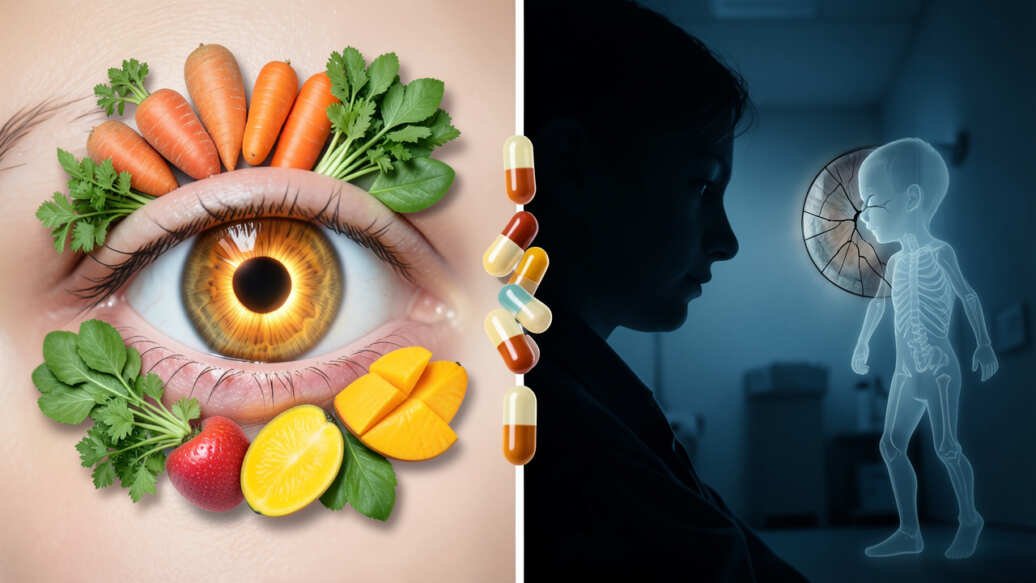
Vitamin A deficiency does not happen overnight. It develops gradually when your diet consistently lacks this nutrient. Early signs include trouble seeing in low light, dry eyes, and rough, bumpy skin that feels like sandpaper.
If left untreated, deficiency can progress to more serious conditions. Night blindness is often the first symptom, and it can advance to xerophthalmia, a condition where the cornea becomes dry and damaged. The WHO reports that an estimated 250 million preschool children worldwide are vitamin A deficient, and this deficiency contributes to preventable blindness and a higher risk of death from infections like measles and diarrhea.
Warning: If you notice persistent night blindness, extreme dry eyes, or frequent respiratory infections, see a doctor. Never attempt to treat suspected vitamin A deficiency with high-dose supplements on your own, since excess can be just as dangerous as deficiency.
Certain groups face a higher risk of deficiency, even in wealthy countries. These include people with cystic fibrosis, Crohn’s disease, celiac disease, or short bowel syndrome, because fat malabsorption limits vitamin A uptake.
People who follow a strict plant-based diet and avoid all animal products can also fall short if they do not eat enough carotenoid-rich produce. However, deficiency in these cases is uncommon when the diet includes plenty of colorful fruits and vegetables.
- Watch for early symptoms like poor night vision and dry eyes.
- Check whether you have a condition that affects fat absorption.
- Choose fortified foods if you avoid animal products.
- Ask your doctor for a blood test if you suspect a problem.
What Does Vitamin A Do for Your Eyes and Skin?
Retinal, a form of vitamin A, combines with a protein called opsin in your retina to form rhodopsin. This pigment is what allows your eyes to adapt from bright light to darkness. When vitamin A is low, rhodopsin production slows and night vision suffers.
In skin care, vitamin A is usually called retinol or retinoids. Topical retinoids are among the most studied anti-aging ingredients because they speed up cell turnover, stimulate collagen, and reduce fine lines. The American Academy of Dermatology recognizes retinoids as effective treatments for acne and photoaging.
Vitamin A also supports the epithelium, the thin layer of tissue that lines your skin and internal organs. Healthy epithelial cells keep moisture in and irritants out, which is why a deficiency often shows up as dry, flaky, or itchy skin.
- Improves night vision through rhodopsin production
- Maintains healthy cornea and tear ducts
- Reduces acne by preventing clogged pores
- Stimulates collagen for firmer skin
- Speeds wound healing and scar repair
- Protects skin from UV-related oxidative damage
One caveat is that eating vitamin A in food does not erase wrinkles the way that prescription retinoids can. The diet mainly supports skin health from within, while topical products work directly on the outer layers.
Best Food Sources of Vitamin A
You do not need exotic ingredients to get enough vitamin A. Everyday foods pack a serious punch. One baked sweet potato delivers more than 1,400 mcg RAE in a single serving, which exceeds the daily need for most adults.
Animal sources provide preformed retinol, while plant sources provide provitamin A carotenoids. Including both in your weekly menu gives you the most reliable coverage.
| Food | Serving | Vitamin A (mcg RAE) |
|---|---|---|
| Beef liver | 3 ounces | 6,580 |
| Sweet potato | 1 medium | 1,403 |
| Spinach | 1 cup cooked | 943 |
| Carrots | 1 cup raw | 459 |
| Pumpkin | 1 cup canned | 1,906 |
| Egg | 1 large | 75 |
The table shows that a single serving of liver or sweet potato can cover your entire daily target. Even smaller contributions from eggs, cheese, and leafy greens add up throughout the day.
Tip: Pair carotenoid-rich vegetables with a little fat, such as olive oil, butter, or avocado. Since vitamin A is fat-soluble, eating it with fat improves absorption significantly.
Can You Take Too Much Vitamin A?
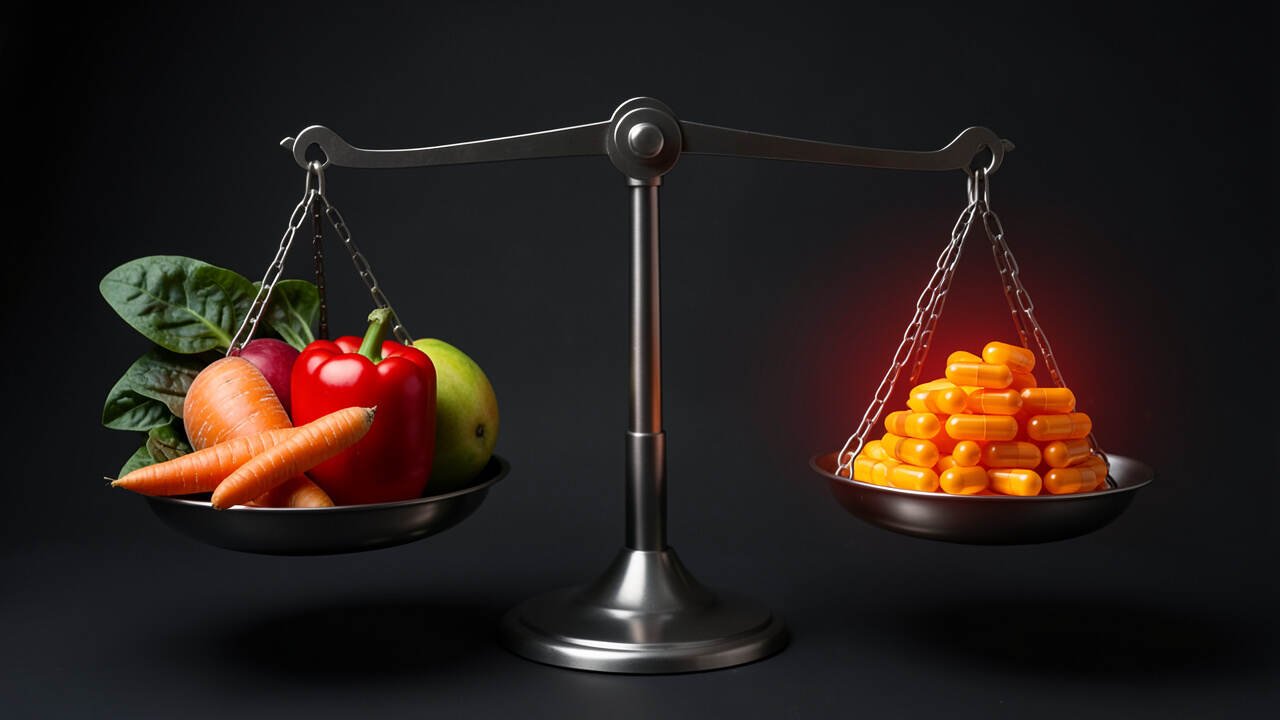
Yes, you can absolutely take too much vitamin A, and the consequences are serious. Chronic toxicity usually comes from overusing supplements, not from eating food. Your body stores excess vitamin A in the liver, and high amounts build up slowly over weeks or months.
Acute toxicity can also happen if you swallow a very large dose at once, like a child eating multiple adult gummy vitamins. Symptoms include dizziness, headache, nausea, and blurred vision. The National Institutes of Health warns that daily intake above 3,000 mcg RAE of preformed vitamin A is considered excessive for adults.
- Liver damage and fibrosis
- Bone pain and increased fracture risk
- Birth defects when taken during early pregnancy
- Dry, cracked skin and hair loss
- Vision changes and increased pressure in the brain
Avoid high-dose isolated retinol supplements unless a doctor prescribes them. For general health, choose a multivitamin with no more than 100% of the daily value, or skip supplements entirely and focus on food sources.
Beta-carotene from plants is much safer because your body controls conversion. Even very high intakes from carrots and sweet potatoes do not cause toxicity, although they can turn your skin slightly orange, a harmless condition called carotenemia.
How to Get Enough Vitamin A in Your Diet
Building a vitamin A rich diet is simple if you follow a loose pattern. Aim to include one orange or dark green vegetable at most lunches and dinners, plus a serving of dairy, eggs, or fortified cereal in your breakfast.
You do not need to calculate exact micrograms every day. Instead, think in terms of color. Orange produce, leafy greens, and animal proteins naturally cover your bases.
- Start breakfast with fortified cereal, eggs, or a glass of milk.
- Add spinach or kale to smoothies, soups, and pasta sauce.
- Snack on baby carrots, roasted pumpkin, or mango slices.
- Eat liver or other organ meats once or twice a month if you enjoy them.
- Use sweet potatoes as a side dish instead of white potatoes.
- Choose cheese, yogurt, or salmon for lunch and dinner protein.
- Talk to your doctor before adding any retinol supplement.
Important: If you are pregnant or planning to become pregnant, do not take vitamin A supplements without medical advice. Both deficiency and excess can harm fetal development, so professional guidance is essential.
People with fat malabsorption conditions might need a water-soluble vitamin A supplement. That decision should come from a doctor or registered dietitian who can order blood tests and determine the right dose.
Ultimately, food-first nutrition works best for most people. Whole foods deliver vitamin A alongside other nutrients that help your body use it effectively.
Frequently Asked Questions
What does vitamin A do for your body?
Vitamin A supports vision, immunity, skin health, reproduction, and normal growth. It helps your eyes adjust to low light, maintains mucous membranes that block infections, and regulates cell growth. It also supports healthy bones, teeth, and organs.
Which food has the most vitamin A?
Beef liver has the highest concentration of preformed vitamin A, with about 6,580 mcg RAE in three ounces. Among plant foods, sweet potatoes and pumpkin are the richest sources of beta-carotene, which your body converts into vitamin A.
Can you get vitamin A from carrots?
Yes, carrots are an excellent source of provitamin A carotenoids, mostly beta-carotene. One cup of raw carrots provides around 459 mcg RAE. Cooking and chopping carrots actually makes the carotenoids easier for your body to absorb.
Is it better to get vitamin A from food or supplements?
Whole foods are better for most people because they provide balanced amounts plus supporting nutrients. Supplements can cause toxicity if you take too much preformed vitamin A. Only use supplements when a doctor confirms a deficiency or you have a condition that limits absorption.
What are the first signs of vitamin A deficiency?
The earliest symptom is usually night blindness, meaning you struggle to see in dim light. Dry eyes, dry skin, and a higher frequency of throat and chest infections are also common early signs. A blood test can confirm whether your vitamin A levels are low.
Final Thoughts
Vitamin A quietly powers some of the most important functions in your body, from helping you see at night to keeping your immune system ready for action. You can meet your needs with common foods like liver, sweet potatoes, eggs, green leafy vegetables, and carrots. Skip megadose supplements unless a healthcare provider recommends them, and focus on colorful plates that naturally deliver reliable amounts of this vital nutrient.