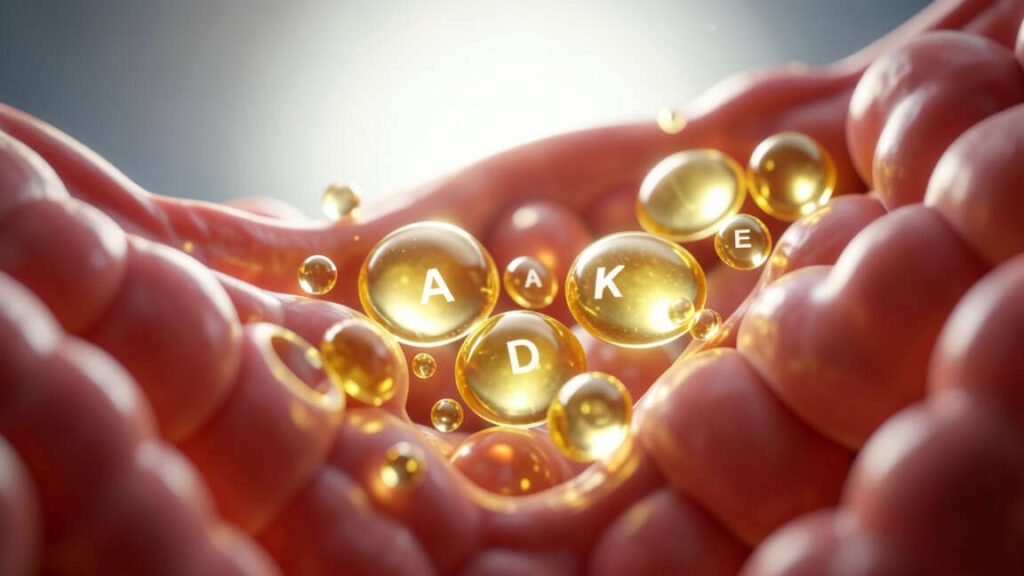
Fat is essential for the absorption of fat-soluble vitamins A, D, E, and K because these nutrients require dietary fat to be transported from the intestines into the bloodstream. These vitamins are absorbed in the small intestine through the formation of micelles, which are tiny fat-based carriers that facilitate their uptake into the body. Consuming fat-soluble vitamins alongside sources of healthy fat, such as oils, nuts, or avocados, significantly enhances nutrient absorption and helps prevent potential deficiencies.
Why are some nutrients better absorbed with fat? The answer lies in your body’s unique digestive machinery. Fat-soluble vitamins require dietary fat to be properly transported from your intestines into your bloodstream. Without this key partner, much of the nutrition you consume simply passes through your system unused.
This guide explains the science behind fat-facilitated nutrient absorption. You will learn which vitamins need fat, how the process works, and practical ways to ensure you get the most from your food. Understanding this mechanism is crucial for maximizing your nutritional intake and preventing deficiencies.
Simply put, fat-soluble vitamins (A, D, E, and K) are absorbed in your small intestine only when dietary fat is present. They rely on fat to form tiny transport vehicles called micelles, which carry them into your body. Eating these vitamins with a source of healthy fat can dramatically increase their absorption.
Key Takeaways
- Nutrient absorption with fat is essential for vitamins A, D, E, and K, as these are fat-soluble.
- Dietary fat triggers the release of bile, which breaks down fats and forms micelles for nutrient transport.
- Eating fat-soluble vitamins with a fat source can boost absorption by 3-5 times.
- A very low-fat diet can lead to deficiencies even if you consume enough of these vitamins in food.
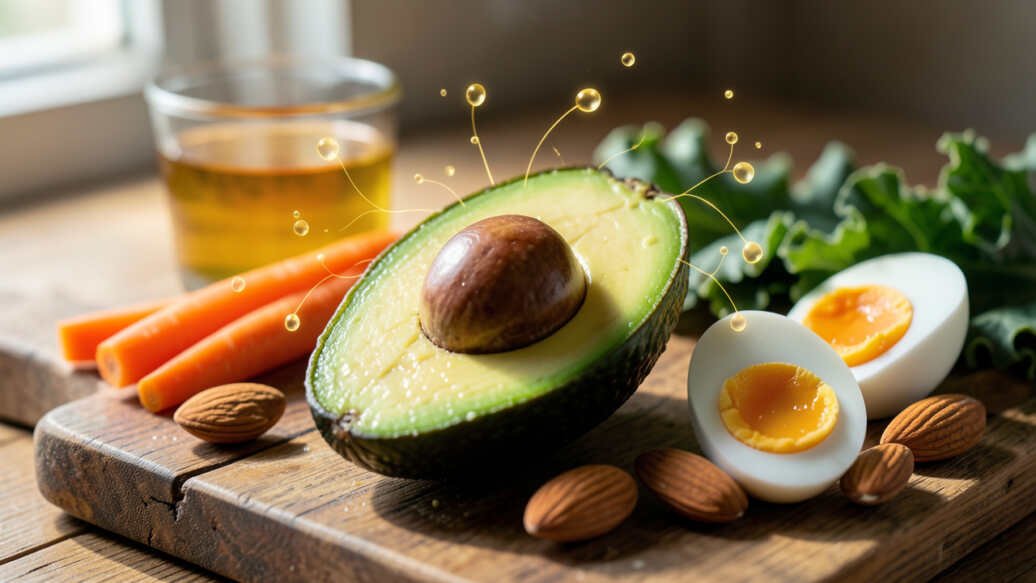
- Healthy fats like avocado, nuts, and olive oil are ideal companions for enhancing nutrient uptake.
What Are Fat-Soluble Vitamins?
Fat-soluble vitamins are a group of four essential nutrients your body needs to function correctly. Unlike water-soluble vitamins, which dissolve in water and are quickly transported, these vitamins are stored in your body’s fatty tissues and liver. This storage ability means you don’t need to consume them every single day, but it also means imbalances can occur.
The key characteristic that defines this group is their dependence on dietary fat for absorption. When you eat foods containing these vitamins without any accompanying fat, a significant portion is not absorbed and is instead eliminated from the body. This makes the pairing of these nutrients with fat a critical dietary consideration.
The four fat-soluble vitamins and their primary roles are:
- Vitamin A: Essential for vision, immune function, and skin health. Found in liver, fish oils, milk, and eggs. Also consumed as beta-carotene in orange/yellow vegetables and dark leafy greens.
- Vitamin D: Crucial for calcium absorption, bone health, and immune regulation. Produced by skin sun exposure and found in fatty fish, egg yolks, and fortified foods.
- Vitamin E: Acts as an antioxidant, protecting cells from damage. Found in nuts, seeds, vegetable oils, and green leafy vegetables.
- Vitamin K: Necessary for blood clotting and bone metabolism. Found in leafy green vegetables, vegetable oils, and fermented foods.
| Vitamin | Primary Function | Top Food Sources |
|---|---|---|
| A | Vision, Immunity, Skin | Sweet potatoes, carrots, spinach, liver |
| D | Bone health, Calcium absorption, Immunity | Salmon, mackerel, egg yolks, fortified milk |
| E | Antioxidant, Cell protection | Almonds, sunflower seeds, spinach, avocado |
| K | Blood clotting, Bone health | Kale, broccoli, Brussels sprouts, vegetable oils |
This table summarizes the core functions and common food sources of the fat-soluble vitamin group. Consuming these foods without some form of fat may limit how much your body can actually use.
How Does Fat Enable Nutrient Absorption?
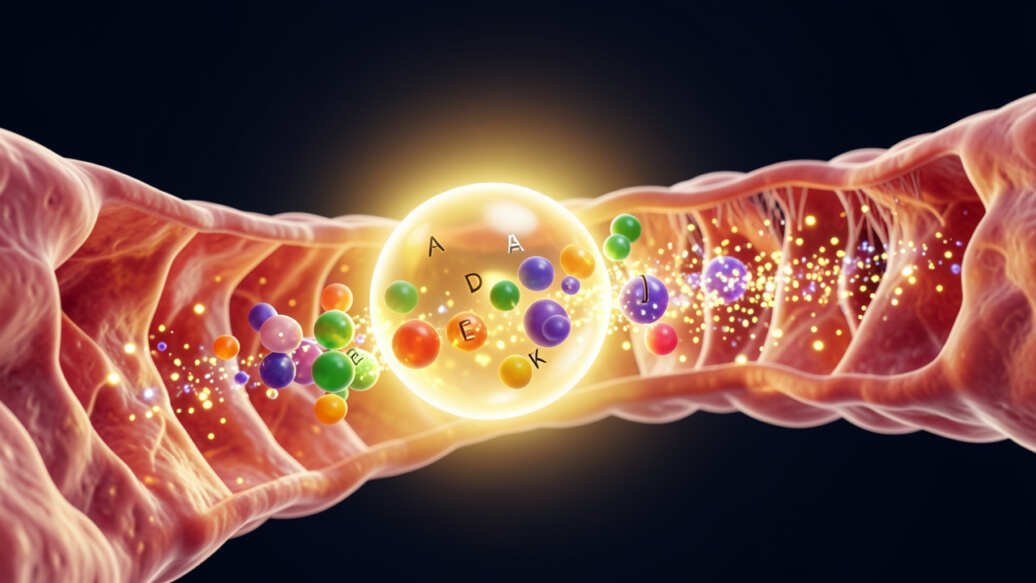
The process of absorbing fat-soluble vitamins is a coordinated digestive event. When fat and fat-soluble vitamins enter your small intestine, they trigger a series of biological steps. Your liver and gallbladder play starring roles in this process by producing and releasing a substance called bile.
Bile acts as an emulsifier, breaking large fat globules into smaller, water-mixable particles. This creates a better surface area for digestive enzymes to work on. Once fats are broken down, bile salts wrap around the individual fatty acids and fat-soluble vitamin molecules, forming tiny spheres called micelles.
Think of micelles as microscopic delivery trucks. Their job is to shuttle the fat and attached vitamins right up to the wall of your small intestine. Here, the contents can finally be absorbed into the intestinal cells.
Without enough fat, this micelle formation is inefficient, and much of the vitamin content stays in the intestine and is excreted.
Important: The absorption of fat-soluble vitamins is a “use it or lose it” scenario. If micelle formation is poor due to low dietary fat, these vitamins cannot enter your bloodstream and are lost. This is why a spoonful of salad dressing on your greens can be more beneficial than eating the salad plain.
Several factors can disrupt this efficient absorption process beyond just avoiding dietary fat:
- Low bile production: Conditions affecting the liver or gallbladder (like gallstones or hepatitis) reduce bile output.
- Pancreatic insufficiency: The pancreas produces enzymes that help break down fats. Issues here hamper the process.
- Intestinal diseases: Crohn’s disease or celiac disease can damage the intestinal lining where absorption happens.
- Weight-loss surgery: Procedures that bypass parts of the intestine can reduce absorption capacity.
Which Specific Nutrients Need Fat for Absorption?
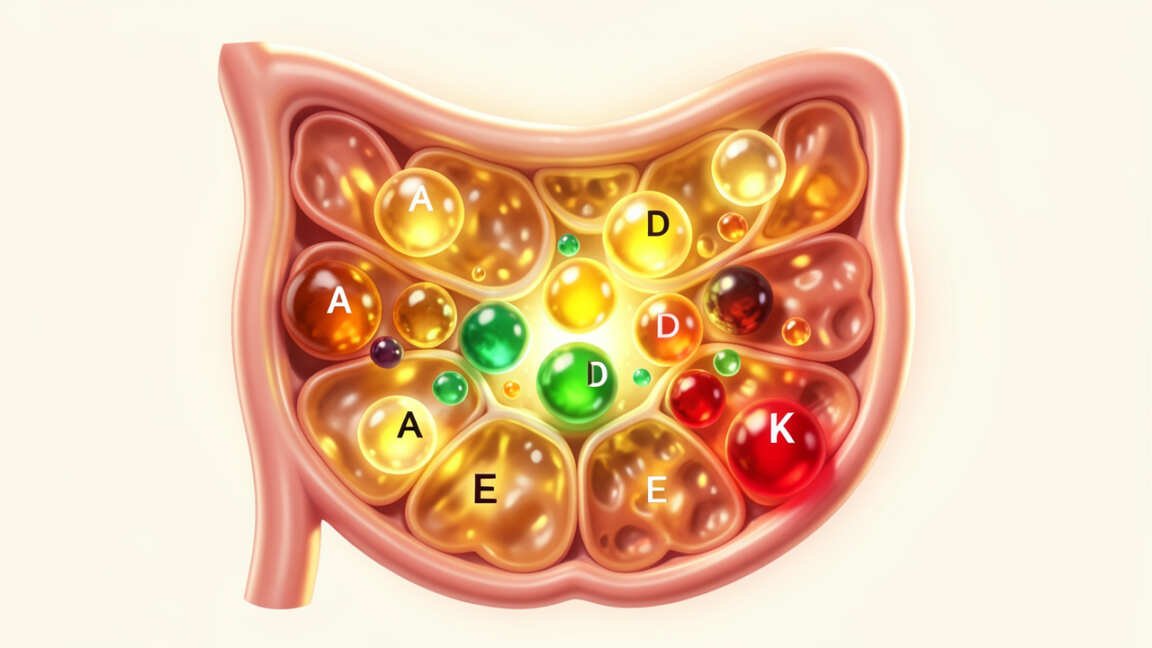
Beyond the well-known A, D, E, and K group, several other important nutrients benefit significantly from being consumed with fat. Carotenoids, the pigments that give fruits and vegetables their vibrant red, orange, and yellow hues, are not vitamins themselves but are converted into vitamin A in the body. This conversion process also requires fat for efficient absorption.
The most well-studied carotenoids are beta-carotene, lycopene, and lutein. Research from the USDA shows that consuming carotenoid-rich foods with a little fat can increase absorption by 3 to 5 times. This is a substantial difference that directly impacts the health benefits you receive from your salad or vegetable stir-fry.
Let’s look at the data on how fat pairing affects absorption:
| Nutrient | Found In | Absorption Impact With Fat |
|---|---|---|
| Beta-carotene | Carrots, sweet potatoes, spinach | 3-5x higher absorption |
| Lycopene | Tomatoes, watermelon, pink grapefruit | 2-3x higher absorption |
| Lutein | Kale, spinach, broccoli, peas | Significantly increased uptake |
| Astaxanthin | Salmon, shrimp, microalgae | Enhanced bioavailability |
As this table illustrates, the boost in absorption is not minor. Choosing to eat your tomato sauce with olive oil or your spinach salad with avocado oil dressing is a simple strategy to maximize your nutrient intake from plant foods.
What Are the Best Food Pairings for Enhanced Absorption?
Knowing the science is one thing, but applying it in the kitchen is where the real benefit happens. You don’t need to eat a stick of butter with your carrots. A small amount of healthy fat, roughly 5-10 grams, is sufficient to trigger the bile release and micelle formation needed for absorption.
This is about a tablespoon of oil or a quarter of an avocado.
Here are practical, delicious food pairings to boost your fat-soluble nutrient intake:
- Leafy Greens (Vitamin K, Lutein): Massage raw kale with olive oil for a salad, or sauté spinach in garlic and avocado oil.
- Orange Vegetables (Vitamin A, Beta-carotene): Roast sweet potatoes and carrots with coconut oil, or make a soup with a swirl of cream.
- Tomatoes (Lycopene): Cook tomatoes in olive oil to make sauce for pasta. Add pesto (pine nuts, olive oil) to tomato sandwiches.
- Nuts and Seeds (Vitamin E): Eat almonds as a snack with a piece of fruit, or sprinkle chia seeds into yogurt that contains some fat.
- Fortified Foods (Vitamin D): Drink fortified milk or plant milk with a meal, not alone. Add it to oatmeal cooked with nuts.
Tip: You can also take your fat-soluble vitamin supplements with a meal that contains fat. Swallowing a vitamin D pill on an empty stomach with water means much of it may not be absorbed. Taking it with your largest meal of the day improves efficacy.
For people following very low-fat or fat-free diets for medical or personal reasons, this presents a challenge. Strategies like adding a small portion of fatty fish, a handful of nuts, or a measured amount of oil can bridge this gap without significantly increasing total fat intake.
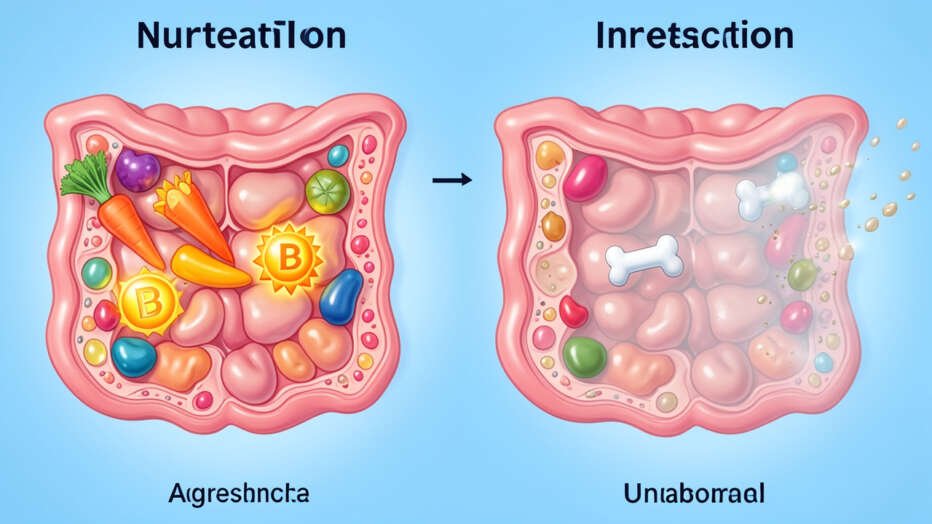
What Happens If You Don’t Eat Enough Fat With These Nutrients?
Chronic low absorption of fat-soluble vitamins can lead to specific deficiency conditions, even if your dietary intake on paper seems adequate. Because these vitamins are stored, symptoms may take months or years to appear, making the connection difficult to diagnose.
The consequences of poor absorption are wide-ranging due to the essential roles these vitamins play. A lack of vitamin A impairs vision, especially night vision, and weakens the immune system. Insufficient vitamin D leads to poor bone mineralization, resulting in conditions like rickets in children or osteomalacia in adults.
Vitamin E deficiency, though rare from diet alone, can cause nerve and muscle damage, leading to loss of body movement control. Vitamin K deficiency impairs blood clotting, causing excessive bruising and bleeding. The body’s production of clotting factors in the liver depends directly on vitamin K.
| Deficient Vitamin | Potential Consequence of Poor Absorption | At-Risk Groups |
|---|---|---|
| A | Night blindness, dry skin, frequent infections | Individuals on extremely low-fat diets, those with malabsorption disorders |
| D | Bone pain, muscle weakness, increased fracture risk | People with limited sun exposure, older adults, those with fat malabsorption issues |
| E | Nerve damage, impaired coordination, muscle weakness | People with rare genetic disorders, fat-malabsorbing diseases |
| K | Easy bruising, excessive bleeding, poor bone health | Newborns, individuals on long-term antibiotics, liver disease patients |
It’s crucial to recognize that simply eating foods rich in these nutrients is not the complete solution. The context of the meal, specifically the presence of fat, determines how much benefit you actually derive.
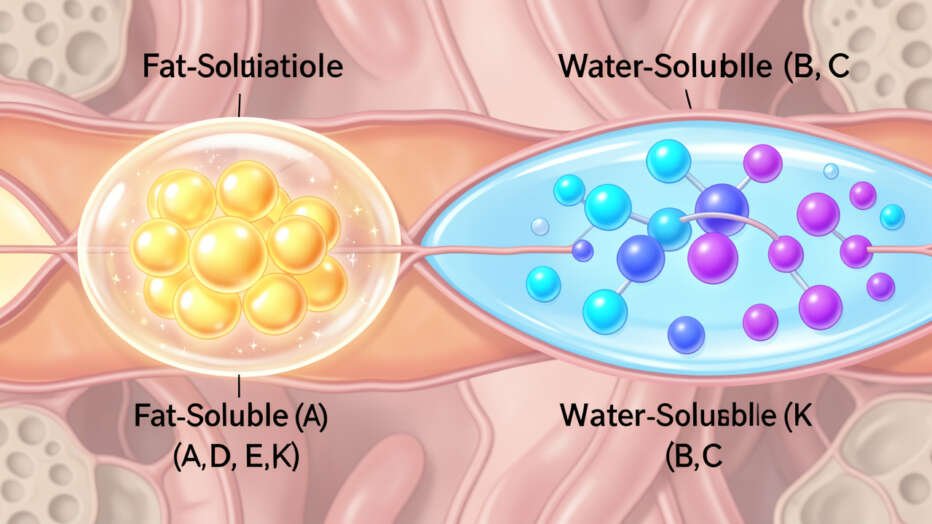
How Do Fat-Soluble Vitamins Differ From Water-Soluble Ones?
Understanding why fat-soluble vitamins need fat is clearer when you contrast them with their water-soluble counterparts. The two groups have fundamentally different chemistry, storage mechanisms, and excretion pathways. This difference is not just academic; it directly impacts your daily dietary choices and supplementation strategies.
Water-soluble vitamins, which include all B vitamins and vitamin C, dissolve in the watery environment of your digestive tract. They are absorbed directly into the bloodstream with relative ease, without needing emulsification by bile. Your body uses what it needs right away, and any excess is typically filtered out by the kidneys and excreted in urine.
In contrast, the fat-soluble group is more complex. Their journey requires a fat partner, they are packaged into chylomicrons with other fats, and they are stored in the liver and fatty tissues for future use. This storage is beneficial because it creates a reserve, but it also means that mega-doses from supplements can potentially build up and cause toxicity over time.
Warning: While food-based fat-soluble vitamins are safe, high-dose supplements of vitamins A and D can be harmful. Because they are stored, excessive intake can lead to toxicity. It is always best to consult a healthcare provider before taking high-dose supplements of fat-soluble vitamins.
Here is a direct comparison to highlight the key differences:
- Absorption: Water-soluble vitamins use simpler transporters. Fat-soluble vitamins require bile and micelle formation.
- Transport: Water-soluble vitamins travel freely in the blood. Fat-soluble vitamins are transported in lipoproteins and chylomicrons.
- Storage: Water-soluble vitamins are not stored in large amounts. Fat-soluble vitamins are stored in the liver and adipose tissue.
- Excretion: Excess water-soluble vitamins are excreted in urine. Excess fat-soluble vitamins are stored, posing a greater risk of toxicity.
- Dietary Need: Water-soluble vitamins generally need to be replenished more frequently. Fat-soluble vitamins can be consumed in larger amounts less often.
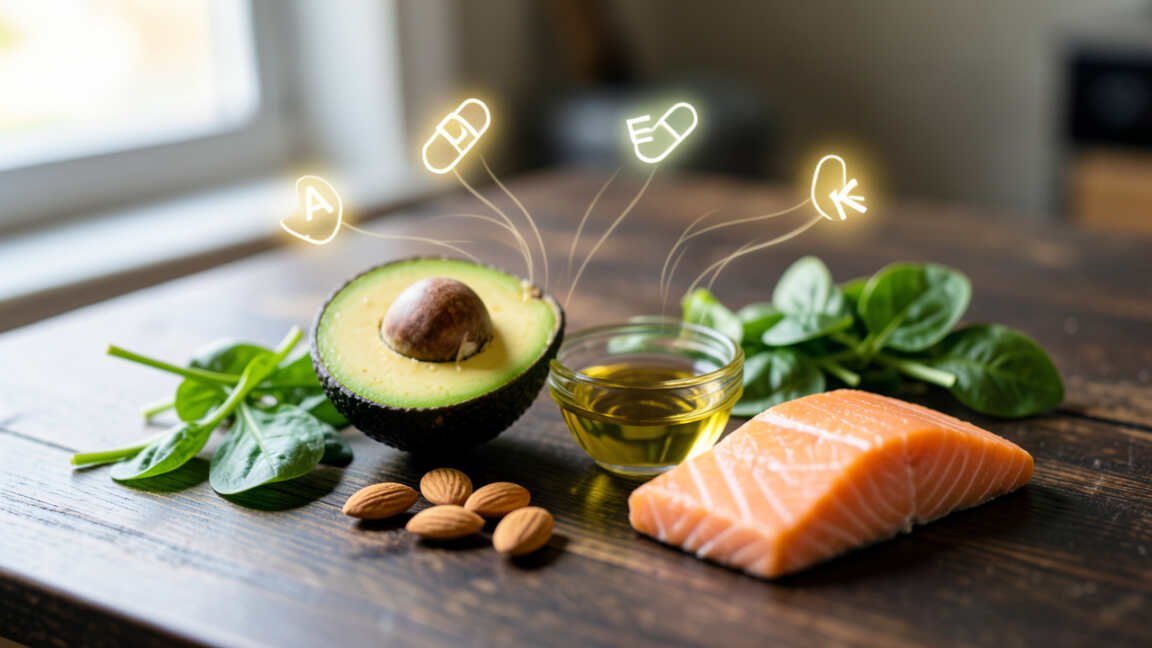
What Are Practical Tips for Optimizing Fat-Soluble Nutrient Intake?
Applying this knowledge doesn’t require a complete diet overhaul. Small, consistent habits can ensure you reap the full benefits of the fat-soluble vitamins in your food. Focus on mindful pairing rather than calorie counting.
The goal is to make the fat work for your nutrition.
Start by auditing your meals. Look at your typical lunch salad or dinner vegetable side. If it contains little to no fat, you are likely missing out on a significant portion of the nutrients.
Add a simple fat source: drizzle oil, add a few nuts, or include a piece of fatty fish.
For those following specific dietary patterns, consider these adjustments:
- Low-Fat Diets: Concentrate your daily fat allowance on the meals with the most fat-soluble vitamins. A teaspoon of oil on a spinach salad is a worthwhile investment.
- Plant-Based Diets: Use tahini, avocado, or nuts in dressings for salads and bowls. Cook with coconut or avocado oil.
- Weight Management: Remember that the fat added is for nutrient absorption, not flavor alone. A small amount is effective, so you can keep portions controlled.
- Supplement Users: Take your multivitamin or individual fat-soluble vitamin supplement with the largest meal of the day that contains some dietary fat.
Creating a simple checklist can help you remember these pairings until they become second nature:
- Leafy Greens: Always add a dressing with oil or eat with a fat source.
- Orange/Red Veggies: Cook or serve with oil, butter, or cream-based sauce.
- Nuts/Seeds: Eat as a snack with fruit or incorporate into meals.
- Supplements: Take with a meal, not on an empty stomach.
- Choose Full-Fat Versions: When possible, opt for full-fat yogurt or milk to get the fat with the vitamin D and other nutrients.
Frequently Asked Questions
Can I get enough vitamin D without eating fat with it?
It is very difficult. Vitamin D is fat-soluble, and without dietary fat to form micelles, its absorption is severely limited. Even if you consume vitamin D-fortified milk, drinking it on an empty stomach with water will result in poor uptake.
The best practice is to consume vitamin D-rich foods or supplements with a meal that contains some fat.
Does cooking destroy fat-soluble vitamins?
Cooking can reduce some vitamin content, but it can also increase the availability of others. For example, cooking tomatoes breaks down cell walls, making lycopene more accessible, which is then well-absorbed with the cooking oil. Light cooking is generally fine; the key is to always pair the final dish with a fat source for optimal absorption.
Are there risks to eating too much fat with my vitamins?
The concern is not typically with dietary fat, which your body regulates well, but with excessive intake of fat-soluble vitamin supplements. Mega-doses of vitamins A and D from supplements can accumulate in your body and lead to toxicity over time. Getting these vitamins from food paired with normal amounts of dietary fat is considered very safe.
Do fat-free salad dressings make my salad less nutritious?
Yes, they can. A fat-free dressing means you are consuming fat-soluble vitamins from the greens and vegetables without the fat needed to absorb them effectively. Your body may not use much of the vitamin K, lutein, and beta-carotene.
Using a vinaigrette with oil or adding other fat sources like avocado or nuts makes the salad’s nutrients more bioavailable.
Should I take a multivitamin with a fatty meal?
Yes, if the multivitamin contains fat-soluble vitamins (A, D, E, K). Taking it with a meal that includes some fat, like eggs for breakfast or fish for dinner, will improve the absorption of these specific nutrients. Taking it with a fat-free meal or on an empty stomach reduces the effectiveness of the fat-soluble components.
Final Thoughts
The relationship between fat and certain nutrients is a perfect example of how food synergy works. Your body is designed to use nutrients in combination, not in isolation. By simply ensuring a small amount of healthy fat accompanies your fat-soluble vitamins and carotenoid-rich vegetables, you dramatically improve your nutritional uptake.
This simple habit supports everything from your vision and bone health to your immune system and cellular protection. Pay attention to your meal composition, and let healthy fats help unlock the full potential of the good food you eat.