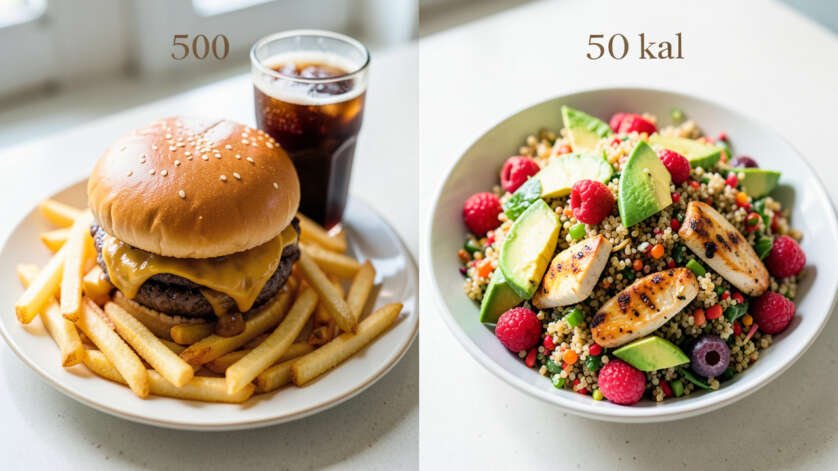
Two meals with identical calorie counts can feel completely different due to variations in their nutrient composition, fiber, protein, water content, and processing. These factors significantly impact digestive speed, the release of satiety hormones like ghrelin and leptin, and blood sugar stability, which directly determine fullness and subsequent hunger. Therefore, building satisfying meals requires focusing on food quality and matrix—not just calorie totals—to promote effective, lasting satiety.
Why can two meals with the same calories feel completely different? You’ve likely experienced this: a 500-calorie salad leaves you full for hours, while a 500-calorie pastry makes you hungry again an hour later. This common experience reveals that calorie counting alone doesn’t tell the whole story of nutrition and satisfaction. The difference lies in the complex biology of satiety, food composition, and how your body processes nutrients.
Understanding this phenomenon is key to making smarter, more satisfying dietary choices. It moves you beyond the simplistic “calories in, calories out” model toward a more nuanced approach to eating well. Let’s explore the science behind why calorie-for-calorie equivalence doesn’t equal meal-for-meal equivalence.
Simply put, two meals with identical calorie counts can feel vastly different due to their nutrient composition, fiber content, protein levels, water volume, and how they impact your hormones and digestion speed. A nutrient-dense, high-fiber meal triggers stronger fullness signals and provides sustained energy, while a processed, low-fiber meal often leads to a quick spike and crash in blood sugar, leaving you unsatisfied and soon hungry again.
Key Takeaways
- Satiety is a complex biological response influenced by more than just calories; it’s driven by food volume, nutrient density, and hormonal signals.
- Fiber and protein are the most critical macronutrients for promoting feelings of fullness and slowing digestion, making them key to a satisfying meal.
- Food matrix and processing dramatically affect how quickly your body absorbs nutrients and the subsequent hormonal response, impacting energy levels and hunger.
- Water content adds volume to a meal without adding calories, physically stretching the stomach and contributing to early satiety signals.
- Blood sugar stability is crucial; meals that cause rapid spikes and crashes often lead to increased hunger and cravings shortly after eating.
What Is Caloric Density and Why Does It Matter?
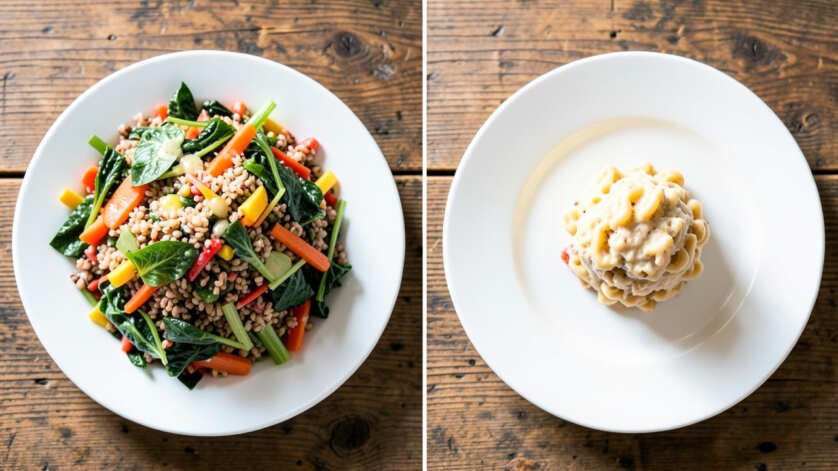
Caloric density is the number of calories per gram of food. It’s the simplest first explanation for why two 500-calorie meals can feel so different. A high-calorie-dense food packs many calories into a small, often low-volume portion.
In contrast, a low-calorie-dense food provides the same number of calories in a much larger, more physically filling volume.
Consider the example from our introduction. The 500-calorie pastry is small, rich in fats and refined carbs, and very calorie-dense. The 500-calorie salad is large, full of water-rich vegetables and lean protein, making it low in calorie density.
Your stomach has stretch receptors that signal fullness based on physical distension. The large volume of the salad physically fills the stomach more, sending stronger initial satiety signals to the brain.
- High Calorie Density (e.g., nuts, cheese, chocolate, oils): Easy to overconsume; you can eat many calories without feeling physically full.
- Low Calorie Density (e.g., fruits, vegetables, broth-based soups, lean meats): Harder to overconsume; large volumes are needed to reach high calorie counts.
- The Satiety Per Calorie Ratio: Goal is to choose foods that maximize fullness per calorie eaten. Vegetables have the best ratio.
- Energy Density vs. Nutrient Density: High-calorie-dense foods often have poor nutrient density, while low-calorie-dense foods are typically nutrient powerhouses.
| Food Example | Approx. Calories | Serving Size | Calorie Density |
|---|---|---|---|
| Olive Oil | ~120 | 1 Tablespoon | Very High |
| Cheddar Cheese | ~115 | 1 Ounce | High |
| Salmon Fillet | ~120 | 3 Ounces | Medium |
| Chicken Breast | ~115 | 3.5 Ounces | Low |
| Broccoli Florets | ~30 | 1 Cup | Very Low |
As the table shows, you’d need to eat a heaping plate of broccoli to match the calories in a single tablespoon of oil. This volume difference is a primary driver of the “feeling full” sensation from low-calorie-dense foods.
How Do Fiber and Protein Influence Satiety Signals?
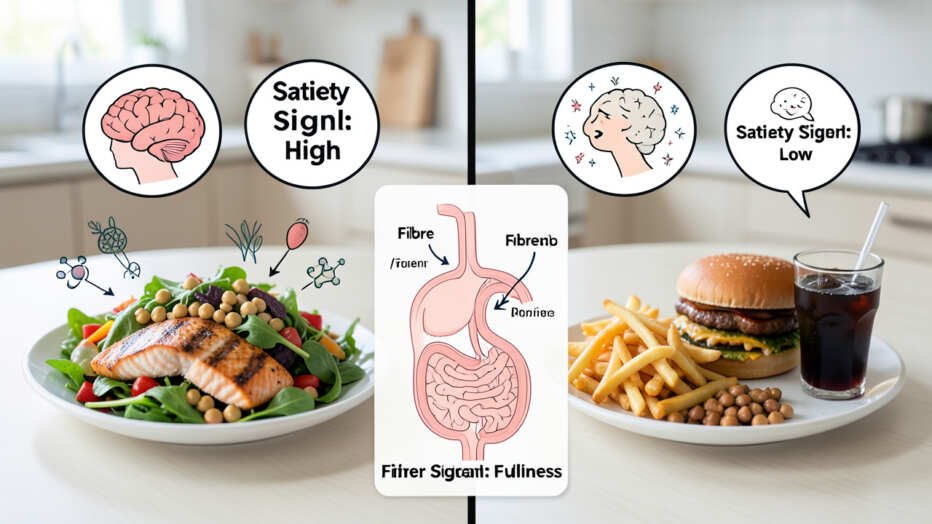
Beyond physical volume, the chemical composition of your food directly communicates with your brain and digestive system. Fiber and protein are the two macronutrients most powerfully linked to satiety. They don’t just add bulk; they trigger a cascade of hormones that tell your brain you are full and should stop eating.
Dietary fiber, found in plants, slows stomach emptying. This means the food stays in your stomach longer, prolonging the feeling of fullness. Soluble fiber dissolves in water to form a gel-like substance, further delaying digestion.
Protein is the most satiating macronutrient per calorie. It boosts the release of satiety hormones like PYY and GLP-1 while suppressing the hunger hormone ghrelin. This hormonal response is more powerful and sustained than that from carbohydrates or fats alone.
- Gastric Emptying Rate: Protein and fiber slow this process, keeping you fuller longer. Fat also slows it, but often in a less satiating way.
- Hormonal Signaling: Protein directly stimulates the release of peptide YY (PYY) and glucagon-like peptide-1 (GLP-1) from the gut.
- Thermic Effect of Food (TEF): Your body burns more calories digesting protein (20-30%) compared to carbs (5-10%) or fats (0-3%), adding to the metabolic benefit.
- Blood Sugar Stabilization: Fiber (especially soluble) and protein prevent rapid spikes in blood sugar, avoiding the subsequent crash that triggers hunger.
Tip: To build a satisfying meal, anchor it with a solid protein source (like eggs, Greek yogurt, tofu, or legumes) and add at least one or two servings of high-fiber vegetables or whole grains. This combination provides both immediate and long-lasting satiety.
Research from the University of Sydney found that meals with higher protein content led to greater reductions in hunger and increased feelings of fullness compared to meals with lower protein, even when total calories were the same. This effect is a cornerstone of why some diets, like higher-protein plans, are effective for appetite control.
What Role Does the Food Matrix and Processing Play?
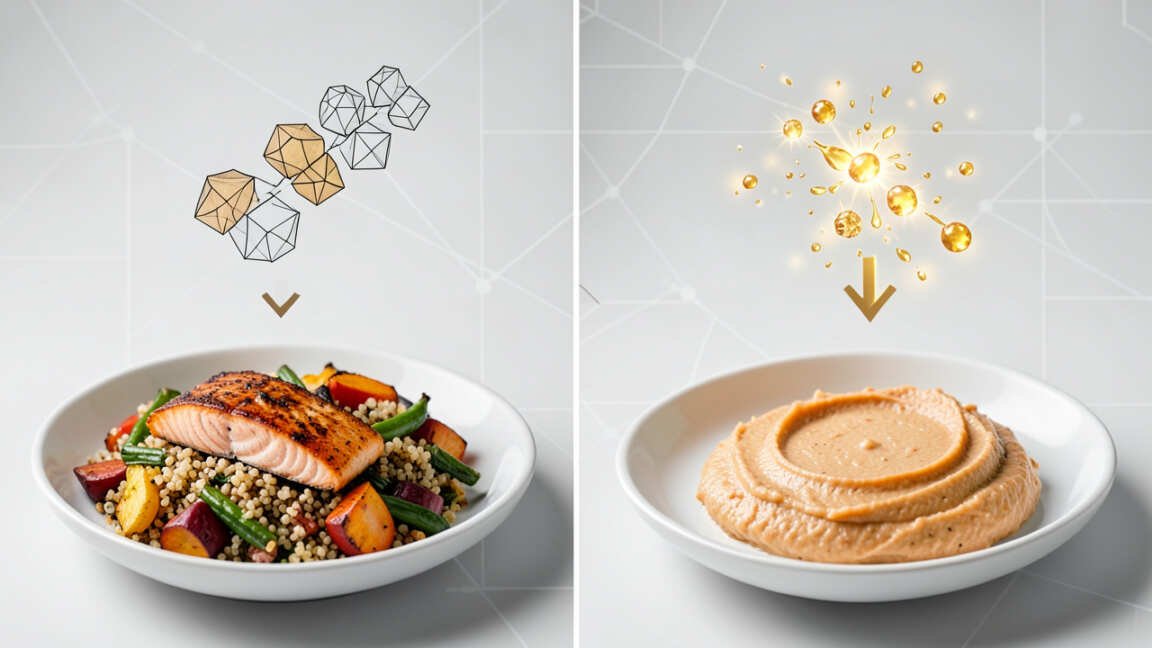
The “food matrix” refers to the complex structure of a whole food, including its cells, fibers, and other components. Processing breaks down this matrix, fundamentally changing how your body interacts with the food. This is a critical factor in why a whole apple feels more filling than apple juice, even if the calories from sugar are similar.
Whole foods have intact cellular walls and structures. Your digestive system must work harder to break them down, slowing the release of nutrients. When food is highly processed, this structure is destroyed.
The nutrients, especially simple sugars and refined starches, become immediately available for absorption. This leads to a rapid influx into the bloodstream, causing a sharp spike in blood sugar and insulin.
| Characteristic | Whole Food (Intact Matrix) | Ultra-Processed Food (Broken Matrix) |
|---|---|---|
| Digestion Speed | Slow | Very Fast |
| Blood Sugar Impact | Gentle, sustained rise | Rapid spike and crash |
| Chewing Effort | High (promotes satiety) | Low |
| Example | A whole orange | A glass of orange juice |
According to a 2019 study published in Cell Metabolism, participants consumed about 500 more calories per day when eating an ultra-processed diet compared to an unprocessed diet, even when meals were matched for available calories, macronutrients, sugar, fat, and fiber. This suggests the breakdown of the food matrix directly influences overall calorie intake and satisfaction.
Warning: Ultra-processed foods are often engineered to be hyper-palatable, overriding your natural satiety signals. They combine sugar, fat, and salt in precise ratios that encourage overconsumption, making it very difficult to stop at a “sensible” portion.
How Does Water Content Affect Meal Satiety?
Water content is a silent but powerful player in the satiety equation. Foods with high water content, like fruits, vegetables, and broth-based soups, add significant weight and volume to a meal without adding calories. This contributes to the physical fullness sensation through stomach stretch receptors, similar to the effect of low-calorie density.
Studies show that people who consume water-rich foods as part of a meal tend to eat less overall calories during that meal and for the rest of the day. The water also helps dissolve soluble fiber, enhancing its gelling effect and slowing gastric emptying. This is why soup is often recommended as a first course for appetite control.
- Physical Distension: Water increases the weight and volume of food, filling stomach space.
- Calorie Dilution: It lowers the overall calorie density of the entire meal.
- Enhanced Fiber Action: Hydrates soluble fiber, improving its satiety-promoting properties.
- Example of Power: A watermelon is about 92% water. You can eat a large bowl for about the same calories as a small handful of raisins.
Incorporating water-rich foods is a simple, effective strategy to make meals more satisfying. Starting a meal with a broth-based soup or a large salad can significantly reduce calorie intake at the main course while increasing feelings of fullness.
Why Do Blood Sugar Spikes and Crashes Drive Hunger?
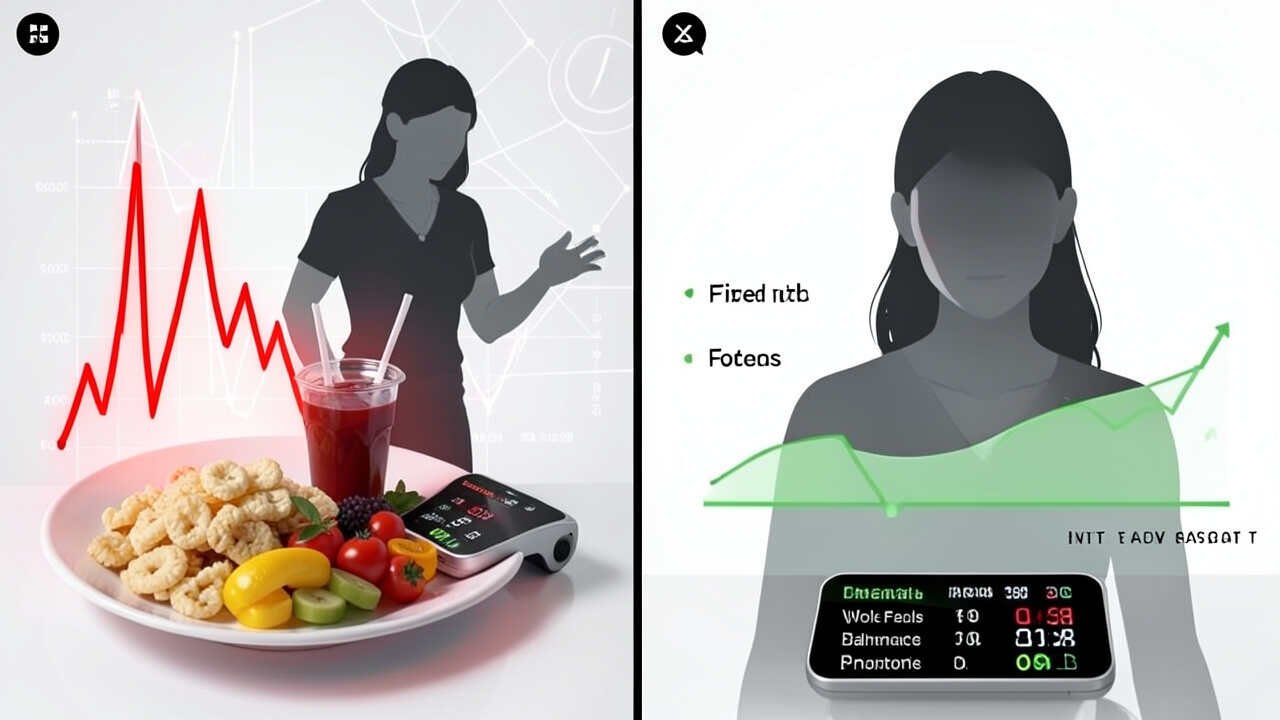
When you eat a meal high in refined carbohydrates or added sugars with little fiber, protein, or fat, your blood glucose levels rise rapidly. This triggers a large release of insulin from the pancreas to shuttle that glucose into cells for energy. The insulin response can be so vigorous that it causes blood sugar to drop below baseline levels, a phenomenon known as reactive hypoglycemia.
This crash in blood sugar is interpreted by your brain as a state of energy deficiency, triggering intense hunger, cravings (especially for more sugar), irritability, and fatigue. You feel unsatisfied despite just having eaten. This creates a vicious cycle of eating, spiking, crashing, and overeating again.
Meals that blend carbohydrates with protein, fat, and fiber prevent this spike-crash rollercoaster.
- Eat a Refined Carb Meal Alone: Blood sugar spikes. Insulin surges. Blood sugar crashes. You feel hungry and tired.
- Eat the Same Carbs with Protein, Fat, and Fiber: Digestion is slowed. Glucose enters bloodstream gradually. Insulin is released moderately. Blood sugar remains stable. You feel full and energized.
The glycemic index (GI) and glycemic load (GL) of foods are measures related to this effect. Choosing lower-GI foods, which cause a slower rise in blood sugar, can improve satiety and energy stability. However, the overall food matrix (like having the whole fruit vs.
juice) is an even more important factor.
How Do Hormones Like Ghrelin and Leptin Regulate Appetite?
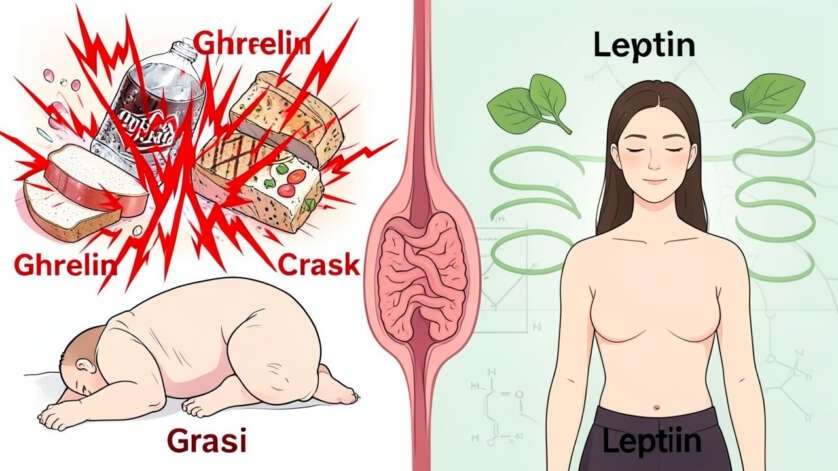
Your appetite is regulated by a complex interplay of hormones, primarily ghrelin and leptin. Understanding their roles clarifies why the composition of your meal, not just its calorie count, dictates how you feel afterwards.
Ghrelin is often called the “hunger hormone.” It is produced primarily in the stomach and signals hunger to the brain. Its levels rise before meals and fall after eating. Protein is particularly effective at suppressing ghrelin levels.
Leptin is the “satiety hormone,” produced by fat cells. It signals energy sufficiency and reduces appetite. Chronically high levels can lead to leptin resistance, disrupting this system.
The meal you eat influences the immediate release and effectiveness of these hormones.
| Hormone | Primary Source | Key Function | Influenced By |
|---|---|---|---|
| Ghrelin | Stomach | Stimulates hunger, food intake | Rises before meals, suppressed by protein |
| Leptin | Fat Cells | Signals satiety, reduces food intake | Levels proportional to body fat |
| PYY | Intestine | Reduces appetite, slows gut motility | Released in response to food, esp. protein |
| GLP-1 | Intestine | Increases insulin, promotes fullness | Released by nutrients in gut |
A meal that effectively balances macronutrients—particularly with adequate protein and fiber—creates an optimal hormonal response: it suppresses ghrelin, stimulates PYY and GLP-1, and promotes stable energy, leading to prolonged satiety and stable mood.

What Are Practical Strategies for Building a More Satisfying Meal?
Armed with this knowledge, you can architect meals that satisfy you physically and nutritionally, preventing the unsatisfied hunger that follows an empty-calorie meal. This isn’t about strict rules but about strategic composition. Focus on including key components that work synergistically to enhance satiety.
- Prioritize Protein: Start building your plate with a palm-sized portion of high-quality protein (fish, poultry, eggs, tofu, legumes). This is the foundation for hormonal satiety.
- Flood with Fiber: Make half your plate non-starchy vegetables. Add a fist-sized serving of high-fiber starch (beans, lentils, quinoa, sweet potato) for sustained energy.
- Include Healthy Fats: Add a thumb-sized portion of healthy fats (avocado, nuts, seeds, olive oil). Fat adds flavor and slows digestion, but be mindful of calorie density.
- Hydrate Your Food: Choose water-rich foods. Start with a broth-based soup or a large salad with vinaigrette. Cook vegetables to increase water content.
- Minimize Ultra-Processing: Choose ingredients that look like their original state. An apple instead of apple sauce, oatmeal instead of sugary cereal.
- Don’t Drink Your Calories: Liquid calories (sodas, juices, fancy coffees) bypass many satiety mechanisms. Stick to water, unsweetened tea, or black coffee.
Important: Mindful eating is a critical complement to meal composition. Chew thoroughly, eat slowly, and pay attention to your body’s fullness cues. It takes about 20 minutes for satiety signals to reach your brain. Eating quickly often leads to overconsumption before you feel full.
According to the National Institutes of Health, strategies like increasing protein intake and choosing low-energy-density foods are consistently linked to better appetite control and weight management. It’s about creating a meal that works with your biology, not against it.
Frequently Asked Questions
Why do I still feel hungry after eating a big meal of pasta and bread?
That meal is likely high in refined carbohydrates with relatively low protein and fiber. It can cause a rapid blood sugar spike and crash, triggering hunger hormones soon after eating. The lack of protein and fiber fails to provide sustained signals of fullness to your brain.
Adding a side salad and some chicken would make it more satisfying.
Are all calories really equal then?
From a pure energy measurement standpoint, a calorie is a calorie. However, from a biological and physiological standpoint, they are not equal in how they affect your body. The source of the calories—whether from protein, fiber-rich carbs, or refined sugar—determines their impact on hunger, hormones, and energy levels.
This is why food quality matters as much as quantity.
Can drinking water with a meal help me feel full faster?
Yes, absolutely. Drinking water with a meal adds volume, which helps fill your stomach and can enhance feelings of fullness. Some studies suggest having water before a meal is even more effective for reducing calorie intake.
It’s a simple, zero-calorie way to boost satiety.
How long does it take for a meal to make you feel full?
The process begins immediately with chewing and stomach distension, but the hormonal signals that create the sensation of fullness take time. It typically takes about 15-20 minutes for satiety hormones like GLP-1 and PYY to release and signal your brain that you’ve had enough. This is why eating slowly is so important.
Does cooking food change its ability to make me feel full?
Cooking can have mixed effects. It can break down some fibers, potentially speeding up digestion slightly. However, it also increases the water content of many foods (like vegetables) and can make certain nutrients more bioavailable.
For satiety, the overall meal composition and whether the food is minimally processed matters more than whether it’s raw or cooked.
Final Thoughts
The experience of two identically-caloried meals feeling completely different is a direct result of their complex nutritional structure. Focus on building meals with ample protein, fiber, and water-rich volume while minimizing refined carbs and ultra-processing. By prioritizing these elements, you harness your body’s natural satiety mechanisms, leading to greater satisfaction, stable energy, and better overall appetite control.